
Common Snapping Turtle Facts for Kids
The common snapping turtle, Chelydra serpentina, is a large freshwater turtle native to much of eastern North America. It has a rough brown or olive shell, an unusually long tail, a powerful beak-like jaw, and a flexible neck that can reach far beyond the front of its shell. Snapping turtles spend most of their lives in ponds, marshes, lakes, rivers, and slow streams, where they usually hide or swim away rather than confront danger.
Quick Common Snapping Turtle Facts
- Animal Type: Reptile
- Group: Snapping turtle in the family Chelydridae
- Known For: Long flexible neck, hooked jaws, small lower shell, ridged tail, muddy-water camouflage, and defensive snapping on land
- Habitat: Ponds, marshes, swamps, lakes, rivers, streams, canals, and brackish wetlands
- Diet: Aquatic plants, insects, worms, crayfish, fish, frogs, carrion, and other available food
What You’ll Learn
Learn 10 powerful common snapping turtle facts for kids about strong jaws, long tails, freshwater habitats, shells, and hunting, with a quiz, glossary, and activity
These facts are written simply for kids, parents, teachers, and curious young fact-finders.
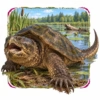
10 Fun Common Snapping Turtle Facts for Kids
1. It Is Not an Alligator Snapping Turtle
The common snapping turtle belongs to Chelydra, while alligator snapping turtles belong to Macrochelys. The common species has a smoother head, less mountainous shell ridges, and no worm-shaped lure on its tongue.
Kid Decode: Two heavyweight turtles share a nickname but carry different shells, faces, and fishing equipment.
2. The Shell Cannot Hide the Whole Body
Its plastron, or lower shell, is relatively small and cross-shaped. The head, legs, and long tail cannot withdraw as completely as they can in many other turtles.
Kid Decode: With too little downstairs armor, the turtle relies on jaws, claws, and attitude when stranded on land.
3. The Neck Reaches Surprisingly Far
The species name serpentina means snake-like and refers to the long flexible neck. A snapping turtle can thrust its head forward and reach sideways or backward farther than its short-looking resting pose suggests.
Kid Decode: The neck unfolds from the shell like a spring-loaded reptile question mark.
4. They Are Usually Calmer Underwater
In water, common snapping turtles often escape, sink into mud, or remain hidden rather than attack. Their famous defensive display is most likely when they are exposed on land and cannot quickly retreat.
Kid Decode: The pond resident saves its loudest argument for the awkward journey away from water.
5. The Beak Cuts Instead of Chewing
Sharp keratin edges form a hooked beak rather than true teeth. The jaws grasp, tear, and slice food, so people should never place hands near the front half of the animal.
Kid Decode: The mouth carries no teeth, yet its hard-edged beak works like powerful garden shears.
6. They Are Ambush Hunters and Scavengers
A snapping turtle may wait beneath plants or mud and lunge at passing prey. It also eats carrion and substantial amounts of aquatic vegetation, making it an opportunistic omnivore rather than a fish-only predator.
Kid Decode: The underwater menu combines patient hunting, cleanup duty, and a side helping of pond salad.
7. They Can Spend Winter Beneath Ice
In cold regions, snapping turtles overwinter underwater in mud, vegetation, muskrat lodges, or other sheltered places. Their metabolism slows dramatically, and they can tolerate long periods with little or no oxygen.
Kid Decode: The turtle turns its body clock almost to pause while winter seals the pond with ice.
8. Females Travel Overland to Nest
During late spring and summer, females leave water and may cross roads while searching for sunny soil or gravel. They dig flask-shaped nests with their hind feet and lay a clutch of round, flexible-shelled eggs.
Kid Decode: The lifelong swimmer becomes a determined land traveler carrying a nursery beneath her shell.
9. Nest Temperature Influences Sex
Incubation temperature helps determine the sex of developing hatchlings. Very warm and cooler nests tend to produce more females, while intermediate temperatures tend to produce more males, although thresholds vary.
Kid Decode: The warmth of the soil helps write part of each hatchling’s biological story.
10. Long-Lived Adults Need Protection
Eggs and hatchlings face many predators, while adults survive much better and may live for many decades. Road deaths, harvesting, habitat loss, fishing gear, and pollution can therefore harm populations by removing breeding adults that are difficult to replace.
Kid Decode: A single old female carries decades of survival and many future nests across one dangerous road.
The Weirdest Common Snapping Turtle Fact
A common snapping turtle can remain submerged beneath an ice-covered pond for months by slowing its metabolism and tolerating oxygen conditions that would overwhelm most reptiles.
Try This Common Snapping Turtle Activity
Snapping Turtle Pond-and-Nest Drawing Activity
Draw a common snapping turtle in a muddy North American pond. Add a rough oval carapace, small cross-shaped plastron inset, long saw-edged tail, flexible snake-like neck, hooked beak, aquatic plants, crayfish and fish, winter mud beneath ice, and a female crossing toward a sunny nest containing eggs and hatchlings.
Quick Common Snapping Turtle Quiz
- Is it the same species as the alligator snapping turtle? Answer: No.
- Why can it not hide fully inside its shell? Answer: Its lower shell is small and its neck, legs, and tail remain exposed.
- When is it most likely to snap defensively? Answer: When exposed or threatened on land.
- What does it eat? Answer: Plants, invertebrates, fish, frogs, carrion, and other available food.
- What can influence the sex of hatchlings? Answer: Nest temperature.
Mini Glossary
- Carapace: The upper shell of a turtle.
- Plastron: The lower shell protecting the belly.
- Keratin: The tough material forming a turtle’s beak, claws, and outer shell covering.
- Brumation: A cold-season slowdown in reptiles similar to hibernation.
- Temperature-Dependent Sex Determination: Development in which nest temperature influences whether young become male or female.
 Flea Facts for Kids
 Prairie Dog Facts for Kids
 White-Tailed Deer Facts for Kids
 Apatosaurus Facts for Kids
More Animal Facts for Kids
Visit the full animal facts library or explore a focused animal group.
More Extinct Animal Facts for Kids
Discover dinosaurs, Ice Age giants, prehistoric sea creatures, recently extinct species, and other animals from the past.
Fact check note: Fact checked with Animal Diversity Web’s Chelydra serpentina account, BioKIDS species resources, current IUCN-linked assessment information, state and provincial wildlife guidance, and published research on snapping-turtle overwintering, diet, nesting, temperature-dependent sex determination, longevity, and road mortality.

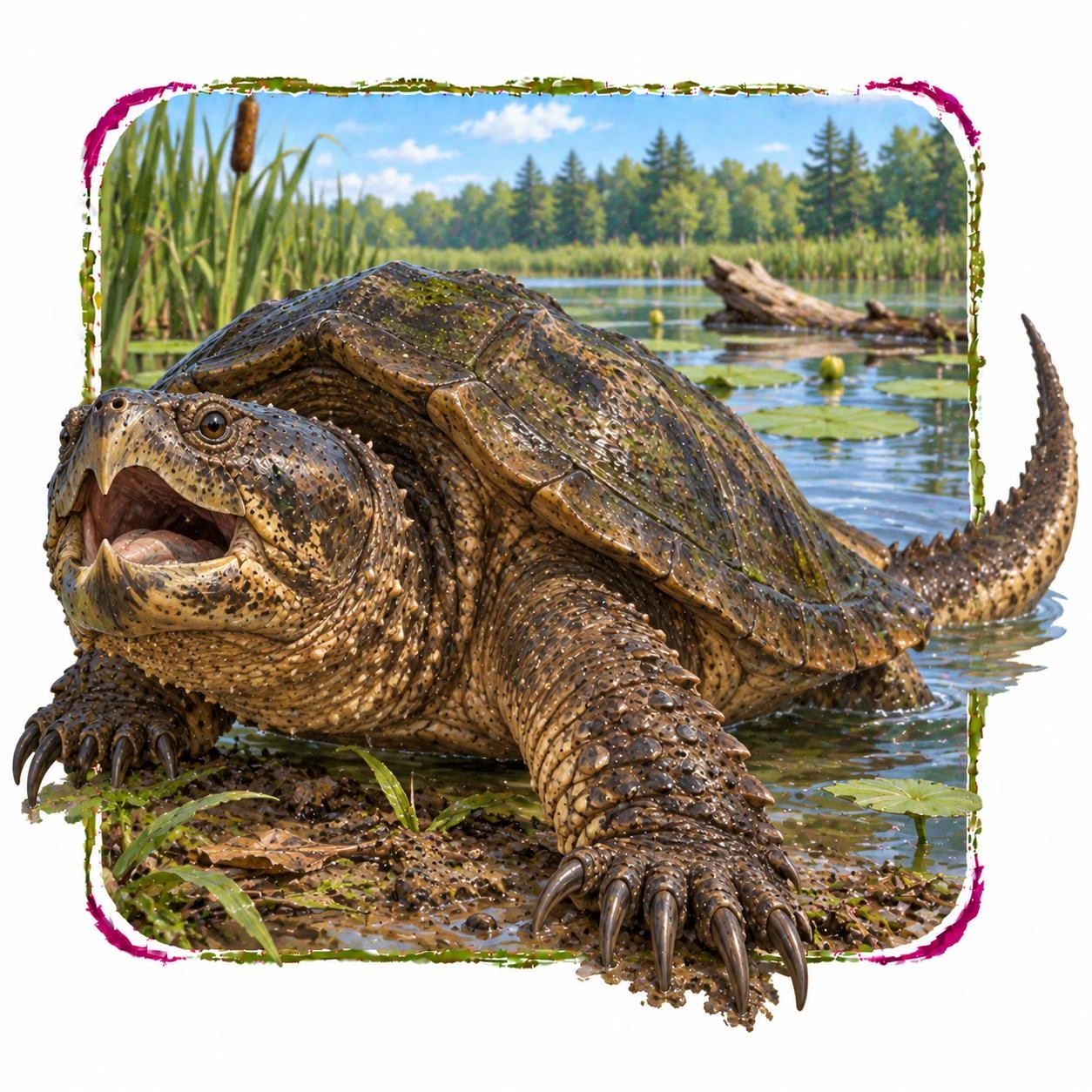
Common Snapping Turtle in its natural Ponds, lakes, marshes, swamps, slow rivers, streams, canals, muddy wetlands, and occasional brackish water across eastern and central North America habitat