
Common Tern Facts for Kids
The Common Tern, Sterna hirundo, is a graceful waterbird that breeds across large parts of Europe, Asia, and North America. It nests beside coasts, lakes, and rivers and spends the nonbreeding season along warmer seas. Breeding adults have a black cap, pale gray body, red-orange legs, a red bill with a dark tip, narrow pointed wings, and a deeply forked tail. They hover above water before plunging after small fish.
Quick Common Tern Facts
- Animal Type: Bird
- Group: Tern in the gull family, Laridae
- Known For: Forked tail, black cap, plunge diving, fish courtship gifts, noisy colonies, and long migration
- Habitat: Coasts, islands, estuaries, lakes, rivers, reservoirs, saltmarshes, and open ocean
- Diet: Small fish, crustaceans, squid, and insects
What You’ll Learn
Discover 10 graceful common tern facts for kids about pointed wings, diving, fish, migration, and coastal colonies, plus a quiz, glossary, and activity
Easy explanations make them great for children, families, teachers, and little fact-hunters.

10 Fun Common Tern Facts for Kids
1. It Belongs to the Gull Family
Common terns belong to Laridae, the family containing gulls, terns, and skimmers. Their narrow pointed wings, forked tails, light bodies, and plunge-diving style distinguish them from the heavier flight and broader wings of many gulls.
Kid Decode: The gull family produced one sleek branch shaped like an arrow with a forked tail.
2. Breeding Adults Wear a Black Cap
In the breeding season, adults have a full black cap, pale gray upperparts, whitish-to-gray underparts, red-orange legs, and a red bill usually tipped with black. Nonbreeding birds develop a white forehead and darker bill.
Kid Decode: The summer bird wears a black helmet and red bill, then swaps to a paler winter face.
3. The Tail Is Deeply Forked
Long outer tail feathers create a forked shape, especially in breeding adults. The Common Tern’s tail is usually longer and more deeply forked than a Forster’s Tern’s but shorter than an Arctic Tern’s.
Kid Decode: Two pointed tail streamers act like graceful steering ribbons behind the bird.
4. They Plunge for Small Fish
Common terns hover or circle over water, fold their wings, and dive just below the surface for small fish. They also take crustaceans, squid, and insects and may snatch prey without fully entering the water.
Kid Decode: The bird turns from hovering kite to feathered fishing dart in one quick fold.
5. They Can Drink Seawater
Special salt glands above the eyes remove excess salt from the bloodstream and release concentrated fluid through the nostrils. This lets Common Terns drink both fresh water and seawater.
Kid Decode: A hidden desalination plant above the eyes keeps ocean water from becoming too salty.
6. Pairs Exchange Fish During Courtship
A male often carries a fish to a female during courtship and may feed her as the pair bond develops. Courtship also includes aerial chases, gliding displays, calls, and ritual postures on the ground.
Kid Decode: One carefully presented fish becomes part gift, part dinner, and part feathered proposal.
7. Colonies Build Simple Ground Nests
Common Terns nest in colonies on islands, beaches, saltmarshes, gravel bars, and lake shores. A nest begins as a shallow scrape lined with vegetation, shells, stones, bones, and occasionally human-made debris.
Kid Decode: The nursery is a tiny ground bowl decorated with whatever the shoreline delivers.
8. Chicks Hide Among Stones and Plants
The spotted eggs and mottled down of chicks blend with sand, shell, gravel, and low vegetation. Chicks can walk soon after hatching but remain near the nest and depend on parents for fish.
Kid Decode: A fuzzy chick can vanish into a beach pattern while waiting for the next fish delivery.
9. They Defend Colonies From Intruders
Adults give sharp calls, dive at gulls and other predators, and may strike or defecate on animals entering the colony. Many pairs defending together can make a nesting island difficult to approach.
Kid Decode: A quiet-looking island can suddenly launch an entire squadron of angry white wings.
10. They Make Long Seasonal Journeys
Common Terns breed across much of the temperate and northern Northern Hemisphere and migrate to warmer coasts. North American birds may winter as far south as Argentina and Chile, while Eurasian populations travel toward Africa, southern Asia, and other warm seas.
Kid Decode: The small fishing bird connects northern nesting islands with warm coastlines thousands of kilometres away.
The Weirdest Common Tern Fact
Common Terns can drink seawater because special glands above their eyes remove excess salt and send the concentrated fluid out through the nostrils.
Try This Common Tern Activity
Common Tern Fishing-and-Colony Activity
Draw a Common Tern hovering above water and plunging after a fish. Add narrow pointed wings, a black cap, red bill with a dark tip, red-orange legs, a forked tail, salt-gland arrows, a male carrying a courtship fish, a gravel nest with spotted eggs, camouflaged chicks, and adults defending the colony.
Quick Common Tern Quiz
- Which bird family contains the Common Tern? Answer: Laridae, the gull and tern family.
- How does it catch many fish? Answer: By hovering and plunge-diving near the surface.
- What shape is its tail? Answer: Deeply forked.
- What may a male give a female during courtship? Answer: A fish.
- How can it drink seawater? Answer: Salt glands remove excess salt.
Mini Glossary
- Tern: A slender waterbird related to gulls and usually adapted for catching aquatic prey.
- Plunge Dive: A hunting dive made from the air into water.
- Salt Gland: An organ that removes extra salt from a seabird’s body.
- Colony: A group of animals nesting or living close together.
- Precocial: Hatched in a relatively developed state and able to move soon afterward.


 Starling Facts for Kids
 Tiger Facts for Kids
 Mussel Facts for Kids
 Monolophosaurus Facts for Kids
More Animal Facts for Kids
Visit the full animal facts library or explore a focused animal group.
More Extinct Animal Facts for Kids
Discover dinosaurs, Ice Age giants, prehistoric sea creatures, recently extinct species, and other animals from the past.
Fact check note: Fact checked with Cornell Lab of Ornithology’s All About Birds Common Tern overview, identification, life-history, and migration resources; BirdLife International species information; and ornithological research on salt glands, courtship feeding, colony defence, chick development, migration, and conservation.

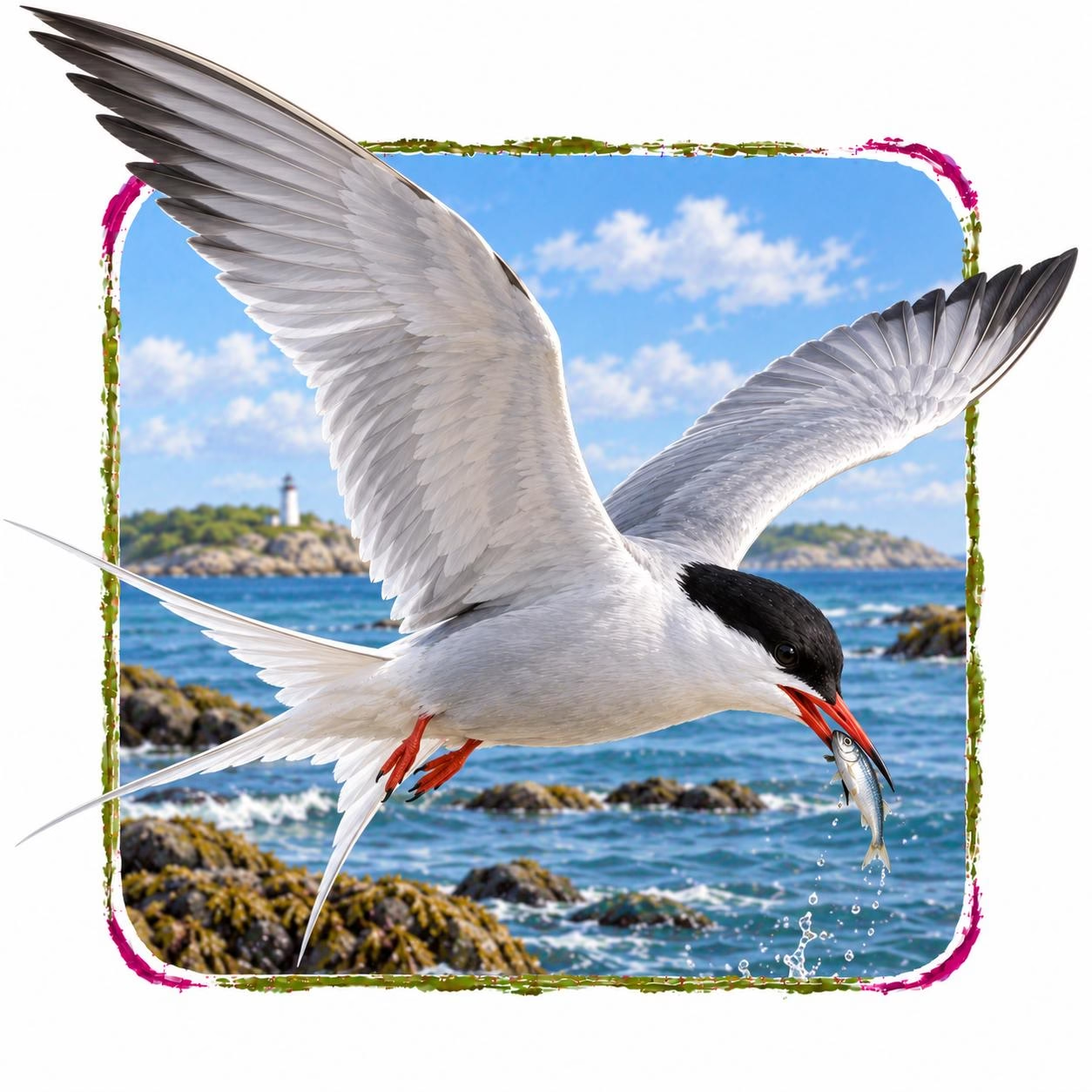
Common Tern in its natural Coastal islands, beaches, saltmarshes, estuaries, rocky shores, lakes, rivers, reservoirs, gravel bars, open ocean, and warm winter coastlines across much of the world habitat