
Common Toad Facts for Kids
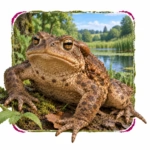
The Common Toad, Bufo bufo, is a sturdy amphibian native to much of Europe and parts of western Asia. It has dry-looking warty skin, copper or golden eyes with horizontal pupils, short legs, and large poison glands behind the eyes. Common Toads usually spend the year on land in woodland, gardens, hedges, and fields, returning to traditional ponds in spring to breed and lay long strings of eggs.
Quick Common Toad Facts
- Animal Type: Amphibian
- Group: True toad in the family Bufonidae
- Known For: Warty skin, parotoid poison glands, traditional pond migrations, egg strings, and dark shoaling tadpoles
- Habitat: Woodland, hedgerows, gardens, grassland, farmland, wetlands, and deep breeding ponds
- Diet: Beetles, ants, worms, slugs, snails, spiders, and other invertebrates
What You’ll Learn
Explore 10 fascinating common toad facts for kids about bumpy skin, hopping, tadpoles, nighttime activity, and European habitats, with a quiz, glossary, and activity
These simple facts are made for kids, parents, teachers, and curious young learners.

10 Fun Common Toad Facts for Kids
1. It Is a True Toad
The Common Toad belongs to the family Bufonidae and the genus Bufo. Its dry-looking warty skin, short legs, broad body, and walking or short-hopping movement help distinguish it from many smoother, longer-legged frogs.
Kid Decode: The toad travels with sturdy little steps instead of launching into frog-sized long jumps.
2. Warts Do Not Cause Human Warts
The bumps on a toad’s skin are glands and skin structures, not contagious human warts. Human warts are caused by viruses and cannot be caught by touching a toad.
Kid Decode: The bumpy coat looks suspicious, but it cannot hand you a human wart.
3. Poison Glands Sit Behind the Eyes
Large parotoid glands behind the eyes release a milky defensive secretion containing toxins. The secretion discourages many predators and can irritate eyes or mouths, so animals should be left alone and hands washed after accidental contact.
Kid Decode: Two hidden chemical shields sit behind the eyes where a neck might have been.
4. They Swallow by Pressing With Their Eyes
Like many amphibians, a toad can pull its eyes downward into the roof of the mouth while swallowing. This movement helps push food toward the throat.
Kid Decode: The eyes briefly join the swallowing team by pressing dinner from above.
5. Night Is the Main Hunting Time
Common Toads emerge after dark to hunt beetles, ants, slugs, snails, worms, spiders, and other invertebrates. They often wait quietly and flick out a sticky tongue when prey comes within reach.
Kid Decode: The garden’s night shift begins when one patient toad opens its insect café.
6. Adults Return to Traditional Ponds
Each spring, many adults migrate along familiar routes to the ponds where they breed. Roads can cut across these routes, leading volunteers in some places to help toads cross safely.
Kid Decode: A tiny amphibian follows an inherited spring road map back to one particular pond.
7. Males Grasp Females in Amplexus
A male climbs onto a female’s back and clasps her behind the front legs in a mating hold called amplexus. Special rough pads on the male’s fingers help him maintain his grip in crowded water.
Kid Decode: The male wears temporary gripping gloves for the busiest pond week of the year.
8. Eggs Form Long Double Strings
Females wind long strings of black eggs through underwater plants rather than laying the floating clumps made by Common Frogs. One female can produce thousands of eggs.
Kid Decode: Toadspawn decorates pond plants with long beaded necklaces instead of jelly clumps.
9. Tadpoles School Together
Common-toad tadpoles are small and dark and often gather in dense shoals. Their skin contains defensive chemicals, but fish, birds, insects, and other predators still eat many of them.
Kid Decode: The black tadpoles travel in living clouds even though danger surrounds the pond.
10. They Spend Most of the Year on Land
After breeding, adults leave ponds for woodland, hedges, gardens, grassland, and farmland. They shelter in burrows, under logs, stones, roots, and compost and slow down in protected places during winter.
Kid Decode: The famous pond animal actually spends most months hiding and hunting on land.
The Weirdest Common Toad Fact
A Common Toad can pull its eyes downward into the roof of its mouth, using the pressure to help push a meal toward its throat.
Try This Common Toad Activity
Common Toad Pond-Journey Activity
Draw a Common Toad traveling from woodland to a spring breeding pond. Add warty brown skin, copper eyes, parotoid glands, short walking legs, a sticky tongue catching a slug, an eye-swallowing inset, a male in amplexus, double egg strings around plants, black tadpoles in a shoal, and tiny toadlets leaving the water.
Quick Common Toad Quiz
- Can touching a toad give a person human warts? Answer: No.
- Where are the large poison glands? Answer: Behind the eyes.
- When do Common Toads usually hunt? Answer: At night.
- What is the mating grip called? Answer: Amplexus.
- How is toadspawn arranged? Answer: In long strings wound around water plants.
Mini Glossary
- Amphibian: A vertebrate with permeable skin and a life cycle often connected with water.
- Parotoid Gland: A large poison-producing skin gland behind a toad’s eye.
- Amplexus: The mating hold in which a male amphibian clasps a female.
- Spawn: The eggs of aquatic animals such as frogs, toads, and fish.
- Metamorphosis: A major body change, such as a tadpole becoming a toadlet.

 Caterpillar Facts for Kids
 Alpaca Facts for Kids
 Oryx Facts for Kids
 Brachiosaurus Facts for Kids
More Animal Facts for Kids
Visit the full animal facts library or explore a focused animal group.
More Extinct Animal Facts for Kids
Discover dinosaurs, Ice Age giants, prehistoric sea creatures, recently extinct species, and other animals from the past.
Fact check note: Fact checked with Amphibian and Reptile Conservation’s Common Toad species account and frog-and-toad guidance, Froglife conservation resources, current European amphibian taxonomy, and research on parotoid secretions, swallowing mechanics, breeding migrations, amplexus, spawn, tadpole behavior, and population declines.

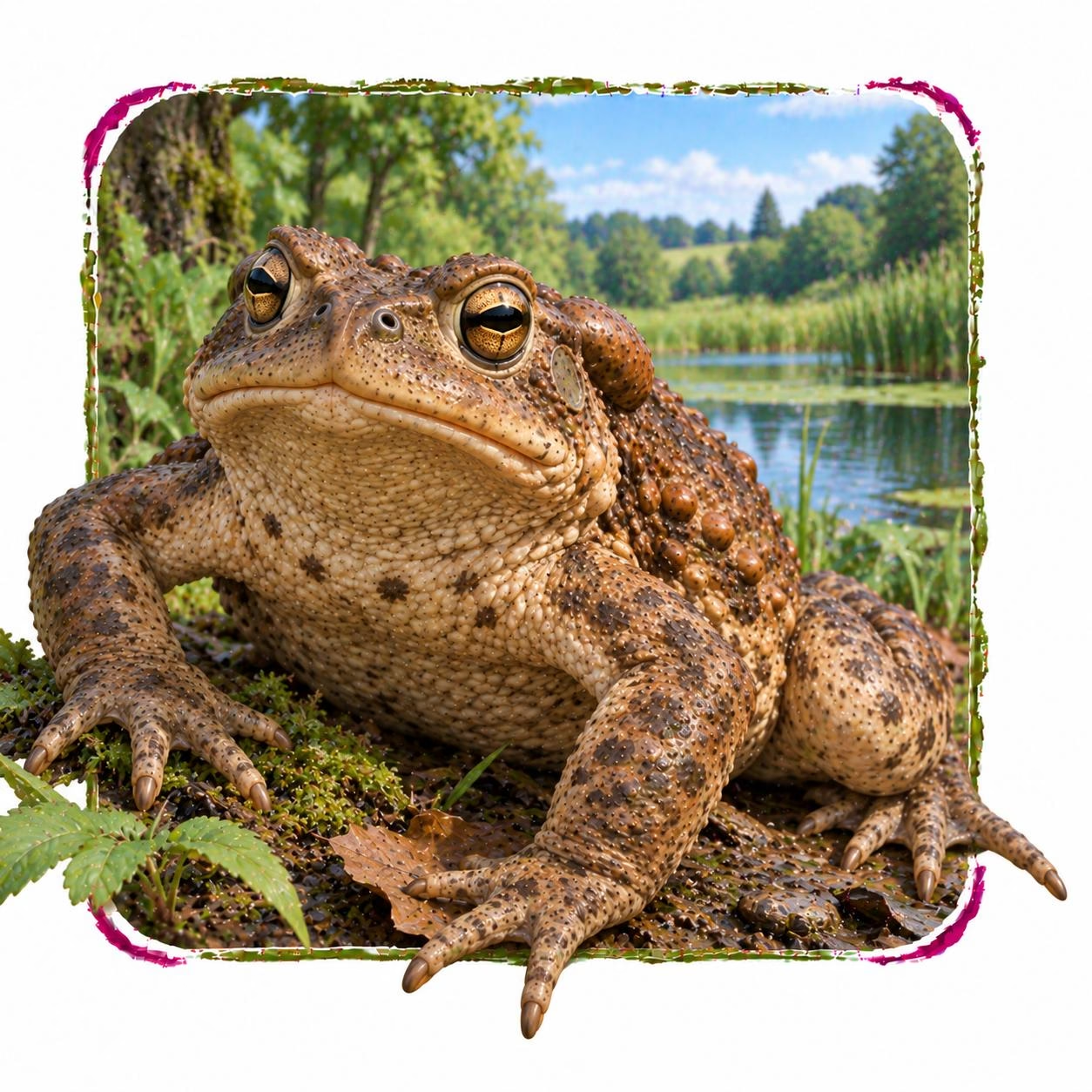
Common Toad in its natural Woodlands, hedgerows, gardens, grasslands, farmland, parks, dunes, wetlands, and deeper ponds, lakes, reservoirs, and ditches across Europe and western Asia habitat