
Alpaca vs Sheep: Andean-Alpaca-to-Domestic-Sheep Fiber-Animal Comparison
Alpacas and sheep may both look like fluffy grazing farm animals, but they come from different branches of the hoofed-mammal family tree. The alpaca is a South American camelid related to llamas and vicuñas. The sheep is a Eurasian-origin bovid related more closely to goats. Alpacas walk on two toes with soft pads, use a three-compartment fermenting foregut, hum, and have babies called crias. Sheep walk on cloven hooves, use a true four-compartment ruminant stomach, bleat, and have lambs. Their fibers also grow in different coat systems, and neither animal has one universal size or softness because breed, age, body area, nutrition, and fiber grade matter.
About Alpaca
- Type Mammal
- Diet Herbivorous grazer eating grasses and, in managed care, suitable pasture, hay, and carefully balanced feed; alpacas use a three-compartment foregut rather than the four-compartment stomach of true ruminants
- Group Domestic alpaca, Vicugna pacos in many modern classifications and also listed as Lama pacos, family Camelidae; a fully domesticated South American camelid developed through Andean breeding strongly influenced by the wild vicuña
- Known for A slender long-necked fiber animal with a small wedge-shaped head, long pointed ears, soft two-toed padded feet, split upper lip, short tail, and a thick coat in huacaya or suri form. Adults usually weigh about 45–90 kilograms and stand roughly 0.8–1.1 meters at the shoulder, with limited size difference between the sexes
- Special skill Dense renewable fiber, efficient use of sparse highland grass, soft spreading foot pads that reduce damage to delicate ground, a split upper lip for selecting plants, a three-compartment fermenting foregut, and alert herd communication support life in cold high country
About Sheep
- Type Mammal
- Diet Herbivorous grazer eating grasses, forbs, hay, and some browse depending on breed and pasture. A true ruminant, the sheep ferments plant fiber in a four-compartment stomach consisting of rumen, reticulum, omasum, and abomasum
- Group Domestic sheep, Ovis aries in family Bovidae and subfamily Caprinae; a highly diverse domesticated bovid descended mainly from Asian mouflon-related ancestors, with hundreds of breeds selected for wool, hair, milk, meat, hardiness, horns, size, and other traits
- Known for A generally stockier, shorter-necked animal with a narrow muzzle, sideways ears, cloven keratin hooves, a naturally downward-hanging tail, and either wool, hair, or a mixed coat depending on breed. Published breed ranges span roughly 20–200 kilograms and about 0.65–1.27 meters at the shoulder, so some sheep are smaller than an alpaca and some are much larger
- Special skill A four-compartment ruminant system extracts energy from fibrous plants; cloven hooves support travel over varied ground; a wide field of view helps scan for danger; and breed-specific wool, hair, fat stores, horns, body size, and seasonal behavior suit many human-managed landscapes
Alpaca vs Sheep: Quick Answer
An alpaca is a long-necked South American camelid with pointed ears, two soft padded toes per foot, a three-compartment fermenting foregut, and a baby called a cria. A sheep is a stockier domestic bovid with cloven hooves, a four-compartment ruminant stomach, and a baby called a lamb. Both are social herbivores raised for fiber, but alpaca fleece and sheep wool differ in structure, grease, crimp, and breed variation.
Where Do They Fit?
Follow the branches to see how Alpaca and Sheep are classified and related.
Alpaca vs Sheep: Quick Comparison
| Feature | Alpaca | Sheep |
|---|---|---|
| Scientific name | Vicugna pacos; Lama pacos is also used | Ovis aries |
| Family | Camelidae, the camel family | Bovidae, the cattle-goat-antelope family |
| Traditional origin | Central Andes of South America | Southwest Asia and nearby Eurasian regions |
| Adult size | Usually about 45–90 kg and 0.8–1.1 m at the shoulder | Extremely breed-variable, roughly 20–200 kg and 0.65–1.27 m at the shoulder in broad references |
| Feet | Two toes ending in nails and resting on soft pads | Two main toes enclosed by hard cloven hooves |
| Digestive system | Three-compartment camelid foregut; cud-chewing foregut fermenter but not a true four-compartment ruminant | True ruminant with rumen, reticulum, omasum, and abomasum |
| Fiber coat | Huacaya fleece grows fluffy and crimped; suri fiber hangs in long locks | May carry fine wool, coarse wool, hair, or mixed fiber depending on breed |
| Main sound | Soft hum plus alarm calls and other vocalizations | Bleat, with different calls between ewes, lambs, and flockmates |
| Baby | Cria; usually one after a gestation of about 11.5 months | Lamb; commonly one or two after a gestation of about five months |
| Social group | Herd | Flock or herd |
How Are Alpacas and Sheep Alike?
- Both are domesticated even-toed hoofed mammals kept in social groups and developed by people over thousands of years for useful fiber and other products.
- Both are herbivorous foregut fermenters that graze, regurgitate partially digested food, chew it again as cud, and depend on microbes to help unlock energy from tough plants.
- Both grow keratin-based coats that can be shorn and sorted into different fiber grades, although the coat structure, grease, crimp, fineness, and processing needs are not identical.
- Both have sideways-set eyes, strong hearing and smell, alert group behavior, split upper lips or mobile lips for gathering plants, and only lower front incisors working against an upper dental pad.
- Both need companions, suitable forage, clean water, shelter, routine foot care, parasite control, and species-appropriate veterinary management rather than being kept as decoration or treated like a dog.
How Are Alpacas and Sheep Different?
- Alpacas are camelids related to llamas, vicuñas, and camels; sheep are bovids related more closely to goats, muskoxen, cattle, and antelopes.
- An alpaca foot has two toes with nails and a broad soft pad contacting the ground. A sheep foot ends in two hard cloven hoof claws that bear the animal’s weight.
- Alpacas have three stomach compartments called C1, C2, and C3. Sheep are true ruminants with four compartments called rumen, reticulum, omasum, and abomasum.
- Alpacas have long necks, pointed ears, short tails, and relatively uniform slender builds. Sheep breeds range from fine-boned hair sheep to massive wool sheep, with widely different ears, tails, horns, faces, and coats.
- An alpaca baby is a cria and normally arrives singly after roughly 11.5 months. A sheep baby is a lamb, and one or two commonly arrive after about five months, with litter size varying by breed and care.
- Alpacas commonly hum and use ear and neck positions or spitting in social communication. Sheep are famous for bleating and often show an especially tight flocking response when alarmed.
Alpaca vs Sheep Adaptation Showdown
Andean padded-foot animal versus woolly flock animal showdown: Sheep receives a cautious maximum-size win because the largest domestic breeds can substantially exceed the usual 45–90-kilogram alpaca range, although small sheep breeds can weigh far less and many ordinary individuals overlap. Speed, strength, stealth, social behavior, and swimming are ties because neither domestic species has a standardized universal trial and breeds, conditioning, terrain, coat, and management change the result. Alpaca wins strangest adaptation for combining two nail-tipped padded toes, a split plant-picking lip, humming communication, defensive spitting, communal dung sites, and a three-compartment camelid foregut. These fields compare broad adaptations, not a race, fight, fiber-quality contest, or claim that one farm animal is easier to keep.
Fun Alpaca vs Sheep Facts
An Alpaca Is a Camel Relative, Not a Sheep
Fluffy coats hide a deep family-tree split. Alpacas belong to Camelidae with llamas, vicuñas, guanacos, and true camels. Sheep belong to Bovidae with goats, cattle, bison, and antelopes. The two were domesticated independently on different continents and cannot produce hybrid young together.
Padded Toes and Cloven Hooves Leave Different Prints
An alpaca places weight on a broad soft pad behind two nail-tipped toes, which spreads pressure across delicate highland ground. A sheep stands on the hard keratin walls and soles of two main hoof claws. Both feet split into two visible parts, but calling both of them the same kind of hoof hides an important anatomical difference.
Three Compartments Are Not Four
Alpaca food ferments in three stomach compartments named C1, C2, and C3. Alpacas regurgitate and rechew food, yet veterinary anatomy classifies camelids as foregut fermenters or pseudoruminants rather than true four-compartment ruminants. Sheep use the classic rumen, reticulum, omasum, and abomasum arrangement.
Alpaca Fleece and Sheep Wool Are Not One Universal Fabric
Huacaya alpacas grow springy fleece while suris grow hanging locks. Sheep breeds may grow very fine crimped wool, long lustrous wool, coarse carpet wool, hair, or mixtures. Raw sheep wool normally carries more wool grease, while alpaca fiber is typically less greasy, but softness and quality still depend on fiber diameter, age, body area, genetics, weathering, and processing.
Alpacas Hum and Sheep Bleat
Alpacas often use a soft hum to maintain contact and add sharper alarm calls, posture, and occasional spitting. Sheep use bleats that help ewes and lambs locate one another and allow flockmates to signal isolation or excitement. A newborn alpaca is a cria; a newborn sheep is a lamb.
Alpaca vs Sheep Quiz
- Which animal belongs to the camel family? Answer: The alpaca.
- Which animal has true cloven hooves? Answer: The sheep.
- How many stomach compartments does an alpaca have? Answer: Three.
- What is a baby sheep called? Answer: A lamb; a baby alpaca is a cria.
- Do all sheep and alpacas have the same size and fiber texture? Answer: No. Breed, age, sex, body area, health, and fiber type create large differences.
Alpaca vs Sheep FAQ
Is an alpaca a type of sheep?
No. An alpaca is a South American camelid, while a sheep is a bovid in genus Ovis. Their similar fluffy appearance comes from useful insulating fiber, not close membership in the same family.
Which is bigger, an alpaca or a sheep?
It depends on the sheep breed. Alpacas usually weigh about 45–90 kilograms. Published domestic-sheep ranges extend from about 20 to 200 kilograms, so a small sheep can be lighter than an alpaca and a large ram can be much heavier. This page gives sheep the maximum-size category, not every head-to-head pairing.
Do alpacas have wool?
People casually say alpaca wool, but producers usually call it alpaca fiber or fleece. It is a keratin fiber with huacaya and suri coat forms. Sheep wool is also keratin but has its own breed-dependent scales, crimp, grease, fineness, and processing qualities.
Are alpacas ruminants like sheep?
Both ferment plants in the foregut and chew cud. In strict veterinary anatomy, sheep are true ruminants with four stomach compartments, while alpacas are camelid foregut fermenters with three compartments and are sometimes called pseudoruminants.
Can alpacas and sheep live in one field?
Sharing a property is not automatically safe or simple. Their nutrition, mineral tolerance, parasite risks, fencing, shearing, shelter, handling, and veterinary needs differ. An experienced veterinarian and responsible livestock specialist should design any mixed-species plan rather than placing unfamiliar animals together.
Animal Words to Know
- Camelid: A member of the camel family, including alpacas, llamas, vicuñas, guanacos, and camels.
- Bovid: A member of family Bovidae, including sheep, goats, cattle, bison, buffalo, and antelopes.
- Foregut fermenter: An herbivore that uses microbes in chambers before the main intestine to break down plant fiber.
- Cloven hoof: A hard hoof divided into two main weight-bearing claws, as in a sheep.
- Cria: A baby alpaca or another South American camelid; a baby sheep is a lamb.
Alpaca and Sheep Fiber Activity
Alpaca and Sheep Fiber Activity
Draw an alpaca and sheep at the same shoulder scale. Give the alpaca a long neck, pointed ears, short tail, thick fiber, and two-toed feet with soft pads. Make the sheep stockier, with a downward tail, woolly fleece, and hard cloven hooves. Add a cria beside the alpaca and a lamb beside the sheep. Label camelid, bovid, fiber, wool, foot pad, and hoof.
Meet Each Animal
Want the full fact file? Here are quick highlights from each animal’s own facts page.
Alpaca Fact Highlight
From the full animal facts page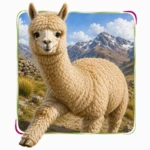
Sheep Fact Highlight
From the full animal facts page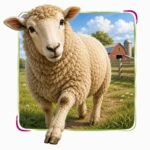
More Animal Comparisons
Pick another animal matchup and keep exploring. Compare appearances, habitats, diets, abilities, and surprising differences.






Make an Animal Story
Turn this alpaca vs sheep comparison into an Andean-farm fiber mystery with our free Animal Story Generator.
Source notes: References used for this comparison. See more See less
Try Another Matchup
Explore this comparison →