
American Kestrel vs Peregrine Falcon for Kids
The American Kestrel and Peregrine Falcon are both true falcons in genus Falco, yet they occupy very different size classes. The American Kestrel is a colourful, dove-sized hunter of insects and small animals. It often watches from a wire or hovers into the wind above short grass. The Peregrine is crow-sized, many times heavier, and built to catch birds in fast aerial pursuits and steep stoops. Kestrels rely on cavities for nests, while Peregrines usually scrape a shallow bowl on a cliff or tall structure.
About American Kestrel
- Type Bird
- Diet Carnivore and insect eater
- Group Falcon; family Falconidae
- Known for Dove-sized body, colourful plumage, hovering, tail pumping, and cavity nesting
- Special skill Facing into the wind and hovering while scanning the ground for small prey
About Peregrine Falcon
- Type Bird
- Diet Carnivore
- Group Falcon; family Falconidae
- Known for Crow-sized body, long pointed wings, worldwide travel, and an extremely fast hunting stoop
- Special skill A high-altitude hunting stoop that may reach about 320 km/h (200 mph)
Quick Answer
Quick answer: The American Kestrel is the smallest falcon in the United States and Canada, measuring about 22-31 centimetres and 80-165 grams. It often hunts insects and small animals from a perch or by hovering, and it nests in cavities. The Peregrine Falcon is much larger at about 36-49 centimetres and 530-1,600 grams. It catches many birds in flight, nests on high ledges, and wins speed with a stoop that may reach about 320 km/h (200 mph).
American Kestrel vs Peregrine Falcon: Quick Comparison
| Feature | American Kestrel | Peregrine Falcon |
|---|---|---|
| Scientific identity | Falco sparverius | Falco peregrinus |
| Published adult length | About 22-31 cm | About 36-49 cm |
| Published adult mass | About 80-165 g | About 530-1,600 g |
| Published wingspan | About 51-61 cm | About 100-110 cm |
| Adult appearance | Rusty back, two dark face slashes; male has slate-blue wings | Blue-gray back, barred pale underside, dark hood, and thick cheek marks |
| Range | Across much of the Americas | Worldwide except Antarctica |
| Main habitat | Open short-grass country with perches and nest cavities | Cliffs, coasts, open country, and tall city structures |
| Main foods | Mostly insects and other small animals | Mostly birds, plus some bats and occasional other prey |
| Hunting style | Perch watching, hovering, and short pounces | High-perch watching, aerial pursuit, and a very fast stoop |
| Nest | Uses an old hole, natural cavity, crevice, building nook, or nest box | Usually makes a shallow scrape on a cliff or high structure |
How Are American Kestrels and Peregrine Falcons Alike?
- Both are true falcons in genus Falco and family Falconidae.
- Both are daytime raptors with hooked bills, sharp eyesight, strong feet, curved talons, and pointed wings.
- Both often watch from a perch and can catch some prey in the air.
- Both form breeding pairs, lay eggs, raise helpless chicks, and defend nesting areas.
- Both can use human-made structures, including buildings or nest boxes, when suitable natural nest places are limited.
How Are American Kestrels and Peregrine Falcons Different?
- The Peregrine is much longer, heavier, and broader in wingspan than the American Kestrel.
- Adult male kestrels are rusty with slate-blue wings, while adult Peregrines are blue-gray above with barred undersides and a dark hood.
- Kestrels eat many insects and small ground animals, while Peregrines specialise in catching birds in flight.
- Kestrels can hover into the wind before pouncing, while Peregrines use fast pursuit and a steep high-speed stoop.
- Kestrels depend on cavities but cannot dig their own, while Peregrines usually make a shallow scrape on a high ledge.
American Kestrel vs Peregrine Falcon Showdown
Adaptation showdown: Peregrine Falcon wins size because its cited length, mass, and wingspan are all much greater. Peregrine Falcon wins speed because its stoop may reach about 320 km/h (200 mph). Peregrine Falcon wins whole-body strength because its much larger body handles substantially larger prey; this is not a fight prediction. Stealth is a Tie because the kestrel’s hovering search and the Peregrine’s high watch and stoop are different hunting approaches, not matched concealment tests. Social behavior is a Tie because both are mainly solitary or paired, with brief gatherings possible. Swimming is a Tie because neither species is aquatic and no fair performance evidence supports a winner. American Kestrel wins weirdest for seeing ultraviolet light; evidence that glowing vole trails guide hunting comes from the closely related Eurasian Kestrel, so the page keeps that detail qualified.
Fun American Kestrel vs Peregrine Falcon Facts
The Tiny Falcon Is Still a Falcon
At about 80-165 grams, the American Kestrel is the smallest falcon in the United States and Canada. Its small size does not make it a baby Peregrine or a songbird. Kestrels and Peregrines are separate adult species in the same genus, Falco.
Male and Female Kestrels Wear Different Colours
An adult male American Kestrel has slate-blue wings, a rusty back and tail, and dark face slashes. The female is more evenly rusty and barred above. Adult male and female Peregrines look more similar in colour, although females are usually much larger than males.
Hovering Turns Wind Into a Lookout
An American Kestrel can face into the wind, flap, adjust its long tail, and hold nearly one spot while scanning the ground. It also hunts from wires and poles. A Peregrine usually watches from high places and uses fast flight to chase birds.
Ultraviolet Comes With a Science Note
Birds, including kestrels, can see ultraviolet light that humans cannot. Cornell explains that urine trails left by voles may stand out under ultraviolet light, but the trail-following observation comes from the Eurasian Kestrel, a close relative. The American Kestrel connection should stay a careful possibility, not a proven shortcut.
Neither Falcon Builds a Typical Nest
American Kestrels cannot excavate their own cavity. They use old woodpecker holes, natural hollows, crevices, building spaces, or nest boxes, usually without carrying nest material. Peregrines make a shallow scrape on gravel or loose material on a cliff or tall structure.
American Kestrel vs Peregrine Falcon Quiz
- Which falcon is much smaller? Answer: The American Kestrel.
- Which falcon often hovers while searching the ground? Answer: The American Kestrel.
- Which falcon catches many birds with fast aerial pursuit? Answer: The Peregrine Falcon.
- Where does an American Kestrel usually nest? Answer: In a cavity, crevice, building nook, or nest box.
- What must be said carefully about glowing vole trails? Answer: Trail-following evidence comes from the Eurasian Kestrel, not a direct American Kestrel test.
American Kestrel vs Peregrine Falcon FAQ
Is an American Kestrel a falcon?
Yes. It and the Peregrine are both members of genus Falco and family Falconidae.
Which is bigger, an American Kestrel or Peregrine Falcon?
Peregrine Falcon wins. It measures about 36-49 centimetres and 530-1,600 grams, compared with about 22-31 centimetres and 80-165 grams for the kestrel.
Which is faster?
Peregrine Falcon wins. Its high-speed stoop may reach about 320 kilometres per hour, or 200 miles per hour.
Do American Kestrels really see vole urine trails?
They can see ultraviolet light, but Cornell notes that trail-following has been observed in the Eurasian Kestrel, a close relative. Treat it as a clue worth studying, not a directly proven American Kestrel habit.
Can either falcon build a stick nest?
Neither normally builds a typical stick nest. Kestrels use cavities, while Peregrines usually make shallow ledge scrapes.
Animal Words to Know
- Falcon: A raptor in family Falconidae, generally recognised by strong flight and pointed wings.
- Hover: To remain over nearly one place in the air by balancing wingbeats, tail movements, and wind.
- Ultraviolet: Light with wavelengths shorter than visible violet; humans cannot see it, but many birds can.
- Cavity nester: An animal that raises young inside a hole or enclosed space.
- Stoop: A steep high-speed hunting dive made by a falcon.
Build a Small-Falcon and Large-Falcon Scale Lab
Build a Small-Falcon and Large-Falcon Scale Lab
Draw an adult American Kestrel and adult Peregrine Falcon at honest relative scale using their cited length and wingspan ranges. Give the kestrel a wire perch, short grass, hover arrows, insects, and a cavity nest. Give the Peregrine a cliff or skyscraper ledge, pointed-wing flight path, flock-search view, and a scrape nest. Sort cards for genus, length, mass, wingspan, adult colours, food, hunting, nest, social life, and ultraviolet evidence. Add a note that the vole-trail observation comes from the Eurasian Kestrel.
Meet Each Animal
Want the full fact file? Here are quick highlights from each animal’s own facts page.
American Kestrel Fact Highlight
From the full animal facts page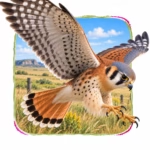
Peregrine Falcon Fact Highlight
From the full animal facts page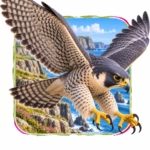
More Animal Comparisons
Pick another animal matchup and keep exploring. Compare appearances, habitats, diets, abilities, and surprising differences.




Make an Animal Story
Send a hovering little kestrel and a high-diving Peregrine into a fast falcon adventure with our free Animal Story Generator.