
Ant vs Termite: Social Insect Comparison
Ants and termites may look similar as they march through busy colonies, but they belong to very different insect groups. Ants are relatives of bees and wasps, with elbowed antennae and pinched waists. Termites are closer to cockroaches, with straighter antennae, broader waists, and a special talent for digesting wood and other plant material.
About Ant
- Type Insect
- Diet Omnivore, herbivore, predator, or scavenger depending on species
- Group Hymenopteran Insect
- Known for Elbowed antennae, narrow waists, pheromone trails, teamwork, and complex colonies
- Special skill Following chemical trails and working together to move food, defend nests, and solve obstacles
About Termite
- Type Insect
- Diet Detritivore or herbivore
- Group Blattodean Insect
- Known for Straight antennae, broad waists, cellulose eating, kings and queens, and mound building
- Special skill Digesting cellulose with help from gut microbes and building nests with controlled temperature and airflow
Ant vs Termite: Quick Answer
Ants have elbowed antennae, narrow waists, and front wings longer than their back wings. Termites have straight or gently curved antennae, broad waists, and two pairs of similar-sized wings. Ants are related to bees and wasps, while termites are closer to cockroaches.
Where Do They Fit?
Follow the branches to see how Ant and Termite are classified and related.
Ant vs Termite: Quick Comparison
| Feature | Ant | Termite |
|---|---|---|
| Animal type | Insect | Insect |
| Animal group | Hymenopteran | Blattodean |
| Known for | Pheromone trails, narrow waists, teamwork, and varied diets | Wood digestion, broad waists, kings and queens, and mound building |
| Antennae | Elbowed | Straight or gently curved |
| Waist | Narrow and pinched | Broad and fairly even |
| Wing shape | Front wings larger than back wings | Four wings of roughly equal length |
| Diet | Varies widely by species | Mainly cellulose-rich plant material |
| Baby stage | Larva | Larva or nymph |
| Adult males | Usually die after mating | Kings may remain with queens |
| Special skill | Chemical trails and cooperative problem-solving | Cellulose digestion and climate-controlled nest building |
How Are Ants and Termites Alike?
- Both ants and termites are insects with six legs, antennae, and hard outer skeletons.
- Both form eusocial colonies containing reproductive adults and non-reproductive workers.
- Both use chemical signals to communicate and organize colony tasks.
- Both may have winged adults that leave the nest to start new colonies.
- Both build nests, care for young, defend their colony, and recycle nutrients through ecosystems.
How Are Ants and Termites Different?
- Ants are relatives of bees and wasps, while termites are closer to cockroaches.
- Ants have elbowed antennae and narrow waists, while termites have straighter antennae and broad waists.
- Winged ants have larger front wings, while winged termites have four wings of similar length.
- Ant colonies usually have queens but no permanent king, while termite colonies may keep both a queen and king.
- Many ants eat varied foods, while termites specialize in cellulose-rich material such as dead wood and grass.
Ant vs Termite Showdown
Colony-insect showdown: The termite wins for maximum individual size because some queens develop enormously swollen abdomens. The ant takes speed and strength, with many species running quickly and carrying loads several times their own body mass. The termite wins stealth by living hidden inside soil or wood. Social life and swimming are ties because both groups vary greatly. The termite wins our weirdest-fact prize for building giant mounds that regulate airflow and temperature without fans or electricity.
Fun Ant vs Termite Facts
Elbowed Antennae vs Straight Antennae
Ant antennae bend sharply at an elbow-like joint near the base. Termite antennae look straighter and are made of bead-like segments, making antenna shape one of the easiest identification clues.
Pinched Waist vs Broad Waist
Ants have a narrow waist with one or two small nodes between the chest and abdomen. Termites have a broader body with no sharply pinched middle.
Unequal Wings vs Matching Wings
A winged ant has front wings noticeably larger than its back wings. A winged termite has four long wings of roughly equal size that may extend far beyond the body.
Wasps’ Cousins vs Cockroaches’ Cousins
Ants evolved within the same insect order as bees and wasps. Genetic and anatomical evidence places termites inside the cockroach order, with wood-eating cockroaches among their closest relatives.
Termite Mounds Can Breathe
Some termite mounds contain tunnels, chambers, and vents that move air as temperature and wind change. This helps control heat, moisture, and gases inside the crowded nest.
Ant vs Termite Quiz
- Which insect has elbowed antennae? Answer: Ant.
- Which insect is more closely related to cockroaches? Answer: Termite.
- Which insect usually has a narrow pinched waist? Answer: Ant.
- What plant material do termites specialize in digesting? Answer: Cellulose.
- Which colony may contain both a long-lived queen and king? Answer: Termite colony.
Ant vs Termite FAQ
What is the main difference between an ant and a termite?
Ants have elbowed antennae, narrow waists, and unequal-sized wings. Termites have straighter antennae, broad waists, and four wings of similar length.
Are termites a type of ant?
No. Ants are hymenopterans related to bees and wasps, while termites belong to the cockroach order Blattodea.
Do all termites eat houses?
No. Most termite species live in natural habitats and recycle dead plants. Only some species damage buildings, usually by feeding on wood or other cellulose materials.
Which is stronger, an ant or a termite?
Ants are generally more famous for carrying heavy loads relative to body size, but termite soldiers can have powerful jaws or chemical defenses.
Why do ants and termites sometimes have wings?
New queens and males grow wings for a mating flight. Afterward, they land, shed or lose their wings, and may begin new colonies.
Animal Words to Know
- Eusocial: Living in a highly organized colony with cooperative care, overlapping generations, and specialized reproductive and worker roles.
- Cellulose: A tough material forming much of a plant’s cell walls.
- Pheromone: A chemical signal used to communicate with members of the same species.
- Alate: A winged reproductive ant or termite.
- Exoskeleton: A hard outer covering that supports and protects an insect’s body.
Ant and Termite Colony Detective Activity
Ant and Termite Colony Detective Activity
Draw a winged ant and winged termite at the same enlarged scale. Give the ant elbowed antennae, a narrow waist, and front wings longer than its hindwings. Give the termite beadlike antennae, a broad waist, and four similar-sized wings. Label antennae, waist, wings, colony, and alate, then note that termites are closer relatives of cockroaches than of ants.
Meet Each Animal
Want the full fact file? Here are quick highlights from each animal’s own facts page.
Ant Fact Highlight
From the full animal facts page
Termite Fact Highlight
From the full animal facts page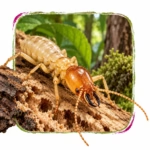
More Animal Comparisons
Pick another animal matchup and keep exploring. Compare appearances, habitats, diets, abilities, and surprising differences.




Make an Animal Story
Turn this ant vs termite comparison into a bustling underground colony adventure with our free Animal Story Generator.
Source notes: References used for this comparison. See more See less
Try Another Matchup
Explore this comparison →