
Armadillo vs Pangolin: Armored Mammal Comparison
Armadillos and pangolins are unusual mammals covered in protective armor, but their armor is made from different materials and they live on different continents. Armadillos have bony plates beneath tough skin and are native to the Americas. Pangolins have overlapping keratin scales and live in Africa and Asia.
About Armadillo
- Type Mammal
- Diet Omnivore or insectivore depending on species
- Group Cingulate
- Known for Bony armor, digging claws, long snout, and insect hunting
- Special skill Digging rapidly and using bony armor to protect the body
About Pangolin
- Type Mammal
- Diet Insectivore
- Group Pholidotan
- Known for Overlapping keratin scales, long sticky tongue, powerful claws, and rolling into a ball
- Special skill Rolling into a tight armored ball and extracting ants and termites with a long sticky tongue
Armadillo vs Pangolin: Quick Answer
Armadillos are American mammals protected by bony plates covered with skin. Pangolins are African and Asian mammals covered in overlapping keratin scales. Both dig for insects and may curl up for protection, but pangolins form a tighter armored ball and have much longer sticky tongues.
Where Do They Fit?
Follow the branches to see how Armadillo and Pangolin are classified and related.
Armadillo vs Pangolin: Quick Comparison
| Feature | Armadillo | Pangolin |
|---|---|---|
| Animal type | Mammal | Mammal |
| Animal group | Cingulate | Pholidotan |
| Known for | Bony armor, digging claws, and insect hunting | Keratin scales, long tongue, and rolling into a ball |
| Main habitat | Grasslands, forests, scrublands, deserts, and farms | Forests, savannas, grasslands, and scrublands |
| Where found | North and South America | Africa and Asia |
| Diet | Insects and other foods depending on species | Mainly ants and termites |
| Baby name | Pup | Pup |
| Armor | Bony plates covered by tough skin | Overlapping keratin scales |
| Defense | Armor, digging, running, or partial curling | Rolling into a tight armored ball |
| Special skill | Powerful digging | Long sticky tongue and full-body curling |
How Are Armadillos and Pangolins Alike?
- Both armadillos and pangolins are mammals with protective body armor.
- Both have long snouts, strong claws, and diets that often include ants or termites.
- Both are usually solitary and active mainly at night.
- Both have poor eyesight compared with their senses of smell.
- Both may curl the body when threatened and have babies called pups.
How Are Armadillos and Pangolins Different?
- Armadillos live in the Americas, while pangolins live in Africa and Asia.
- Armadillo armor contains bony plates, while pangolin scales are made of keratin.
- Most armadillos cannot roll into a complete ball, while pangolins can curl tightly around the soft underside.
- Armadillos often eat a varied diet, while pangolins specialize mainly in ants and termites.
- Armadillos may have many small teeth, while pangolins have no teeth at all.
Armadillo vs Pangolin Showdown
Armored-mammal showdown: The armadillo wins for maximum size, land speed, and swimming because giant armadillos are heavier and many species can paddle or cross water. The pangolin takes strength through its powerful claws and tightly locked defensive ball. Stealth and social life are ties because both are mainly solitary, nocturnal animals. The pangolin wins our weirdest-fact prize because it has no teeth and uses an extremely long sticky tongue to collect insects.
Fun Armadillo vs Pangolin Facts
Bone Armor vs Keratin Scales
An armadillo’s shell contains bony plates called osteoderms covered by tough skin. A pangolin’s overlapping scales are made from keratin, the same protein found in hair, nails, claws, and horns.
Americas vs Africa and Asia
All living armadillos are native to the Americas, with the greatest variety in South America. Pangolins occur naturally in parts of sub-Saharan Africa and South and Southeast Asia.
Partial Curl vs Complete Ball
Three-banded armadillos can close into a nearly complete ball, but most armadillo species cannot. Pangolins can curl tightly and wrap the muscular tail around the body, shielding the softer face and belly.
Teeth vs No Teeth
Armadillos may have numerous simple peg-like teeth, though the number varies by species. Pangolins are toothless and grind insects inside the stomach with swallowed stones and tough internal structures.
Pangolin Tongues Can Be Astonishingly Long
A pangolin’s tongue is anchored deep inside the body near the pelvis and can extend far beyond the mouth. Sticky saliva helps it collect ants and termites from narrow tunnels.
Armadillo vs Pangolin Quiz
- Which animal lives naturally in the Americas? Answer: Armadillo.
- Which animal has keratin scales? Answer: Pangolin.
- Which animal has no teeth? Answer: Pangolin.
- What are baby armadillos and pangolins called? Answer: Pups.
- Can every armadillo roll into a complete ball? Answer: No.
Armadillo vs Pangolin FAQ
What is the main difference between an armadillo and a pangolin?
An armadillo is an American mammal with bony armor plates. A pangolin is an African or Asian mammal with overlapping keratin scales.
Are armadillos and pangolins related?
They are both mammals, but they are not close relatives. Their similar armor evolved separately, an example of convergent evolution.
Which is bigger, an armadillo or a pangolin?
Size depends on species. Giant armadillos are generally heavier than the largest pangolins, while smaller armadillos and pangolins may overlap in size.
Can armadillos and pangolins both roll into balls?
Pangolins can curl into tight protective balls. Only three-banded armadillos can close into a nearly complete ball; most armadillos cannot.
Do armadillos and pangolins eat the same food?
Both may eat ants and termites. Pangolins specialize in these insects, while many armadillos eat a broader diet that may include grubs, beetles, worms, fruit, eggs, and small animals.
Animal Words to Know
- Osteoderm: A bony plate formed within an animal’s skin.
- Keratin: A tough protein found in hair, nails, claws, horns, and pangolin scales.
- Insectivore: An animal that eats mainly insects.
- Convergent evolution: When unrelated animals independently develop similar features.
- Nocturnal: Mainly active at night.
Armadillo and Pangolin Armor Activity
Armadillo and Pangolin Armor Activity
Draw an armadillo and pangolin on the same ground line. Give the armadillo bands of bony armor, strong digging claws, and an American grassland background. Give the pangolin overlapping keratin scales, a long tail, a sticky tongue, and an African or Asian habitat. Label bony armor, scales, claws, tongue, and continent.
Meet Each Animal
Want the full fact file? Here are quick highlights from each animal’s own facts page.
Armadillo Fact Highlight
From the full animal facts page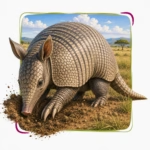
Pangolin Fact Highlight
From the full animal facts page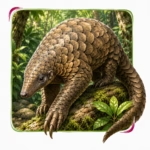
More Animal Comparisons
Pick another animal matchup and keep exploring. Compare appearances, habitats, diets, abilities, and surprising differences.




Make an Animal Story
Turn this armadillo vs pangolin comparison into an armored animal adventure with our free Animal Story Generator.
Source notes: References used for this comparison. See more See less
Try Another Matchup
Explore this comparison →