
Asian Palm Civet vs Indian Grey Mongoose: Small Carnivoran Family Comparison
Asian Palm Civets and Indian Grey Mongooses can both look like long-bodied cat-weasel mixtures, but they belong to different families. The Asian Palm Civet, Paradoxurus hermaphroditus, is a masked, mostly fruit-eating member of Viverridae that climbs trees at night. This page uses the Indian Grey Mongoose, Urva edwardsii, for the broad name mongoose. It belongs to Herpestidae and searches open ground by day for rodents, reptiles, insects and eggs.
About Asian Palm Civet
- Type Living
- Diet Omnivore but mainly a fruit eater; also eats nectar, sap, seeds, insects, eggs and small vertebrates
- Group Small cat-like carnivoran in the civet family Viverridae (Paradoxurus hermaphroditus)
- Known for Dark face mask, gray spotted body, black feet, nearly body-length unringed tail, scent glands and excellent climbing
- Special skill Climbs with grasping hind feet and semi-retractile claws, then spreads swallowed fruit seeds far from the parent tree
About Indian Grey Mongoose
- Type Living
- Diet Omnivore and mainly a hunter; eats rodents, lizards, snakes, insects, eggs, birds, fruit, berries and roots
- Group Ground-hunting carnivoran in the mongoose family Herpestidae (Urva edwardsii; older sources use Herpestes edwardsii)
- Known for Long low body, coarse silver-gray speckled coat, pointed face, small ears, sharp claws, white-tipped tail and quick reactions
- Special skill Uses fast dodges, thick loose fur and some resistance to certain snake toxins when tackling dangerous prey
Asian Palm Civet vs Indian Grey Mongoose: Quick Answer
An Asian Palm Civet is the larger, darker and more tree-loving animal. It wears a face mask, searches for ripe fruit at night and leaves scent messages. An Indian Grey Mongoose is smaller, lower to the ground and active mainly by day. Its coarse silver-gray coat, white-tipped tail and rapid dodges help identify this quick hunter.
Where Do They Fit?
Follow the branches to see how Asian Palm Civet and Indian Grey Mongoose are classified and related.
Asian Palm Civet vs Indian Grey Mongoose: Quick Comparison
| Feature | Asian Palm Civet | Indian Grey Mongoose |
|---|---|---|
| Scientific name | Paradoxurus hermaphroditus | Urva edwardsii; older sources use Herpestes edwardsii |
| Family | Viverridae, the civet family | Herpestidae, the mongoose family |
| Adult mass | Usually around 3 kg | Usually around 1-2 kg |
| Body and coat | Gray, shaggy, spotted or striped body with black legs | Long low body with coarse silver-gray speckled fur |
| Face and tail | Dark face mask and long unringed dark-tipped tail | Pointed face and bushy tail with a pale or white tip |
| Active time | Night | Day, especially early morning and evening |
| Movement | Climbs trees well and also walks on the ground | Runs and hunts mainly on the ground; rarely climbs trees |
| Main food | Mostly ripe fruit, plus small animals and insects | Mostly rodents, reptiles, insects and eggs, plus some plants |
| Social life | Mostly solitary and communicates strongly through scent | Usually solitary or in pairs and uses scents and calls |
| Ecosystem job | Spreads many forest seeds | Controls many rodents, insects and other small prey |
How Are Asian Palm Civets and Indian Grey Mongooses Alike?
- Both are small Asian mammals in the order Carnivora.
- Both have long bodies, short legs, pointed muzzles, sharp claws and long tails.
- Both are omnivores that eat small animals, insects and some plant foods.
- Both are usually solitary and use scent marks to communicate.
- Both adapt to farms, gardens and other places near people as well as natural habitat.
How Are Asian Palm Civets and Indian Grey Mongooses Different?
- The Asian Palm Civet belongs to Viverridae, while the Indian Grey Mongoose belongs to Herpestidae.
- A palm civet has a dark face mask and body spots; the mongoose has an evenly speckled gray coat and pale tail tip.
- Palm civets are mostly active at night, while Indian Grey Mongooses search mainly by day.
- Palm civets climb trees often, while Indian Grey Mongooses spend most of their hunting time on the ground.
- Fruit dominates the palm civet’s diet, while live prey dominates the mongoose’s diet.
Asian Palm Civet vs Indian Grey Mongoose Adaptation Showdown
- Size – Asian Palm Civet: Its typical mass near 3 kg is above the Indian Grey Mongoose’s usual range around 1-2 kg.
- Speed – Indian Grey Mongoose: Its quick ground trot, rapid turns and strike-dodging reactions are central hunting adaptations.
- Strength – Asian Palm Civet: Its heavier body gives it more total pulling power, especially while gripping branches.
- Stealth – Asian Palm Civet: Dark nights, tree cover and a quiet solitary routine help this masked forager stay hidden.
- Social – Tie: Both usually search alone and rely heavily on scent rather than permanent social groups.
- Swimming – Tie: Neither animal is a swimming specialist, and fair matched swimming evidence is unavailable.
- Weirdest – Indian Grey Mongoose: It may hurl a large egg backward between its hind legs against a hard object to crack the shell.
Fun Asian Palm Civet vs Indian Grey Mongoose Facts
A Masked Night Climber
An Asian Palm Civet searches trees after dark using large eyes, grasping feet and semi-retractile claws.
A Forest Seed Courier
The civet swallows fruit and drops many seeds hundreds of metres away, helping new plants grow.
Long-Lasting Smell Notes
Asian Palm Civets drag a scent gland across surfaces, leaving chemical messages that remain after they leave.
The Egg-Throwing Trick
A mongoose may toss a large egg backward between its legs so it cracks against a rock or another hard surface.
Snake Skill, Not Invincibility
An Indian Grey Mongoose depends on fast dodges, thick loose fur and partial resistance to some toxins, but a snake can still injure it.
Asian Palm Civet vs Indian Grey Mongoose Quiz
Which animal is mostly active at night? A) Asian Palm Civet B) Indian Grey Mongoose C) Both only sleep Answer: A) Asian Palm Civet
Which animal has a pale-tipped tail? A) Asian Palm Civet B) Indian Grey Mongoose C) Neither Answer: B) Indian Grey Mongoose
What food does the palm civet prefer? A) Ripe fruit B) Grass only C) Fish only Answer: A) Ripe fruit
Which animal hunts mainly on the ground by day? A) Asian Palm Civet B) Indian Grey Mongoose C) Both live only in water Answer: B) Indian Grey Mongoose
Are civets and mongooses in the same family? A) Yes B) No C) Only as babies Answer: B) No
Asian Palm Civet vs Indian Grey Mongoose FAQ
Is an Asian Palm Civet a Mongoose?
No. It belongs to the civet family Viverridae, while mongooses belong to Herpestidae. The two families are related but distinct.
Which Mongoose does this page compare?
It uses the Indian Grey Mongoose. Other mongoose species differ in size, color, habitat and social life.
Is an Asian Palm Civet a Cat?
No. Its face may look cat-like and it is sometimes called a civet cat, but it is not a member of the cat family.
Are Indian Grey Mongooses immune to snake venom?
Not completely. Their toxin-resistant receptors may reduce the effect of some venoms, while speed, timing, thick fur and loose skin also help.
Why are Asian Palm Civets important to forests?
They carry swallowed fruit seeds away from parent trees and leave them in new places where some can germinate.
Animal Words to Know
- Carnivora: The mammal order containing cats, dogs, bears, civets, mongooses and their relatives.
- Frugivore: An animal that eats a large amount of fruit.
- Nocturnal: Active mainly at night.
- Seed dispersal: Movement of seeds away from the plant that produced them.
- Scent mark: A smell left by an animal to send information to others.
Map Two Small-Carnivore Shifts
Map Two Small-Carnivore Shifts
Draw the same Asian habitat twice. In the night picture, place a masked Asian Palm Civet on a fruiting branch and draw arrows showing seeds moving away. In the day picture, place a speckled Indian Grey Mongoose trotting through grass toward an insect. Add a moon or sun and three identification clues to each scene.
Meet Each Animal
Want the full fact file? Here are quick highlights from each animal’s own facts page.
Asian Palm Civet Fact Highlight
From the full animal facts page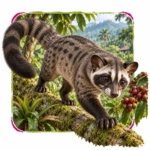
Indian Grey Mongoose Fact Highlight
From the full animal facts page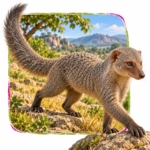
More Animal Comparisons
Pick another animal matchup and keep exploring. Compare appearances, habitats, diets, abilities, and surprising differences.
Make an Animal Story
Create a nighttime adventure about a fruit-finding Asian Palm Civet and a speedy Indian Grey Mongoose!
Source notes: References used for this comparison. See more See less
Try Another Matchup
Explore this comparison →