
Badger vs Wolverine: Mustelid Comparison
Badgers and wolverines are sturdy members of the weasel family, Mustelidae, but they are built for different landscapes. This comparison uses the American badger as the representative badger because “badger” covers several groups. The American badger is a low, broad digging specialist of open country. The wolverine is larger, longer-legged, and adapted for roaming enormous snowy forests, tundra, and mountains.
About Badger
- Type Mammal
- Diet Omnivore
- Group Mustelid
- Known for Low stocky body, facial stripes, enormous digging claws, burrows, grassland hunting, and underground escape
- Special skill Rapid digging, pursuing burrowing prey underground, creating dens, and disappearing into loose soil
About Wolverine
- Type Mammal
- Diet Omnivore
- Group Mustelid
- Known for Large powerful mustelid, shaggy dark coat, broad snow feet, long-distance travel, scavenging, and mountain wilderness
- Special skill Traveling long distances across snow, climbing, caching food, scavenging frozen carcasses, and surviving severe cold
Badger vs Wolverine: Quick Answer
An American badger is a short-legged burrower with facial stripes and long front claws. A wolverine is a larger, shaggy mustelid with broad feet, powerful jaws, and exceptional endurance in cold northern wilderness. Both are mostly solitary, strong for their size, and related to otters, weasels, and martens.
Where Do They Fit?
Follow the branches to see how Badger and Wolverine are classified and related.
Badger vs Wolverine: Quick Comparison
| Feature | American Badger | Wolverine |
|---|---|---|
| Animal type | Mammal | Mammal |
| Family | Mustelidae | Mustelidae |
| Scientific name | Taxidea taxus | Gulo gulo |
| Typical size | Smaller, lower, and lighter | Larger, taller, and heavier |
| Body shape | Broad, flattened body with short legs | Stocky bear-like body with longer legs and bushy tail |
| Coat | Grayish or brownish with bold black-and-white facial markings | Dark shaggy fur with pale side bands in many individuals |
| Main habitat | Prairies, grasslands, scrublands, and deserts | Boreal forest, tundra, alpine mountains, and snowy wilderness |
| Main movement skill | Fast, forceful digging | Long-distance snow and mountain travel |
| Food | Burrowing mammals, insects, reptiles, birds, eggs, carrion, and some plant foods | Carrion, mammals, birds, eggs, insects, berries, and cached food |
| Baby name | Cub | Kit |
| Home | Self-dug underground burrow | Large territory with dens in snow, rock, or sheltered ground |
How Are Badgers and Wolverines Alike?
- Both American badgers and wolverines are mammals in the family Mustelidae.
- Both have muscular bodies, strong jaws, non-retractable claws, scent glands, and thick fur.
- Both are usually solitary and defend or regularly use large areas relative to their needs.
- Both hunt and scavenge, helping control prey and recycle nutrients.
- Females of both species use protected dens while raising their young.
How Are Badgers and Wolverines Different?
- American badgers are specialized for digging underground, while wolverines specialize in long-distance travel over snow and rugged terrain.
- Wolverines are generally larger and heavier than American badgers.
- Badgers have flattened bodies and bold facial stripes, while wolverines have shaggy dark coats, bushy tails, and pale side bands.
- American badgers favor open grasslands and dry country, while wolverines need extensive northern forests, tundra, or mountain wilderness.
- Badger babies are commonly called cubs, while young wolverines are usually called kits.
Badger vs Wolverine Showdown
Mustelid showdown: The wolverine wins size, overland speed, total strength, and the weirdest-fact prize for crossing vast snowy territories and finding food beneath deep snow. The badger wins stealth around underground prey because it can rapidly vanish into soil and attack burrows from below. Social behavior and swimming are ties because both are usually solitary and neither is an aquatic specialist. These categories compare adaptations, not combat.
Fun Badger vs Wolverine Facts
Underground Digger vs Wilderness Traveler
American badgers use huge curved front claws and powerful shoulders to excavate soil, chase rodents, and create shelters. Wolverines have broad feet, strong legs, and enormous stamina for crossing snowfields, forests, and mountain passes.
Low and Flat vs Taller and Shaggy
A badger’s broad body and short legs help it brace against soil and squeeze through tunnels. A wolverine stands taller and looks somewhat bear-like, with dense shaggy fur, a large head, and a long bushy tail.
Grassland Burrow vs Snowy Range
American badgers often live where soil can be excavated and burrowing prey is abundant. Wolverines occur at low densities across remote northern and alpine landscapes where individuals may travel remarkable distances to locate food.
Different Food-Finding Tools
Badgers dig out ground squirrels, prairie dogs, pocket gophers, and other underground prey. Wolverines hunt some animals but also use keen senses and powerful jaws to locate, tear, and consume frozen or hidden carrion.
Wolverines Can Smell Food Beneath Snow
A wolverine’s strong sense of smell can help it locate carcasses or cached food hidden by deep snow. It may dig through snow to reach food that other animals cannot easily detect or uncover.
Badger vs Wolverine Quiz
- Which animal is especially adapted for digging? Answer: The American badger.
- Which animal is generally larger? Answer: The wolverine.
- What family contains both animals? Answer: Mustelidae.
- What is a young wolverine called? Answer: A kit.
- Which animal commonly travels through remote snowy mountains and forests? Answer: The wolverine.
Badger vs Wolverine FAQ
What is the main difference between a badger and a wolverine?
An American badger is a low, short-legged digging specialist of open country. A wolverine is a larger, longer-legged mustelid adapted for long-distance travel in cold forests, tundra, and mountains.
Are badgers and wolverines related?
Yes. Both belong to Mustelidae, along with otters, weasels, mink, martens, and ferrets.
Which is bigger, a badger or a wolverine?
Wolverines are generally larger and heavier than American badgers, though exact size varies with sex, age, individual, region, and food availability.
Can wolverines dig?
Yes. Wolverines can dig through snow or soil and females create or use protected dens, but their bodies are not as specialized for rapid underground excavation as an American badger’s.
Is every animal called a badger closely related?
No. Badger is a broad common name applied to several stocky digging mammals. This comparison specifically uses the American badger, Taxidea taxus.
Animal Words to Know
- Mustelid: A member of the weasel family Mustelidae.
- Fossorial: Adapted for digging and spending substantial time underground.
- Carrion: The remains of an animal used as food by another animal.
- Cache: Food stored in a hidden place for later use.
- Home range: The area an animal regularly travels while finding food, shelter, and mates.
Badger and Wolverine Habitat Activity
Badger and Wolverine Habitat Activity
Draw an American badger beside a larger wolverine. Give the badger a low flat body, short legs, facial stripes, and long digging claws beside a prairie burrow. Give the wolverine shaggy dark fur, pale side bands, broad paws, and a bushy tail in a snowy mountain setting. Label mustelid, size, claws, paws, burrow, and snow travel.
Meet Each Animal
Want the full fact file? Here are quick highlights from each animal’s own facts page.
Badger Fact Highlight
From the full animal facts page
Wolverine Fact Highlight
From the full animal facts page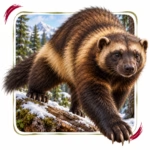
More Animal Comparisons
Pick another animal matchup and keep exploring. Compare appearances, habitats, diets, abilities, and surprising differences.





Make an Animal Story
Turn this badger vs wolverine comparison into an underground-and-mountain adventure with our free Animal Story Generator.
Source notes: References used for this comparison. See more See less
Try Another Matchup
Explore this comparison →