
Barn Owl vs Great Horned Owl for Kids
The American Barn Owl and Great Horned Owl both hunt after dark in the Americas, but they belong to different owl families. The American Barn Owl, Tyto furcata, is pale and lanky with a heart-shaped face and dark eyes. The Great Horned Owl, Bubo virginianus, is much larger, mottled brown and topped with feather tufts. The Barn Owl specializes in finding small mammals by sound, while the Great Horned Owl takes an unusually wide range of prey.
About American Barn Owl
- Type Living
- Diet Carnivore; mainly mice, rats, voles, lemmings, shrews and other small mammals
- Group Medium-sized barn owl in family Tytonidae (Tyto furcata), split from the wider Barn Owl group in 2024
- Known for A white heart-shaped face, dark eyes, pale underside, long legs and a raspy screech instead of a hoot
- Special skill Uses an uneven ear arrangement and heart-shaped facial disc to pinpoint prey by sound in complete darkness
About Great Horned Owl
- Type Living
- Diet Carnivore; eats mammals, birds, reptiles, frogs, fish and invertebrates from tiny insects to large prey
- Group Large true owl in family Strigidae (Bubo virginianus)
- Known for Tall feather ear tufts, yellow eyes, mottled brown feathers, a white throat and deep hoots
- Special skill Uses extremely strong talons to overpower prey larger than most other North American owls can handle
Quick Answer
The American Barn Owl is about 32–40 cm long and weighs 400–700 g. It has a white heart-shaped face, black eyes, no ear tufts and a harsh screech. The Great Horned Owl is about 46–63 cm long and weighs 0.91–2.5 kg. It has yellow eyes, tall feather tufts and a deep hoot. Both fly quietly at night, but the Great Horned Owl is much heavier and stronger.
American Barn Owl vs Great Horned Owl: Quick Comparison
| Feature | American Barn Owl | Great Horned Owl |
|---|---|---|
| Scientific name | Tyto furcata | Bubo virginianus |
| Owl family | Tytonidae, the barn-owl family | Strigidae, the true-owl family |
| Adult size | About 32–40 cm long, 400–700 g, with a 100–125 cm wingspan | About 46–63 cm long, 0.91–2.5 kg, with a 101–145 cm wingspan |
| Face and eyes | White heart-shaped facial disc, dark eyes and no ear tufts | Rounded reddish or gray facial disc, yellow eyes and tall feather ear tufts |
| Plumage | Pale below and cinnamon-gray above, with long rounded wings and long legs | Mottled gray-brown with barred underparts, a white throat and broad rounded wings |
| Voice | Harsh raspy screeches, hisses and other calls rather than classic hoots | Deep stuttering hoots, plus hisses, screams and bill claps |
| Main food | Mostly small night-active mammals such as mice, voles, rats and shrews | Mammals and birds of many sizes, plus reptiles, frogs, fish and invertebrates |
| Hunting method | Floats low over open ground and pinpoints tiny sounds with its facial disc and uneven ears | Watches from a perch, then strikes with extremely powerful feet and talons |
| Nest | A tree hole, cave, cliff opening, barn, steeple or nest box | Usually another animal’s old stick nest, but also a cavity, ledge, building or platform |
| Typical setting | Open fields with a safe dark cavity nearby | Almost any habitat that combines a nest site, cover and open hunting ground |
How Are Barn Owls and Great Horned Owls Alike?
- Both are birds of prey that hunt mainly at night.
- Both use soft feathers to approach prey with very little flight noise.
- Both have hooked bills, strong talons, excellent low-light vision and sensitive hearing.
- Both swallow small prey whole and later cough up pellets containing fur and bones.
- Both form breeding pairs and raise helpless, white-downy owlets.
How Are Barn Owls and Great Horned Owls Different?
- The American Barn Owl has a heart-shaped face and dark eyes; the Great Horned Owl has a rounder face and yellow eyes.
- The Barn Owl has no ear tufts, while the Great Horned Owl has two tall feather tufts.
- The Great Horned Owl is much larger and heavier than the American Barn Owl.
- The Barn Owl makes raspy screeches, while the Great Horned Owl is famous for deep hoots.
- The Barn Owl focuses on small mammals in open fields, while the Great Horned Owl takes a much wider prey range.
Barn Owl vs Great Horned Owl Showdown
- Size – Great Horned Owl: It can weigh more than three times as much as a large American Barn Owl.
- Speed – Tie: Both are agile aerial hunters, but no matched flight test gives one a dependable speed win.
- Strength – Great Horned Owl: Its larger body and extremely powerful talons let it take much heavier prey.
- Stealth – Tie: Both use soft flight feathers and sensitive senses to surprise prey in darkness.
- Social – Tie: Each forms a breeding pair but normally hunts alone outside the nest area.
- Swimming – Tie: Neither is shaped for swimming or an aquatic way of life.
- Weirdest – American Barn Owl: Its heart-shaped face works like a sound collector that helps it catch mice in complete darkness.
Fun Barn Owl vs Great Horned Owl Facts
A Face Like a Sound Dish
The American Barn Owl’s stiff heart-shaped facial feathers guide faint sounds toward its ears.
Not Every Owl Hoots
American Barn Owls make long raspy screeches and hisses rather than the storybook hoot.
Feather Tufts, Hidden Ears
The Great Horned Owl’s horns are display feathers; its real ears hide at the sides of the head.
A Cup Made From Pellets
A female American Barn Owl may shred her own dry pellets with her feet to make a simple nest cup.
A Powerful Grip
A Great Horned Owl’s closed talons need about 28 pounds of force to pull open.
Barn Owl vs Great Horned Owl Quiz
Which owl has a heart-shaped face? A) American Barn Owl B) Great Horned Owl C) Both Answer: A) American Barn Owl
Which owl is much heavier? A) American Barn Owl B) Great Horned Owl C) They are equal Answer: B) Great Horned Owl
What color are a Barn Owl’s eyes? A) Dark B) Yellow C) Blue Answer: A) Dark
Which owl makes deep hoots? A) American Barn Owl B) Great Horned Owl C) Neither Answer: B) Great Horned Owl
What do both owls produce after meals? A) Pellets B) Feathers C) Nests Answer: A) Pellets
Barn Owl vs Great Horned Owl FAQ
Is a Barn Owl a Great Horned Owl?
No. They belong to different owl families and differ in face shape, eye color, voice, size and hunting style.
Why Is It Called the American Barn Owl?
Ornithologists split the old worldwide Barn Owl group into American, Eastern and Western species in 2024. This page uses the American species for the North American comparison.
Which Owl Is Bigger?
The Great Horned Owl. It reaches 2.5 kg, while an American Barn Owl usually weighs only 400–700 g.
Do Barn Owls Hoot?
Not in the familiar deep way. American Barn Owls use raspy screeches, hisses and other sounds.
Can These Owls Live in the Same Area?
Yes. Both may use farmland or suburbs, but different nest sites and hunting habits help them use the landscape differently. A Great Horned Owl may also prey on smaller owls.
Animal Words to Know
- Facial disc: A circle or heart of feathers that directs sound toward an owl’s ears.
- Nocturnal: Mainly active at night.
- Pellet: A compact lump of fur, feathers and bones coughed up after an owl digests a meal.
- Raptor: A bird that hunts animals using a hooked bill and strong feet.
- Taxonomy: The science of naming and grouping living things.
Test Two Owl Sound Collectors
Test Two Owl Sound Collectors
Cut one paper heart-shaped facial disc and one round facial disc. Hold each behind a cardboard owl head and whisper from different directions while a partner closes their eyes. This model cannot copy real owl hearing, but it helps show how feathers can guide sound toward hidden ears.
Meet Each Animal
Want the full fact file? Here are quick highlights from each animal’s own facts page.
American Barn Owl Fact Highlight
From the full animal facts page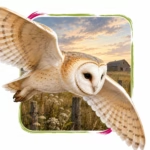
Great Horned Owl Fact Highlight
From the full animal facts page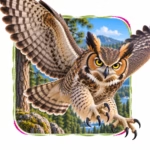
More Animal Comparisons
Pick another animal matchup and keep exploring. Compare appearances, habitats, diets, abilities, and surprising differences.






Make an Animal Story
Create a night-flight story about a listening Barn Owl and a powerful Great Horned Owl!