
Bison vs Cow: Wild vs Domestic Bovid Comparison
Bison and cows are both large hoofed herbivores in the bovid family, but one is a powerful wild grassland animal and the other is domesticated cattle. Bison have massive shoulder humps, shaggy front coats, and compact hindquarters. Cows vary enormously by breed and have been shaped by people for milk, meat, work, and life on farms.
About Bison
- Type Mammal
- Diet Herbivore
- Group Wild Bovid
- Known for Huge shoulder hump, shaggy front coat, curved horns, powerful build, and grassland herds
- Special skill Using a massive head and shoulder hump to push through snow and reach buried grass
About Cow
- Type Mammal
- Diet Herbivore
- Group Domestic Cattle
- Known for Milk production, grazing, chewing cud, raising calves, and life on farms and ranches
- Special skill Turning tough grass into energy through rumination in a four-compartment stomach
Bison vs Cow: Quick Answer
Bison are wild bovids with huge shoulder humps, shaggy forequarters, short curved horns, and bodies built for open grasslands and cold weather. A cow is an adult female domestic cattle animal. Cows are generally more varied in color and body shape and depend on human management.
Where Do They Fit?
Follow the branches to see how Bison and Cow are classified and related.
Bison vs Cow: Quick Comparison
| Feature | Bison | Cow |
|---|---|---|
| Animal type | Wild mammal | Domestic mammal |
| Animal group | Wild bovid | Domestic cattle |
| Known for | Shoulder hump, shaggy coat, horns, and powerful herds | Milk, calves, grazing, rumination, and farm life |
| Main habitat | Prairies, plains, grasslands, and open woodlands | Pastures, ranches, farms, barns, and managed grasslands |
| Where found | North America and Europe | Worldwide through domestication |
| Diet | Herbivore | Herbivore |
| Baby name | Calf | Calf |
| Body shape | Massive front end with a high shoulder hump | More even body shape, varying greatly by breed |
| Coat | Shaggy on the head, shoulders, and forelegs | Usually shorter and smoother, depending on breed |
| Special skill | Pushing through snow and surviving harsh weather | Producing milk and thriving under human care |
How Are Bison and Cows Alike?
- Both bison and cows are mammals in the bovid family.
- Both are herbivores, ruminants, and even-toed hoofed animals.
- Both have cloven hooves, horns in many individuals, and babies called calves.
- Both live socially in herds and communicate with sounds, scents, touch, and body postures.
- Both spend much of the day grazing, resting, and chewing cud.
How Are Bison and Cows Different?
- Bison are wild animals, while cows are domesticated female cattle.
- Bison have a huge shoulder hump and shaggy forequarters, while most cows have a more even body shape and shorter coats.
- Bison are generally faster and more athletic over open ground.
- Cows vary much more in color, size, milk production, horn shape, and body form because of selective breeding.
- Bison survive harsh weather without farm shelter, while domestic cows usually depend on human care and management.
Bison vs Cow Showdown
Wild-versus-domestic showdown: The bison wins for typical size, speed, strength, and outdoor stealth because its body is built for wild grasslands, harsh weather, and sudden bursts of movement. Social life and swimming are ties because both live in herds and can cross water. The bison wins our weirdest-fact prize because it can use its enormous head like a snowplow to sweep aside snow and uncover grass.
Fun Bison vs Cow Facts
Wild Bovid vs Domestic Cattle
Bison evolved as wild grazers in open landscapes. Cows are adult female domestic cattle whose ancestors were tamed and selectively bred by humans over thousands of years for milk, meat, labor, temperament, and other traits.
Shoulder Hump vs Even Back
A bison’s tall shoulder hump is supported by long spinal bones and powerful muscles that move its heavy head. Most cows lack this dramatic hump, although zebu cattle have a different fatty-muscular hump over the shoulders.
Shaggy Coat vs Breed Variety
Bison have dense woolly underfur and long shaggy hair over the head, neck, shoulders, and front legs. Cow coats vary from sleek to shaggy and may be black, white, red, brown, spotted, or patterned depending on breed.
Both Chew Cud
Bison and cows are ruminants with four stomach compartments. They swallow plant food, later bring partly digested material called cud back to the mouth, chew it again, and send it through the digestive system.
Bison Use Their Heads as Snowplows
In winter, bison swing their massive heads from side to side to clear snow and reach buried grasses. Their strong necks, shoulder muscles, and thick skulls make this demanding feeding method possible.
Bison vs Cow Quiz
- Which animal is wild? Answer: Bison.
- Which animal is an adult female domestic cattle animal? Answer: Cow.
- What are baby bison and cows called? Answer: Calves.
- Which animal has a large shoulder hump and shaggy forequarters? Answer: Bison.
- What do both animals rechew after swallowing grass? Answer: Cud.
Bison vs Cow FAQ
What is the main difference between a bison and a cow?
A bison is a wild bovid with a large shoulder hump, shaggy forequarters, and a body adapted to open grasslands. A cow is an adult female domestic cattle animal shaped by selective breeding and human care.
Which is bigger, a bison or a cow?
Adult bison are generally larger, heavier, and more powerfully built than most cows, although very large cattle breeds may overlap with smaller bison.
Are bison and cows the same species?
No. They are related bovids but belong to different species and genera. American bison are Bison bison, while common domestic cattle are usually Bos taurus or Bos indicus.
Can bison and cattle have babies together?
Yes. They can sometimes produce hybrids commonly called beefalo or cattalo, although breeding and fertility can be complicated.
Are bison dangerous?
Yes. Bison are powerful, fast wild animals that may charge when approached, crowded, or disturbed. People should keep a large distance and follow wildlife rules.
Animal Words to Know
- Bovid: A hoofed mammal in the family containing cattle, bison, buffalo, goats, sheep, and antelopes.
- Ruminant: A herbivore that regurgitates and rechews partly digested food called cud.
- Domesticated: Changed over generations through breeding and life under human care.
- Cloven hoof: A hoof divided into two main toes.
- Selective breeding: Choosing animals with desired traits to produce the next generation.
Bison and Cow Bovid Activity
Bison and Cow Bovid Activity
Draw an American bison beside an adult female domestic cow on the same ground line. Give the bison a high shoulder hump, shaggy front coat, beard, and curved horns. Give the cow a smoother coat, udder, pasture, and calf. Label bovid, hump, coat, domesticated, and herd.
Meet Each Animal
Want the full fact file? Here are quick highlights from each animal’s own facts page.
Bison Fact Highlight
From the full animal facts page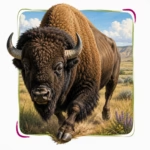
Cow Fact Highlight
From the full animal facts page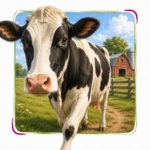
More Animal Comparisons
Pick another animal matchup and keep exploring. Compare appearances, habitats, diets, abilities, and surprising differences.


Make an Animal Story
Turn this bison vs cow comparison into a thundering grassland adventure with our free Animal Story Generator.
Source notes: References used for this comparison. See more See less
Try Another Matchup
Explore this comparison →