
Bison vs Musk Ox: Living Northern Bovid Species Comparison
American bison and musk oxen are shaggy, horned, plant-eating ruminants in the cattle family Bovidae, but their resemblance can be misleading. The American bison is the much larger, faster North American grazer with a huge shoulder hump. The musk ox is a compact Arctic specialist more closely grouped with sheep and goats than with true cattle. Its soft qiviut undercoat traps heat, and its herd can form a defensive line or circle around calves.
About Bison
- Type Mammal
- Diet Herbivorous ruminant and mainly a grazer; grasses and sedges dominate, with forbs, leaves, twigs, and other browse used depending on habitat and season
- Group American Bison (Bison bison; Family Bovidae)
- Known for North America’s largest land mammal, with massive head, tall muscular shoulder hump, deep chest, short hindquarters, dark shaggy forequarters, shorter rear coat, beard, tufted tail, cloven hooves, and short permanent upcurved horns on both sexes
- Special skill Using the high shoulder hump and powerful neck muscles to swing the head through snow, then running and maneuvering far faster than its bulk suggests
About Musk Ox
- Type Mammal
- Diet Herbivorous ruminant; grasses, sedges, forbs, reeds, horsetails, willows, mosses, lichens, roots, and other tundra plants depending on season and snow
- Group Musk Ox (Ovibos moschatus; Family Bovidae, Subfamily Caprinae)
- Known for Stocky Arctic ruminant with compact body, slight shoulder hump, very short tail, short strong legs, dark skirt-like guard hair, cream saddle patch, extraordinarily soft insulating qiviut undercoat, broad forehead horn bosses in bulls, and down-curving then upturned permanent horns on both sexes
- Special skill Surviving exposed Arctic winters through compact shape and qiviut, then facing danger as a coordinated horn-out line or circle with calves protected inside
Bison vs Musk Ox: Quick Answer
An American bison is larger and faster, with bulls commonly reaching about 2,000 pounds and an enormous shoulder-and-neck muscle system that helps clear snow. A musk ox usually weighs about 400–800 pounds and relies on compact proportions, long guard hairs, and an exceptionally insulating undercoat called qiviut. Both sexes of both species grow permanent horns, but a musk ox’s horns sweep down beside the face and adult bulls develop a thick forehead boss.
Where Do They Fit?
Follow the branches to see how Bison and Musk Ox are classified and related.
Bison vs Musk Ox: Quick Comparison
| Feature | American Bison | Musk Ox |
|---|---|---|
| Scientific name | Bison bison | Ovibos moschatus |
| Closest familiar group | Bovine relative within Bovidae | Caprine relative grouped with sheep and goats |
| Adult male mass | Often up to about 2,000–2,200 lb | Usually about 600–800 lb in large bulls |
| Body profile | Very tall muscular shoulder hump and smaller hindquarters | Compact low body with short legs and slight hump |
| Coat | Shaggy head, shoulders, and forelegs with shorter rear coat | Long skirt-like guard hairs over dense soft qiviut |
| Horns | Short, upcurved, permanent horns on both sexes | Broad-based horns sweeping down then up on both sexes |
| Habitat | Prairie, grassland, meadow, and some boreal openings | Open Arctic tundra and windswept shallow-snow areas |
| Winter feeding | Uses head and shoulder power to sweep snow aside | Uses smell and hooves or head but avoids persistently deep snow |
| Defense | Size, speed, horns, group vigilance, and protective cows | Coordinated horn-out line or circle with calves sheltered |
| Top speed | About 35 mph in documented park guidance | Capable of a short gallop but usually conserves energy |
How Are Bison and Musk Oxen Alike?
- Both are even-toed hoofed mammals in Bovidae and digest tough plants as ruminants.
- Both males and females grow permanent keratin-covered horns rather than annually shed antlers.
- Both have cloven hooves, heavy heads, thick winter coats, shaggy hair, strong senses, and calves that stay close to protective adults.
- Both eat grasses, sedges, forbs, and some woody plants, with menus changing by season and location.
- Both are social, survive freezing northern winters without hibernating, and have important ecological and cultural relationships with people.
How Are Bison and Musk Oxen Different?
- An American bison can be two to four times heavier than a musk ox and has a much taller shoulder hump.
- Bison are bovine relatives; musk oxen belong to the caprine branch with sheep and goats.
- Bison evolved for prairies, grasslands, and some boreal openings, while musk oxen specialize in open Arctic tundra.
- Bison have short upcurved horns; musk ox horns sweep downward and outward before curving upward, and mature bulls have a thick horn boss across the forehead.
- A bison’s long coat is concentrated over the front of the body; musk ox guard hairs can hang nearly to the ground over a qiviut undercoat.
- Bison can sprint around 35 miles per hour; musk oxen usually conserve energy and rely more heavily on a coordinated defensive formation.
Bison vs Musk Ox Adaptation Showdown
Shaggy-grazer adaptation showdown: American bison wins size, speed, and whole-body strength through its enormous mass, powerful hump, and documented sprinting ability. Stealth is a tie because neither giant depends primarily on hiding. Musk ox wins social defense for its coordinated horn-out formation and weirdest fact for qiviut, an undercoat finer and far warmer by weight than ordinary sheep wool. Bison wins swimming because it is a documented strong swimmer, although neither animal is aquatic. These categories compare adaptations, not combat.
Fun Bison vs Musk Ox Facts
A Musk Ox Is Not a True Ox
Despite its English name and cattle-like silhouette, Ovibos moschatus sits on the caprine branch of Bovidae with sheep, goats, and takins. The American bison sits on the bovine branch. Names based on first impressions can hide evolutionary relationships that anatomy and genetics reveal more clearly.
Qiviut Hides Beneath the Shag
The long outer guard hairs block wind and blowing snow, while a soft undercoat called qiviut traps insulating air close to the skin. Musk oxen naturally shed qiviut in spring, leaving tufts on tundra vegetation. Arctic communities collect and spin this exceptionally warm lightweight fiber without needing to shear a wild animal.
A Bison Hump Powers a Snowplow
The famous hump is supported by elongated vertebral spines and massive shoulder and neck muscles. A bison swings its heavy head from side to side to expose buried grass beneath snow. The hump is muscle and bone architecture, not a camel-like fat or water-storage tank.
Both Keep Horns Instead of Antlers
Bison and musk oxen grow horns with a bony core covered by keratin, the material in human fingernails. Horns normally remain and keep growing rather than dropping each winter. Antlers, such as those of moose and caribou, are solid bone and are shed after a seasonal cycle.
The Musk Ox Circle Protects Calves
When several threats surround a musk ox herd, adults may stand shoulder to shoulder facing outward while calves shelter within. Against one threat they may form a line instead. The formation works only when animals stay together, so people and dogs must remain far away and never force a herd to run or split.
Bison vs Musk Ox Quiz
- Which animal is larger? Answer: The American bison.
- What is qiviut? Answer: The musk ox’s very soft insulating undercoat.
- Which familiar animals are closer relatives of musk oxen? Answer: Sheep and goats.
- How does a bison’s hump help in winter? Answer: Powerful shoulder and neck muscles help swing the head through snow.
- How may musk oxen protect calves from threats? Answer: Adults form a horn-out line or circle around them.
Bison vs Musk Ox FAQ
Which is bigger, a bison or musk ox?
An American bison is much bigger. A bull may reach about 2,000–2,200 pounds, while a mature bull musk ox is commonly around 600–800 pounds.
Is a musk ox a type of bison?
No. Both belong to Bovidae, but musk oxen are caprines related to sheep and goats, while bison are bovines.
Do bison and musk oxen have horns or antlers?
Both have permanent horns. Males and females grow them, although size and shape differ by sex and species.
Which is faster?
The American bison. Park guidance documents speeds around 35 miles per hour, while musk oxen can gallop briefly but normally conserve energy.
Do musk oxen smell musky?
The English name refers to an odor associated with breeding males, but the animal is neither a true ox nor covered in musk-producing wool.
Animal Words to Know
- Qiviut: The extremely soft, warm undercoat beneath a musk ox’s long guard hairs.
- Ruminant: A hoofed plant eater that ferments food and rechews cud.
- Horn boss: The thick joined base of an adult bull musk ox’s horns across its forehead.
- Caprine: A member of the sheep-and-goat branch of Bovidae.
- Wallow: A shallow dusty or muddy depression where an animal rolls or rubs.
Bison and Musk Ox Drawing Activity
Bison and Musk Ox Drawing Activity
Draw an American bison and a musk ox at the same scale. Make the bison much larger, with a high shoulder hump, massive head, beard, and shaggy forequarters on a prairie. Give the musk ox a low compact body, long hanging coat, and downward-curving horns on Arctic tundra. Label hump, horns, coat, herd, prairie, and tundra.
Meet Each Animal
Want the full fact file? Here are quick highlights from each animal’s own facts page.
Bison Fact Highlight
From the full animal facts page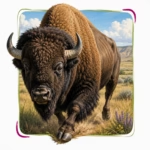
Musk Ox Fact Highlight
From the full animal facts page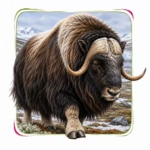
More Animal Comparisons
Pick another animal matchup and keep exploring. Compare appearances, habitats, diets, abilities, and surprising differences.




Make an Animal Story
Turn this bison vs musk ox comparison into a snowy prairie-and-tundra adventure with our free Animal Story Generator.
Source notes: References used for this comparison. See more See less
Try Another Matchup
Explore this comparison →