
Blue Whale vs Elephant: Ocean Giant vs Land Giant Comparison
Blue whales and elephants are the heavyweight champions of sea and land. The blue whale is the largest animal known to have lived and filters tiny krill from the ocean. The elephant is the largest living land animal, using its trunk, tusks, intelligence, and close family bonds to thrive across Africa and Asia.
About Blue Whale
- Type Mammal
- Diet Filter Feeder
- Group Baleen Whale
- Known for Largest animal known to have lived, enormous size, deep calls, baleen, and krill feeding
- Special skill Engulfing enormous mouthfuls of krill-rich seawater and filtering prey through baleen plates
About Elephant
- Type Mammal
- Diet Herbivore
- Group Proboscidean
- Known for Largest living land animal, long trunk, large ears, tusks, intelligence, and family herds
- Special skill Using a muscular trunk for breathing, smelling, drinking, touching, feeding, and lifting
Blue Whale vs Elephant: Quick Answer
The blue whale is far larger and heavier than an elephant. It is an ocean-dwelling baleen whale that breathes through blowholes and eats krill. The elephant is the largest living land animal and uses a trunk to breathe, smell, drink, feed, and handle objects. Both are intelligent mammals with babies called calves.
Where Do They Fit?
Follow the branches to see how Blue Whale and Elephant are classified and related.
Blue Whale vs Elephant: Quick Comparison
| Feature | Blue Whale | Elephant |
|---|---|---|
| Animal type | Marine mammal | Land mammal |
| Animal group | Baleen whale | Proboscidean |
| Known for | Largest known animal, baleen, deep calls, and krill feeding | Largest living land animal, trunk, tusks, intelligence, and herds |
| Main habitat | Open oceans and productive feeding grounds worldwide | Savannas, forests, wetlands, deserts, and grasslands |
| Diet | Mainly krill | Grass, leaves, bark, roots, fruit, and branches |
| Baby name | Calf | Calf |
| Breathing | Lungs through two blowholes | Lungs through nostrils at the trunk tip |
| Main tool | Baleen and expandable throat pleats | Muscular trunk and tusks |
| Movement | Swimming with horizontal tail flukes | Walking, running, climbing slopes, and swimming |
| Special skill | Enormous lunge feeding | Precise trunk control and family cooperation |
How Are Blue Whales and Elephants Alike?
- Both blue whales and elephants are warm-blooded mammals.
- Both breathe air with lungs and give birth to live young called calves.
- Both mothers feed their calves milk and provide long periods of care.
- Both communicate with very low-frequency sounds that can travel long distances.
- Both are highly intelligent animals with long lifespans and strong learning abilities.
How Are Blue Whales and Elephants Different?
- Blue whales live in oceans, while elephants live mainly on land in Africa and Asia.
- Blue whales are far longer and heavier than elephants.
- Blue whales use baleen to filter krill, while elephants chew a wide variety of plants.
- Blue whales swim with flippers and tail flukes, while elephants walk on four column-like legs.
- Blue whales usually travel alone or in loose groups, while female elephants form stable family herds.
Blue Whale vs Elephant Showdown
Ocean-versus-land showdown: The blue whale wins for size, swimming, speed through water, total body strength, and ocean stealth because it is vastly larger and built for efficient travel beneath the surface. The elephant takes social life with its stable matriarchal families, cooperation, and long-term relationships. The blue whale wins our weirdest-fact prize because its tongue can weigh about as much as an elephant.
Fun Blue Whale vs Elephant Facts
Largest Animal vs Largest Land Animal
Blue whales are the largest animals known to have lived, reaching lengths near 30 meters in exceptional cases. African savanna elephants are the largest living land animals, with large males standing several meters tall at the shoulder.
Flippers vs Feet
A blue whale moves through water with paired flippers and broad horizontal tail flukes. An elephant walks on four thick legs with cushioned feet that spread its enormous weight across the ground.
Baleen vs Trunk
Blue whales use baleen plates and expandable throat pleats to strain krill from seawater. Elephants use trunks containing tens of thousands of muscles to smell, breathe, drink, touch, trumpet, and pick up objects.
Loose Traveler vs Family Herd
Blue whales are often solitary or travel in loose temporary groups, although they gather around rich feeding areas. Female elephants and calves live in stable herds led by experienced matriarchs.
A Blue Whale Tongue Can Rival an Elephant
A blue whale’s enormous tongue may weigh several tonnes, with some estimates placing it in the same broad weight range as an elephant. Exact values vary because weighing such a structure directly is extremely difficult.
Blue Whale vs Elephant Quiz
- Which animal is the largest known animal? Answer: Blue whale.
- Which animal is the largest living land animal? Answer: Elephant.
- What are baby blue whales and elephants called? Answer: Calves.
- What tiny animals make up most of a blue whale’s diet? Answer: Krill.
- Which animal uses a trunk to smell, drink, feed, and touch? Answer: Elephant.
Blue Whale vs Elephant FAQ
What is the main difference between a blue whale and an elephant?
A blue whale is a gigantic ocean mammal that filters krill with baleen. An elephant is a large land mammal that eats plants and uses a muscular trunk for breathing, smelling, drinking, feeding, and touching.
Which is bigger, a blue whale or an elephant?
The blue whale is vastly larger and heavier. It is the largest animal known to have lived, while the elephant is the largest living land animal.
How many elephants equal one blue whale?
The answer depends on the individuals compared, but a very large blue whale may weigh as much as roughly twenty-five or more adult elephants.
Can elephants swim?
Yes. Elephants are strong swimmers and can use their trunks like snorkels, but they are land animals rather than marine specialists.
Are blue whales and elephants related?
They are both placental mammals, but they belong to very different branches. Whales are even-toed ungulate relatives, while elephants belong to the proboscidean branch of Afrotheria.
Animal Words to Know
- Baleen: Flexible keratin plates used by some whales to strain food from seawater.
- Proboscidean: A member of the mammal order containing elephants and their extinct relatives.
- Krill: Small shrimp-like crustaceans eaten by many ocean animals.
- Matriarch: An experienced adult female that leads an elephant family group.
- Fluke: One half of a whale’s broad horizontal tail.
Blue Whale and Elephant Scale Activity
Blue Whale and Elephant Scale Activity
Make a scale chart rather than placing the animals in one habitat. Draw a blue whale silhouette in water and an African savanna elephant silhouette on land, with the same measurement line beneath both. Add a person or school bus for reference. Label length, height, marine mammal, land mammal, flukes, and trunk.
Meet Each Animal
Want the full fact file? Here are quick highlights from each animal’s own facts page.
Blue Whale Fact Highlight
From the full animal facts page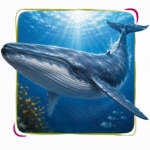
Elephant Fact Highlight
From the full animal facts page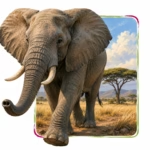
More Animal Comparisons
Pick another animal matchup and keep exploring. Compare appearances, habitats, diets, abilities, and surprising differences.



Make an Animal Story
Turn this blue whale vs elephant comparison into a giant sea-and-land adventure with our free Animal Story Generator.
Source notes: References used for this comparison. See more See less
Try Another Matchup
Explore this comparison →