
Blue Whale vs Fin Whale: Giant Rorqual Comparison
Blue whales and fin whales are enormous rorquals with streamlined bodies, throat pleats, and baleen, but the two ocean giants have different proportions and markings. Blue whales are the largest animals known to have lived. Fin whales are slimmer, usually faster, and carry a remarkable right-left color difference across the lower jaw.
About Blue Whale
- Type Mammal
- Diet Filter Feeder
- Group Baleen Whale
- Known for Largest animal known to have lived, enormous size, blue-gray color, deep calls, and krill feeding
- Special skill Engulfing enormous mouthfuls of krill-rich seawater and filtering prey through baleen plates
About Fin Whale
- Type Mammal
- Diet Filter Feeder
- Group Baleen Whale
- Known for Second-largest living animal, sleek body, fast swimming, tall blow, and asymmetrical jaw coloring
- Special skill Swimming rapidly with a streamlined body and lunging through schools of krill or small fish
Blue Whale vs Fin Whale: Quick Answer
The blue whale is generally longer and much heavier, making it the largest known animal. The fin whale is the second-largest living animal, has a sleeker body, often swims faster, and shows asymmetrical jaw coloring: the lower right side is pale while the left is darker. Both are baleen whales that lunge feed.
Where Do They Fit?
Follow the branches to see how Blue Whale and Fin Whale are classified and related.
Blue Whale vs Fin Whale: Quick Comparison
| Feature | Blue Whale | Fin Whale |
|---|---|---|
| Animal type | Marine mammal | Marine mammal |
| Animal group | Rorqual baleen whale | Rorqual baleen whale |
| Known for | Largest known animal, blue-gray body, deep calls, and krill feeding | Second-largest living animal, fast swimming, sleek shape, and uneven jaw coloring |
| Main habitat | Open oceans and productive feeding grounds worldwide | Open oceans, continental slopes, and productive feeding grounds worldwide |
| Diet | Mainly krill | Krill, copepods, and small schooling fish |
| Baby name | Calf | Calf |
| Body shape | Extremely large, broad, and streamlined | Long, narrow, sleek, and fast-looking |
| Dorsal fin | Small and set far back | Taller and more curved |
| Jaw coloring | Mostly similar on both sides | Pale on the right and darker on the left |
| Special skill | Enormous krill-lunge feeding | Fast, efficient ocean cruising |
How Are Blue Whales and Fin Whales Alike?
- Both blue whales and fin whales are warm-blooded marine mammals.
- Both belong to the rorqual family and have throat pleats that expand during feeding.
- Both use baleen plates to filter prey from seawater.
- Both breathe air through two blowholes and give birth to calves that drink milk.
- Both travel long distances and produce powerful low-frequency sounds.
How Are Blue Whales and Fin Whales Different?
- Blue whales are generally larger and much heavier than fin whales.
- Fin whales have slimmer bodies and are often faster swimmers.
- Blue whales feed mainly on krill, while fin whales also commonly eat small schooling fish and copepods.
- Fin whales have asymmetrical lower-jaw coloring, while blue whale jaws are more evenly colored.
- Fin whales usually have taller, more curved dorsal fins.
Blue Whale vs Fin Whale Showdown
Giant-rorqual showdown: The blue whale wins for size and total body strength because it is the largest animal known to science. The fin whale takes speed, stealth, and swimming efficiency with its narrow streamlined body and quick ocean cruising. Social life is a tie because both usually travel alone or in small temporary groups. The fin whale wins our weirdest-fact prize for having a pale lower jaw on the right side and a darker one on the left.
Fun Blue Whale vs Fin Whale Facts
Largest Animal vs Second-Largest Animal
Blue whales are the largest animals known to have lived, with exceptional individuals reaching lengths near 30 meters. Fin whales are generally shorter and lighter but still rank as the second-largest living animals.
Broad Giant vs Sleek Speedster
Blue whales have enormous broad bodies, while fin whales are more slender and streamlined. Their long narrow shape helps fin whales cruise quickly and efficiently across open water.
Krill Specialist vs Mixed Small-Prey Feeder
Blue whales specialize strongly in krill. Fin whales also eat krill but may take copepods and dense schools of small fish such as herring, capelin, or sand lance, depending on region and season.
Small Dorsal Fin vs Taller Dorsal Fin
A blue whale’s dorsal fin is small compared with its enormous body and sits far back near the tail. A fin whale has a taller, more curved dorsal fin that often appears soon after its blow when the animal surfaces.
Fin Whales Have Two-Tone Jaws
The fin whale’s lower jaw is unusually asymmetrical: the right side is pale or white, while the left side is dark. Researchers think this coloring may help during feeding, but its exact advantage is still being studied.
Blue Whale vs Fin Whale Quiz
- Which whale is the largest animal known to have lived? Answer: Blue whale.
- Which whale is usually the faster swimmer? Answer: Fin whale.
- What feeding structures do both whales use? Answer: Baleen plates.
- Which whale has pale coloring on the right side of its lower jaw? Answer: Fin whale.
- What are baby blue whales and fin whales called? Answer: Calves.
Blue Whale vs Fin Whale FAQ
What is the main difference between a blue whale and a fin whale?
A blue whale is generally larger, heavier, and more strongly specialized for eating krill. A fin whale is slimmer, usually faster, and has uneven coloring across its lower jaw.
Which is bigger, a blue whale or a fin whale?
The blue whale is bigger and heavier. The fin whale is the second-largest living animal.
Which whale is faster?
Fin whales are generally considered faster and more streamlined, although speed varies with age, behavior, sea conditions, and measurement method.
Do blue whales and fin whales eat the same food?
Both eat krill. Fin whales also commonly eat copepods and small schooling fish, while blue whales specialize more heavily in krill.
Can blue whales and fin whales have hybrid calves?
Rare blue-fin whale hybrids have been documented. Some hybrids may be fertile, although these events are uncommon and scientifically important.
Animal Words to Know
- Rorqual: A baleen whale with expandable throat pleats used during lunge feeding.
- Baleen: Flexible keratin plates that strain prey from seawater.
- Krill: Small shrimp-like crustaceans eaten by many ocean animals.
- Dorsal fin: The fin on an animal’s back.
- Asymmetrical: Different on the left and right sides.
Blue Whale and Fin Whale Ocean Activity
Blue Whale and Fin Whale Ocean Activity
Draw a blue whale and fin whale on the same scale. Make the blue whale broader and blue-gray, with a very small dorsal fin. Make the fin whale slimmer, with a taller curved dorsal fin and a pale right lower jaw. Label body shape, color, dorsal fin, lower jaw, and baleen.
Meet Each Animal
Want the full fact file? Here are quick highlights from each animal’s own facts page.
Blue Whale Fact Highlight
From the full animal facts page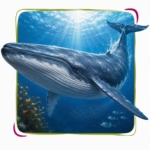
Fin Whale Fact Highlight
From the full animal facts page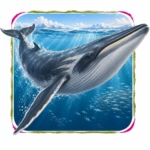
More Animal Comparisons
Pick another animal matchup and keep exploring. Compare appearances, habitats, diets, abilities, and surprising differences.





Make an Animal Story
Turn this blue whale vs fin whale comparison into a giant ocean-race adventure with our free Animal Story Generator.
Source notes: References used for this comparison. See more See less
Try Another Matchup
Explore this comparison →