
Blue Whale vs Gray Whale: Baleen Whale Comparison
Blue whales and gray whales are both giant baleen mammals, but they use the ocean in very different ways. The blue whale is the largest animal known to have lived and feeds mainly on krill in open water. The gray whale is smaller, mottled with scars and barnacles, follows coastal migration routes, and often feeds by scooping tiny animals from seafloor mud.
About Blue Whale
- Type Mammal
- Diet Filter Feeder
- Group Baleen Whale
- Known for Largest animal known to have lived, enormous size, deep calls, baleen, and krill feeding
- Special skill Engulfing enormous mouthfuls of krill-rich seawater and filtering prey through baleen plates
About Gray Whale
- Type Mammal
- Diet Filter Feeder
- Group Baleen Whale
- Known for Mottled skin, barnacles, coastal migration, bottom feeding, and long journeys
- Special skill Rolling onto one side to suction prey-rich sediment from the seafloor and filtering food through baleen
Blue Whale vs Gray Whale: Quick Answer
The blue whale is much larger, more streamlined, and specializes in lunge feeding on krill. The gray whale is smaller, lacks a dorsal fin, often follows coastlines, and commonly rolls onto one side to filter bottom-dwelling prey from sediment. Both breathe air, use baleen, and have calves.
Where Do They Fit?
Follow the branches to see how Blue Whale and Gray Whale are classified and related.
Blue Whale vs Gray Whale: Quick Comparison
| Feature | Blue Whale | Gray Whale |
|---|---|---|
| Animal type | Marine mammal | Marine mammal |
| Animal group | Rorqual baleen whale | Gray whale |
| Known for | Largest known animal, deep calls, and krill feeding | Mottled skin, barnacles, coastal migration, and bottom feeding |
| Main habitat | Open oceans and productive feeding grounds worldwide | North Pacific coasts, shelves, lagoons, and migration routes |
| Diet | Mainly krill | Amphipods, worms, mysids, and other small animals |
| Baby name | Calf | Calf |
| Body shape | Very long, streamlined, and blue-gray | Stockier, mottled, and often covered with scars and barnacles |
| Dorsal area | Small dorsal fin set far back | No true dorsal fin; a low hump followed by knuckles |
| Feeding style | Lunge feeding in open water | Bottom feeding and suction feeding near the seafloor |
| Special skill | Engulfing huge krill-rich mouthfuls | Completing very long coastal migrations |
How Are Blue Whales and Gray Whales Alike?
- Both blue whales and gray whales are warm-blooded marine mammals.
- Both breathe air through two blowholes and must surface regularly.
- Both use baleen plates to filter small prey from seawater.
- Both give birth to calves and feed them milk.
- Both migrate long distances between feeding and breeding areas.
How Are Blue Whales and Gray Whales Different?
- Blue whales are much larger and heavier than gray whales.
- Blue whales usually feed in open water, while gray whales often feed along shallow seafloors.
- Blue whales have expandable throat pleats, while gray whales do not have the same deep rorqual-style pleats.
- Blue whales have a small dorsal fin, while gray whales have a low hump followed by a row of knuckles.
- Gray whales are famously mottled with scars, whale lice, and barnacles.
Blue Whale vs Gray Whale Showdown
Baleen-whale showdown: The blue whale wins for size, speed, and total body strength because it is the largest animal known to science and a powerful open-ocean swimmer. The gray whale takes stealth with its mottled coloring and shallow coastal habits. Social life is a tie because both are usually solitary or found in loose groups. The gray whale wins swimming for its extraordinary coastal migrations and our weirdest-fact prize for vacuuming tiny animals from muddy seafloors while rolled onto one side.
Fun Blue Whale vs Gray Whale Facts
Open-Water Giant vs Coastal Traveler
Blue whales often roam offshore waters and productive feeding zones across several oceans. Gray whales are strongly associated with the North Pacific and are famous for following long coastal migration routes between Arctic feeding grounds and warmer breeding lagoons.
Krill Lunges vs Mud Scoops
Blue whales accelerate into dense krill patches and expand their pleated throats to engulf huge volumes of water. Gray whales often roll onto one side, suction sediment and prey from the seafloor, then strain small animals through baleen.
Small Dorsal Fin vs Knuckled Back
A blue whale has a small triangular dorsal fin set far back on its body. A gray whale has no true dorsal fin, but instead carries a low hump followed by several bumps called knuckles.
Smooth Blue-Gray vs Mottled Skin
Blue whales usually appear blue-gray and relatively smooth from a distance. Gray whales have patchy gray skin marked by scars, barnacles, and whale lice, creating one of the most recognizable coats in the sea.
Gray Whales Make Epic Migrations
Some eastern North Pacific gray whales travel thousands of kilometers between Arctic feeding grounds and breeding lagoons in Mexico. Their round-trip journeys rank among the longest regular migrations made by mammals.
Blue Whale vs Gray Whale Quiz
- Which whale is the largest animal known to have lived? Answer: Blue whale.
- Which whale often feeds near the seafloor? Answer: Gray whale.
- What feeding structures do both whales use? Answer: Baleen plates.
- Which whale has a row of knuckles instead of a true dorsal fin? Answer: Gray whale.
- What are baby blue whales and gray whales called? Answer: Calves.
Blue Whale vs Gray Whale FAQ
What is the main difference between a blue whale and a gray whale?
A blue whale is much larger, more streamlined, and mainly lunge feeds on krill in open water. A gray whale is smaller, mottled, follows coastal routes, and often filters small animals from seafloor sediment.
Which is bigger, a blue whale or a gray whale?
The blue whale is far larger and heavier. It is the largest animal known to have lived.
Why are gray whales covered with barnacles?
Barnacles attach to the skin and travel with the whale. Whale lice also live in skin creases and around scars, helping create the gray whale's mottled appearance.
Do blue whales and gray whales eat the same food?
Their diets can overlap in small crustaceans, but blue whales specialize mainly in krill. Gray whales often eat amphipods, worms, mysids, and other small animals from coastal waters and seafloor sediments.
Which whale migrates farther?
Both make long migrations, but some gray whale routes are among the longest regularly documented mammal migrations. Exact distances vary by population and individual.
Animal Words to Know
- Baleen: Flexible keratin plates used by some whales to strain food from seawater.
- Amphipod: A small crustacean often eaten by gray whales.
- Barnacle: A small crustacean that attaches permanently to hard surfaces or whale skin.
- Migration: Regular seasonal travel between different habitats.
- Knuckle: One of the small bumps along a gray whale’s back behind its low hump.
Blue Whale and Gray Whale Migration Activity
Blue Whale and Gray Whale Migration Activity
Draw a long blue whale beside a mottled gray whale at realistic scale. Give the blue whale throat pleats, a small dorsal fin, baleen, and krill. Give the gray whale barnacles, a low hump followed by back knuckles, and a muddy bottom-feeding scene. Add a coastal migration arrow, then label body shape, barnacles, food, and migration.
Meet Each Animal
Want the full fact file? Here are quick highlights from each animal’s own facts page.
Blue Whale Fact Highlight
From the full animal facts page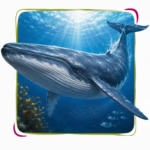
Gray Whale Fact Highlight
From the full animal facts page
More Animal Comparisons
Pick another animal matchup and keep exploring. Compare appearances, habitats, diets, abilities, and surprising differences.





Make an Animal Story
Turn this blue whale vs gray whale comparison into a coastal migration adventure with our free Animal Story Generator.
Source notes: References used for this comparison. See more See less
Try Another Matchup
Explore this comparison →