
Blue Whale vs Megalodon: Living Whale vs Extinct Shark Comparison
The blue whale and megalodon are two of the greatest ocean giants in Earth’s history, but they lived very different lives. The blue whale is a living air-breathing mammal and the largest animal known to have lived. Megalodon was an extinct giant shark with enormous serrated teeth, a cartilage skeleton, and a predatory diet.
About Blue Whale
- Type Mammal
- Diet Filter Feeder
- Group Baleen Whale
- Known for Largest animal known to have lived, enormous size, deep calls, baleen, and krill feeding
- Special skill Engulfing enormous mouthfuls of krill-rich seawater and filtering prey through baleen plates
About Megalodon
- Type Extinct Fish
- Diet Carnivore
- Group Otodontid Shark
- Known for Enormous serrated teeth, giant size, powerful jaws, and hunting large marine animals
- Special skill Using a giant streamlined body, serrated teeth, and an extremely powerful bite to attack large marine prey
Blue Whale vs Megalodon: Quick Answer
The blue whale is generally longer and far heavier than most scientific reconstructions of megalodon. It is a living baleen whale that filters tiny krill. Megalodon was an extinct predatory shark that hunted large marine animals with huge serrated teeth. Because no complete megalodon skeleton exists, its exact length, body shape, speed, and mass remain uncertain.
Where Do They Fit?
Follow the branches to see how Blue Whale and Megalodon are classified and related.
Blue Whale vs Megalodon: Quick Comparison
| Feature | Blue Whale | Megalodon |
|---|---|---|
| Animal type | Living marine mammal | Extinct shark |
| Animal group | Baleen whale | Otodontid shark |
| Known for | Largest known animal, baleen, deep calls, and krill feeding | Giant serrated teeth, powerful jaws, and marine predation |
| Main habitat | Oceans worldwide, including cold feeding grounds | Warm and temperate ancient seas worldwide |
| Breathing | Lungs and two blowholes | Gills |
| Skeleton | Bone | Cartilage |
| Diet | Mainly krill | Large marine animals, including whales and other prey |
| Baby name | Calf | Pup |
| Feeding tool | Baleen plates and throat pleats | Rows of large serrated teeth |
| Evidence | Living animals can be observed and measured | Known mainly from fossil teeth and vertebrae |
How Were Blue Whales and Megalodon Alike?
- Both blue whales and megalodon were or are enormous ocean vertebrates.
- Both had streamlined bodies, fins, and powerful tails for long-distance swimming.
- Both gave or give birth to live young rather than laying eggs outside the body.
- Both depended on rich marine food webs containing whales, fish, and other ocean animals.
- Both traveled through open seas and productive coastal regions.
How Were Blue Whales and Megalodon Different?
- Blue whales are living mammals, while megalodon was an extinct shark.
- Blue whales breathe air with lungs, while megalodon breathed underwater through gills.
- Blue whales have bony skeletons, while megalodon’s skeleton was made mainly of cartilage.
- Blue whales filter tiny krill using baleen, while megalodon hunted large prey with serrated teeth.
- Blue whale size and behavior can be measured directly, while megalodon must be reconstructed from incomplete fossils.
Blue Whale vs Megalodon Showdown
Ocean-giant showdown: The blue whale wins for size and total body strength because it is the largest animal known to science and outweighs most megalodon estimates. Speed and swimming are ties because both were powerful ocean travelers, but megalodon performance cannot be observed directly. Megalodon takes stealth as an active predator. The blue whale wins social knowledge because its calls and mother-calf care are documented, while megalodon social behavior is unknown. Megalodon wins our weirdest-fact prize because nearly everything scientists know about its giant body begins with fossil teeth and vertebrae.
Fun Blue Whale vs Megalodon Facts
Living Mammal vs Extinct Shark
A blue whale is warm-blooded, breathes air through blowholes, gives birth to a calf, and feeds the calf milk. Megalodon was a fish that breathed through gills and gave birth to pups that likely began life in relatively safe nursery habitats.
Baleen vs Serrated Teeth
Blue whales have no functional teeth as adults and use hundreds of baleen plates to strain krill from seawater. Megalodon had rows of thick triangular teeth with serrated edges suited to gripping and cutting large prey.
Bone vs Cartilage
A blue whale’s skeleton is made of bone. Megalodon’s skeleton was made mostly of cartilage, which usually decays before fossilization, so scientists mainly find its hard teeth and occasional vertebrae.
Largest Animal vs Giant Predator
Exceptional blue whales can approach 30 meters in length and reach enormous masses. Megalodon length estimates vary, and recent reconstructions have proposed an elongated animal that may have reached roughly 20 meters or more, but no complete specimen confirms an exact maximum.
Megalodon Teeth Were Enormous
Some megalodon teeth exceed 17 centimeters in height. Sharks continually replace worn or lost teeth, so a single megalodon produced many teeth during its lifetime, helping explain why teeth dominate its fossil record.
Blue Whale vs Megalodon Quiz
- Which animal is alive today? Answer: Blue whale.
- Which animal used huge serrated teeth? Answer: Megalodon.
- What tiny animals make up most of a blue whale’s diet? Answer: Krill.
- Which animal had a cartilage skeleton? Answer: Megalodon.
- Why is megalodon’s exact body shape uncertain? Answer: No complete skeleton has been found.
Blue Whale vs Megalodon FAQ
What is the main difference between a blue whale and megalodon?
A blue whale is a living baleen mammal that breathes air and filters krill. Megalodon was an extinct shark that breathed through gills and hunted large marine prey using serrated teeth.
Which was bigger, a blue whale or megalodon?
The blue whale was generally larger and far heavier. Some recent megalodon studies allow longer estimates than older reconstructions, but the shark’s exact maximum remains uncertain because no complete skeleton is known.
Did blue whales and megalodon live together?
Megalodon became extinct millions of years ago. There is no evidence of megalodon interacting with modern blue whales, and today’s giant blue whales live long after the shark disappeared.
Could megalodon eat a blue whale?
No direct fossil proves such an encounter. Megalodon ate whales and other large marine animals, but modern blue whales are enormous, and the two are not known to have met.
Is megalodon still alive?
No credible scientific evidence shows that megalodon survives today. Its accepted fossils are millions of years old.
Animal Words to Know
- Baleen: Flexible keratin plates used by some whales to strain food from seawater.
- Cartilage: Flexible supporting tissue that formed most of megalodon’s skeleton.
- Serrated: Having a saw-like cutting edge.
- Fossil: Preserved evidence of ancient life.
- Reconstruction: A scientific estimate of an extinct animal’s appearance based on fossils and living relatives.
Blue Whale and Megalodon Scale Activity
Blue Whale and Megalodon Scale Activity
Draw a blue whale and a scientifically cautious megalodon reconstruction on the same ocean scale, with a diver or boat for reference. Give the whale two blowholes, baleen, throat pleats, and krill. Give megalodon gill slits, serrated teeth, and a streamlined shark body. Label living, extinct, mammal, shark, and estimated size so the uncertain reconstruction is clear.
Meet Each Animal
Want the full fact file? Here are quick highlights from each animal’s own facts page.
Blue Whale Fact Highlight
From the full animal facts page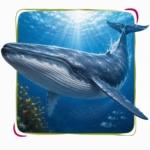
Megalodon Fact Highlight
From the full animal facts page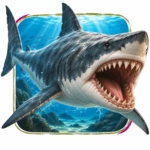
More Animal Comparisons
Pick another animal matchup and keep exploring. Compare appearances, habitats, diets, abilities, and surprising differences.



Make an Animal Story
Turn this blue whale vs megalodon comparison into a time-traveling ocean adventure with our free Animal Story Generator.
Source notes: References used for this comparison. See more See less
Try Another Matchup
Explore this comparison →