
Blue Whale vs Orca: Whale Comparison
Blue whales and orcas are both ocean-going mammals, but they fill completely different roles in marine ecosystems. The blue whale is the largest animal known to have lived and filters tiny krill through baleen. The orca is a much smaller toothed whale, but it is faster, highly social, and one of the ocean’s most capable predators.
About Blue Whale
- Type Mammal
- Diet Filter Feeder
- Group Baleen Whale
- Known for Largest animal known to have lived, enormous size, deep calls, baleen, and krill feeding
- Special skill Engulfing enormous mouthfuls of krill-rich seawater and filtering prey through baleen plates
About Orca
- Type Mammal
- Diet Carnivore
- Group Toothed Whale
- Known for Black-and-white markings, family pods, intelligence, teamwork, speed, and powerful hunting
- Special skill Using echolocation, speed, intelligence, and teamwork to locate and capture many kinds of marine prey
Blue Whale vs Orca: Quick Answer
The blue whale is far larger and feeds mainly on tiny krill using baleen. The orca is a smaller toothed whale that hunts fish, seals, sharks, and other prey using teeth, echolocation, speed, and teamwork. Both breathe air, give birth to calves, produce milk, and communicate with sound.
Where Do They Fit?
Follow the branches to see how Blue Whale and Orca are classified and related.
Blue Whale vs Orca: Quick Comparison
| Feature | Blue Whale | Orca |
|---|---|---|
| Animal type | Marine mammal | Marine mammal |
| Animal group | Baleen whale | Toothed whale |
| Known for | Largest known animal, deep calls, baleen, and krill feeding | Black-and-white markings, pods, intelligence, and cooperative hunting |
| Main habitat | Open oceans and productive feeding grounds worldwide | Coastal waters, open oceans, polar seas, fjords, and bays |
| Diet | Mainly krill | Fish, squid, marine mammals, sharks, and other prey depending on population |
| Feeding tool | Baleen plates and expandable throat pleats | Teeth, echolocation, speed, and teamwork |
| Baby name | Calf | Calf |
| Typical social style | Usually alone or in loose groups | Stable family pods |
| Body shape | Extremely long and streamlined | Shorter, muscular, and built for speed and turning |
| Special skill | Enormous lunge feeding | Cooperative hunting and cultural learning |
How Are Blue Whales and Orcas Alike?
- Both blue whales and orcas are warm-blooded marine mammals.
- Both breathe air through blowholes and must surface regularly.
- Both give birth to calves and feed them milk.
- Both use sound to communicate and navigate through the ocean.
- Both can travel long distances and live in oceans around the world.
How Are Blue Whales and Orcas Different?
- Blue whales are baleen whales, while orcas are toothed whales.
- Blue whales are far larger and heavier than orcas.
- Blue whales filter tiny krill, while orcas actively hunt larger prey.
- Blue whales are usually solitary or loosely grouped, while orcas live in stable family pods.
- Orcas are faster, more agile, and use echolocation to find prey.
Blue Whale vs Orca Showdown
Whale showdown: The blue whale wins for size and total body strength because it is the largest animal known to science. The orca takes speed, stealth, social teamwork, and swimming agility through its muscular body, echolocation, learned hunting techniques, and tight family pods. The orca also wins our weirdest-fact prize because different populations have their own diets, calls, and hunting traditions.
Fun Blue Whale vs Orca Facts
Baleen Giant vs Toothed Hunter
Blue whales have no functional teeth as adults. Instead, they use rows of baleen plates to strain krill from huge mouthfuls of seawater. Orcas have large conical teeth used to seize fish, squid, seals, and other prey.
Largest Animal vs Fast Predator
A blue whale can be several times longer and many times heavier than an orca. Orcas are much smaller, but their compact muscular bodies allow quicker acceleration, sharper turns, and bursts of speed.
Loose Traveler vs Family Pod
Blue whales are commonly seen alone or in temporary groups around food. Orcas often remain with mothers, siblings, and other relatives for years or even life, forming stable pods with their own calls and traditions.
Krill Clouds vs Many Kinds of Prey
Blue whales specialize mainly in krill and may consume several tonnes during intense feeding periods. Orca diets vary by population: some specialize in fish, while others hunt seals, sharks, rays, or other marine animals.
Orcas Have Ocean Cultures
Orca groups pass calls, food preferences, travel routes, and hunting techniques from older animals to younger ones. Scientists describe these learned traditions as culture because they are shared socially rather than inherited only through genes.
Blue Whale vs Orca Quiz
- Which whale is the largest animal known to have lived? Answer: Blue whale.
- Which whale has large teeth? Answer: Orca.
- What tiny animals make up most of a blue whale’s diet? Answer: Krill.
- Which whale usually lives in stable family pods? Answer: Orca.
- What feeding structures does a blue whale use? Answer: Baleen plates.
Blue Whale vs Orca FAQ
What is the main difference between a blue whale and an orca?
A blue whale is a gigantic baleen whale that filters krill. An orca is a smaller toothed whale that hunts prey using teeth, echolocation, speed, intelligence, and teamwork.
Which is bigger, a blue whale or an orca?
The blue whale is vastly larger and heavier. It is the largest animal known to have lived.
Can orcas hunt blue whales?
Groups of orcas have been documented attacking blue whales, especially calves or vulnerable individuals. Such events are unusual and require coordinated teamwork.
Are orcas actually whales?
Yes. Orcas are the largest members of the oceanic dolphin family, and dolphins are toothed whales.
Do blue whales and orcas make sounds?
Yes. Blue whales produce powerful low-frequency calls, while orcas use whistles, pulsed calls, and echolocation clicks.
Animal Words to Know
- Baleen: Flexible keratin plates used by some whales to strain food from seawater.
- Echolocation: Finding objects by sending out sounds and listening for returning echoes.
- Krill: Small shrimp-like crustaceans eaten by many ocean animals.
- Pod: A social group of whales or dolphins.
- Culture: Behaviors and knowledge learned and shared within a social group.
Blue Whale and Orca Ocean Activity
Blue Whale and Orca Ocean Activity
Draw a gigantic blue whale beside a much smaller orca at realistic scale. Give the blue whale two blowholes, baleen, throat pleats, and krill. Give the orca black-and-white markings, teeth, a tall dorsal fin, and a family pod. Label baleen whale, toothed whale, size, food, and pod, then note that an orca is the largest member of the oceanic dolphin family.
Meet Each Animal
Want the full fact file? Here are quick highlights from each animal’s own facts page.
Blue Whale Fact Highlight
From the full animal facts page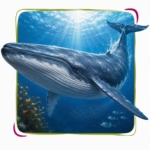
Orca Fact Highlight
From the full animal facts page
More Animal Comparisons
Pick another animal matchup and keep exploring. Compare appearances, habitats, diets, abilities, and surprising differences.





Make an Animal Story
Turn this blue whale vs orca comparison into a thrilling ocean adventure with our free Animal Story Generator.
Source notes: References used for this comparison. See more See less
Try Another Matchup
Explore this comparison →