
Boa Constrictor vs Anaconda: Boa Comparison
A boa constrictor and an anaconda are not two unrelated snake types: anacondas belong to the boa family too. The boa constrictor is a land-and-tree generalist with bold saddle-shaped markings and a huge range of habitats. Anacondas are heavier-bodied, more aquatic boas built for hiding and hunting in South American wetlands.
About Boa Constrictor
- Type Reptile
- Diet Carnivore
- Group Boa
- Known for Saddle-shaped markings, powerful constriction, climbing, camouflage, and success in many habitats
- Special skill Climbing when young, adapting to varied habitats, and subduing prey with strong coils
About Anaconda
- Type Reptile
- Diet Carnivore
- Group Aquatic Boa
- Known for Enormous bulk, olive camouflage, excellent swimming, eyes and nostrils high on the head, and wetland ambushes
- Special skill Hiding almost completely underwater and swimming powerfully through tropical wetlands
Boa Constrictor vs Anaconda: Quick Answer
Boa constrictors usually spend more time on land or in trees and have brown saddle-shaped markings. Anacondas have more aquatic bodies, eyes and nostrils high on the head, and olive coloring that blends into murky wetlands. Green anacondas grow much heavier than boa constrictors, although both are nonvenomous boas that constrict prey and give birth to live young.
Where Do They Fit?
Follow the branches to see how Boa Constrictor and Anaconda are classified and related.
Boa Constrictor vs Anaconda: Quick Comparison
| Feature | Boa Constrictor | Anaconda |
|---|---|---|
| Animal type | Reptile | Reptile |
| Animal group | Boa | Aquatic boa in genus Eunectes |
| Known for | Saddle markings, climbing, camouflage, and broad habitat tolerance | Heavy body, powerful swimming, wetland camouflage, and giant size |
| Main habitat | Forests, savannas, scrublands, farms, burrows, and rocky areas | Rivers, swamps, marshes, flooded forests, and wetlands |
| Where found | From Mexico through Central America and much of South America | Tropical South America |
| Body shape | Long, muscular, and comparatively streamlined | Extremely thick, heavy, and strongly aquatic |
| Color pattern | Tan, gray, or brown with dark saddle-shaped blotches | Often olive, brown, or yellowish with dark spots or blotches depending on species |
| Diet | Rodents, birds, bats, lizards, and other medium-sized prey | Fish, turtles, birds, capybaras, caimans, and other prey depending on species and size |
| Baby name | Snakelet | Snakelet |
| Special skill | Climbing and thriving across many habitat types | Underwater camouflage and powerful swimming |
How Are Boa Constrictors and Anacondas Alike?
- Both boa constrictors and anacondas are nonvenomous snakes in the boa family.
- Both seize prey with backward-curving teeth and subdue it using muscular coils.
- Both give birth to live young rather than laying an external clutch of eggs.
- Both use camouflage, tongue-flicking, and ambush hunting to find food.
- Both are native to tropical parts of the Americas and can swim.
How Are Boa Constrictors and Anacondas Different?
- Boa constrictors use forests, dry country, farms, and many other habitats, while anacondas are closely tied to wetlands.
- Boa constrictors often climb, especially when young, while anacondas are more specialized for swimming.
- Boa constrictors usually have saddle-shaped blotches, while anacondas tend to have olive, brown, or yellowish bodies with dark spots.
- Green anacondas grow far heavier and thicker than boa constrictors.
- Anacondas have eyes and nostrils positioned high on the head for seeing and breathing while mostly submerged.
Boa Constrictor vs Anaconda Showdown
Giant-boa showdown: The anaconda wins size and strength because the green anaconda is the heaviest living snake and has an extraordinarily thick muscular body. The boa constrictor takes land speed and agility because it travels and climbs more effectively away from water. The anaconda wins stealth and swimming with its wetland coloring and high-set eyes and nostrils. Social life is a tie because both are mainly solitary. The anaconda also wins our weirdest-fact prize for using its head like a living periscope while most of its body remains underwater.
Fun Boa Constrictor vs Anaconda Facts
Habitat Generalist vs Wetland Specialist
Boa constrictors occupy rainforests, seasonally dry forests, savannas, scrublands, farms, hollow logs, and animal burrows. Anacondas remain closely associated with slow water, marshes, flooded forests, and swampy grasslands.
Saddles vs Spots
A boa constrictor usually has dark saddle-shaped markings along a tan, gray, or brown back, often with a more colorful tail. Anaconda patterns vary by species but commonly use dark rounded spots or blotches over olive, brown, or yellowish backgrounds.
Climber vs Swimmer
Young boa constrictors climb readily and adults travel well across the ground. Anacondas can move on land but their great bulk is better supported by water, where their muscular bodies and tails provide powerful propulsion.
Medium-Prey Hunter vs Wetland Heavyweight
Boa constrictors commonly take rodents, birds, bats, lizards, and other manageable prey. Large anacondas can overpower bigger wetland animals, although their meals still depend on opportunity, body size, species, and location.
Eyes and Nostrils Work Like a Periscope
An anaconda’s eyes and nostrils sit high on its head. This arrangement lets the snake watch and breathe at the surface while keeping most of its large body concealed in murky water.
Boa Constrictor vs Anaconda Quiz
- Is an anaconda a kind of boa? Answer: Yes.
- Which snake is more specialized for wetland life? Answer: Anaconda.
- Which snake commonly has saddle-shaped back markings? Answer: Boa constrictor.
- Do boa constrictors and anacondas lay eggs? Answer: No; both give birth to live young.
- Which living snake is considered the heaviest? Answer: The green anaconda.
Boa Constrictor vs Anaconda FAQ
What is the main difference between a boa constrictor and an anaconda?
A boa constrictor is a versatile land-and-tree snake found across many habitats. An anaconda is a heavier, more aquatic boa specialized for rivers, marshes, swamps, and flooded forests.
Is an anaconda a boa constrictor?
No. Anacondas and boa constrictors are different snakes, but both belong to the boa family. Anacondas belong to the genus Eunectes, while the boa constrictor belongs to the genus Boa.
Which is bigger, a boa constrictor or an anaconda?
The green anaconda is much heavier and thicker than a boa constrictor and is considered the heaviest living snake. Exact size varies by sex, species, age, and individual.
Can boa constrictors swim?
Yes. Boa constrictors can swim well, but they usually spend much less time in water than anacondas do.
Do anacondas eat people?
There are no verified records of a green anaconda consuming a human. Anacondas are powerful wild predators and should always be observed from a safe distance.
Animal Words to Know
- Boa: A member of a family of nonvenomous constrictor snakes that includes boa constrictors and anacondas.
- Anaconda: A large semiaquatic boa in the South American genus Eunectes.
- Constrict: To wrap around prey and tighten the coils so blood can no longer circulate normally.
- Semiaquatic: Adapted to spending substantial time both in water and on land.
- Ambush predator: A hunter that waits quietly for prey to approach before striking.
Boa Constrictor and Anaconda Habitat Activity
Boa Constrictor and Anaconda Habitat Activity
Draw a boa constrictor climbing a low branch beside a much heavier green anaconda swimming through a flooded forest. Give the boa saddle-shaped markings and a long climbing body. Give the anaconda an olive coat with dark oval spots, high-set eyes and nostrils, and a thick body. Add a label showing that both belong to the boa family. Label climbing, swimming, forest, wetland, snakelet, and constriction.
Meet Each Animal
Want the full fact file? Here are quick highlights from each animal’s own facts page.
Boa Constrictor Fact Highlight
From the full animal facts page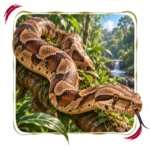
Anaconda Fact Highlight
From the full animal facts page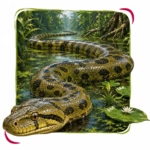
More Animal Comparisons
Pick another animal matchup and keep exploring. Compare appearances, habitats, diets, abilities, and surprising differences.



Make an Animal Story
Turn this boa constrictor vs anaconda comparison into a winding wetland adventure with our free Animal Story Generator.
Source notes: References used for this comparison. See more See less
Try Another Matchup
Explore this comparison →