
Chickadee vs Titmouse for Kids
Black-Capped Chickadees and Tufted Titmice are close relatives in family Paridae. Both are small, curious woodland songbirds that hang from branches, visit feeders, eat insects and seeds, and hide food. The titmouse is noticeably larger, with a pointed crest, stout bill, and peachy flanks. The chickadee has a black cap and bib, white cheeks, and a smaller round body. Their social systems and nesting skills are especially revealing: chickadees form winter flocks and can excavate soft rotten wood, while titmouse pairs use ready-made holes and may line them with animal hair.
About Black-Capped Chickadee
- Type Bird
- Diet Omnivore; mostly insects in warm seasons
- Group Chickadee; family Paridae
- Known for A black cap and bib, white cheeks, curious behavior, complex alarm calls, and winter flocks
- Special skill Encoding danger in chick-a-dee calls, with more dee notes signaling a greater threat
About Tufted Titmouse
- Type Bird
- Diet Omnivore; mostly insects in summer
- Group Titmouse; family Paridae
- Known for A pointed gray crest, large dark eyes, peter-peter song, seed hammering, and woodland feeding
- Special skill Lining a cavity nest with many kinds of hair and fur, sometimes plucked from a living mammal
Quick Answer
Quick answer: The Tufted Titmouse is noticeably larger and heavier, with a pointed crest, stout bill, and silvery-gray body. The Black-Capped Chickadee is smaller, with a black cap and bib, white cheeks, and a complex chick-a-dee alarm system. Both are acrobatic Paridae songbirds that eat insects and seeds, cache food, visit feeders, and nest in cavities. Chickadees can excavate soft rotten wood and organize winter flocks, while titmice depend on existing holes and sometimes line nests with hair plucked from living mammals.
Black-Capped Chickadee vs Tufted Titmouse: Quick Comparison
| Feature | Black-Capped Chickadee | Tufted Titmouse |
|---|---|---|
| Scientific identity | Poecile atricapillus | Baeolophus bicolor |
| Bird family | Paridae | Paridae |
| Published adult length | About 12-15 cm | About 14-16 cm |
| Published adult mass | About 9-14 g | About 18-26 g |
| Published wingspan | About 16-21 cm | About 20-26 cm |
| Adult appearance | Black cap and bib, white cheeks, gray back, and buffy sides | Pointed gray crest, black forehead patch, white underside, and peachy flanks |
| Main habitat | Wooded and shrubby habitats across northern North America | Eastern deciduous and mixed woods, parks, orchards, and suburbs |
| Main foods | Insects and spiders, plus seeds, berries, and feeder foods | Insects and spiders, plus seeds, nuts, berries, and feeder foods |
| Nest hole | Often excavates rotten wood or uses a natural hole, old woodpecker hole, or box | Cannot excavate its own hole; uses natural cavities, old woodpecker holes, boxes, or structures |
| Winter social life | Forms flocks that attract many other woodland birds | Usually stays as a pair or small family and joins mixed-species flocks |
How Are Black-Capped Chickadees and Tufted Titmice Alike?
- Both are small passerine songbirds in family Paridae, the chickadee and titmouse family.
- Both forage acrobatically among branches and may hang sideways or upside down to inspect leaves and twigs.
- Both eat insects, spiders, seeds, nuts, and berries and regularly visit backyard feeders.
- Both carry seeds away, hold them with their feet, hammer them open, and cache some food for later.
- Both nest in tree cavities or nest boxes and raise naked, helpless chicks inside a hidden cup nest.
How Are Black-Capped Chickadees and Tufted Titmice Different?
- A Tufted Titmouse is noticeably larger at about 18-26 grams, compared with about 9-14 grams for a Black-Capped Chickadee.
- The chickadee has a black cap, black bib, and white cheeks, while the titmouse has a pointed gray crest, black forehead patch, and peachy flanks.
- The chickadee’s alarm call can add dee notes as danger rises, while the titmouse is famous for an echoing peter-peter-peter whistle.
- Chickadees can excavate their own cavity in rotten wood, while Tufted Titmice must find an existing hole or human-made space.
- Chickadees form winter flocks that act as a nucleus for other species, while titmice usually keep a pair or small family group and join mixed flocks.
Black-Capped Chickadee vs Tufted Titmouse Showdown
Adaptation showdown: Tufted Titmouse wins size because its published mass range is about twice the chickadee’s and its length and wingspan are also larger. Speed is a Tie because no same-condition race supports an overall winner. Tufted Titmouse wins whole-body strength as the heavier bird with a stouter seed-cracking bill; this is not a fight prediction. Stealth is a Tie because both are active, visible branch foragers. Black-Capped Chickadee wins social behavior because its winter flocks form a nucleus used by many other species. Swimming is a Tie because neither is a specialized swimmer. Tufted Titmouse wins weirdest for sometimes plucking hair from a living mammal to line its nest.
Fun Black-Capped Chickadee vs Tufted Titmouse Facts
The Alarm Call Has a Code
The chick-a-dee call carries more than the bird’s name. Chickadees use it for identity, flock contact, and predator alarms. More dee notes can signal a higher threat level, and birds of other species listen and react too.
Thousands of Tiny Pantries
A Black-Capped Chickadee hides seeds and other food items in separate locations, then remembers thousands of hiding places. Each autumn it also replaces some brain neurons, a remarkable change connected with keeping information useful as flocks and conditions change.
One Bird Can Dig Its Bedroom
Black-Capped Chickadees often excavate cavities in dead snags or rotten branches. Both sexes help hollow the chamber. Tufted Titmice cannot dig a complete nest cavity, so they depend on natural holes, old woodpecker holes, boxes, fenceposts, or pipes.
A Titmouse Chooses the Biggest Seed
Experiments found that Tufted Titmice choose the largest seeds available while foraging. A titmouse carries a large seed to a perch, grips it with its feet, and cracks it with sharp blows from its stout bill.
The Nest Lining May Wiggle
Tufted Titmice line their cavity nests with soft hair, fur, wool, and cotton. They sometimes pluck hair directly from a living mammal. Old nests have contained hair from many animals, including rabbits, squirrels, pets, livestock, and people.
Black-Capped Chickadee vs Tufted Titmouse Quiz
- Which bird is noticeably larger and heavier? Answer: The Tufted Titmouse.
- Which bird has a black cap and bib? Answer: The Black-Capped Chickadee.
- Which bird can excavate a cavity in rotten wood? Answer: The Black-Capped Chickadee.
- What can more dee notes communicate? Answer: A higher threat level.
- What surprising material may a titmouse collect from a living mammal? Answer: Hair or fur.
Black-Capped Chickadee vs Tufted Titmouse FAQ
Are chickadees and titmice related?
Yes. Black-Capped Chickadees and Tufted Titmice both belong to family Paridae, so they share many body, feeding, and nesting traits.
Which is bigger, a chickadee or a titmouse?
The Tufted Titmouse is bigger. It weighs about 18-26 grams, while the Black-Capped Chickadee weighs about 9-14 grams.
Can both birds dig their own nest holes?
No. Black-Capped Chickadees often excavate rotten wood. Tufted Titmice cannot excavate a complete cavity and use ready-made holes or nest boxes.
Do chickadees and titmice flock together?
They can forage together in mixed-species groups. Chickadees form winter flocks that attract other birds, while Tufted Titmouse pairs or small families often join those groups.
Why is swimming a tie?
Neither species is built as a swimmer, and the cited sources do not give a fair swimming comparison. A tie is more accurate than inventing a winner.
Animal Words to Know
- Paridae: The songbird family that includes chickadees, tits, and titmice.
- Cavity: A hollow space in a tree or structure that a bird can use for a nest.
- Excavate: To dig or carve material away to make a hollow.
- Mixed-species flock: A moving group made up of more than one kind of bird.
- Foliage gleaner: A bird that picks insects or other food from leaves and twigs.
Design Two Tiny Tree Homes
Design Two Tiny Tree Homes
Draw one adult Black-Capped Chickadee and one adult Tufted Titmouse at honest relative scale beside a rotten snag and a ready-made tree hole. Add measurement bars for their published length, mass, and wingspan. Make ten cards for cap, crest, dee alarm, peter song, excavation, old woodpecker hole, winter flock, pair territory, seed cache, and hair lining. Sort the cards under Chickadee, Titmouse, or Both.
Meet Each Animal
Want the full fact file? Here are quick highlights from each animal’s own facts page.
Black-Capped Chickadee Fact Highlight
From the full animal facts page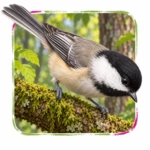
Tufted Titmouse Fact Highlight
From the full animal facts page
More Animal Comparisons
Pick another animal matchup and keep exploring. Compare appearances, habitats, diets, abilities, and surprising differences.





Make an Animal Story
Send a curious chickadee and a crested titmouse into a tiny forest-home adventure with our free Animal Story Generator.