
Chicken vs Rooster: Domestic Bird Species-to-Adult-Male Comparison
A rooster is a chicken, not a separate kind of bird. Chicken names the domestic species and can refer to a bird of either sex or any age; rooster means an adult male. For the clearest classroom comparison, this page shows an adult hen as the everyday chicken representative beside an adult rooster of the same breed. The rooster is often larger and more ornamented and is famous for crowing, while the hen lays eggs and may incubate and raise chicks. Both scratch, forage, dust-bathe, roost, communicate, and belong to the same flock.
About Chicken
- Type Bird
- Diet Omnivore that scratches and pecks for seeds, grains, shoots, fruit, and small invertebrates, while properly managed birds need a nutritionally balanced poultry ration rather than scraps alone
- Group Domestic chicken (Gallus gallus domesticus), represented here by an adult hen so the familiar contrast is clear
- Known for A medium-sized domestic ground bird whose size, color, feathering, comb, wattles, legs, and body shape vary enormously among breeds; an adult hen is often smaller and less ornamented than a rooster of the same breed, but breed and age can outweigh sex differences
- Special skill Powerful scratching feet, close-range color vision, rapid head movements, varied alarm and food calls, insulating feathers, dust bathing, elevated night roosting, egg formation, incubation, and maternal teaching in broody hens
About Rooster
- Type Bird
- Diet The same omnivorous diet as hens, using scratching, pecking, and food calls to find and share suitable items; balanced feed and species-appropriate care remain essential
- Group An adult male domestic chicken; cock is another adult term, while a younger male is commonly called a cockerel
- Known for Usually larger, taller, and more upright than a hen of the same breed, often with a bigger comb and wattles, pointed hackle and saddle feathers, long curved sickle feathers in the tail, and more developed leg spurs; every clue varies with breed, age, hormones, and health
- Special skill Loud crowing powered by the syrinx, conspicuous visual signals, courtship waltzing and tidbitting, alert postures, alarm calls, typically larger comb and wattles, pointed ornamental feathers, and spurs that tend to become more prominent with age
Chicken vs Rooster: Quick Answer
Every rooster is a chicken, but not every chicken is a rooster. Chicken is the species name; rooster means an adult male chicken. Compared with a hen of the same breed, a rooster is often larger, has a bigger comb and wattles, carries pointed neck and saddle feathers, may grow long curved tail feathers and spurs, and commonly crows. A hen is the adult female and can lay eggs without a rooster, although a rooster is needed for those eggs to be fertile and develop into chicks.
Where Do They Fit?
Follow the branches to see how Chicken and Rooster are classified and related.
Chicken vs Rooster: Quick Comparison
| Feature | Chicken (Hen Representative) | Rooster |
|---|---|---|
| Main meaning | Any member of the domestic chicken species; shown here as an adult female hen | An adult male domestic chicken |
| Scientific name | Gallus gallus domesticus | Gallus gallus domesticus |
| Sex term | Hen means adult female; pullet often means young female | Rooster or cock means adult male; cockerel often means young male |
| Typical size | Often smaller and rounder than a same-breed rooster | Often taller, heavier, and more upright than a same-breed hen |
| Feather clues | Usually rounder hackle and saddle feathers and a shorter, less curved tail | Often pointed hackle and saddle feathers with long curved sickle tail feathers |
| Comb and wattles | Present in many hens but often smaller within the same breed | Often larger and brighter within the same breed |
| Leg spurs | Usually small or absent, although some hens develop spurs | Often larger and more obvious with age, but not in every bird |
| Best-known sound | Clucks, food calls, alarm calls, nesting calls, and a post-laying cackle | Crowing plus food, courtship, alarm, and contact calls |
| Eggs | A healthy mature hen may lay eggs without any rooster present | Does not lay eggs; contributes sperm if fertile chicks are wanted |
| Young | Chick | Chick |
| Conservation | Domesticated and not assigned a wild-species Red List category | The same domesticated taxon, not a separate conservation unit |
How Are Chickens and Roosters Alike?
- A rooster is a chicken, so both sides belong to the same domesticated taxon, Gallus gallus domesticus, in the pheasant family Phasianidae.
- Both are feathered, warm-blooded birds with beaks, wings, scaly legs, claws, four-chambered hearts, air sacs, and lightweight skeletons.
- Both scratch, peck, forage, preen, dust-bathe, perch, roost, recognize flock mates, and use calls and body postures to communicate.
- Both can carry combs, wattles, colorful feathers, and even leg spurs; these traits are not male-only identification switches.
- Both need balanced food, clean water, safe space, veterinary attention when ill, good ventilation, shade, weather protection, and secure nighttime shelter.
How Are Chickens and Roosters Different?
- Chicken is the species-level everyday name and includes hens, roosters, pullets, cockerels, capons, and chicks; rooster specifically means an adult male.
- A same-breed rooster is often larger and more upright, with a bigger comb and wattles, pointed hackle and saddle feathers, and longer curved tail feathers.
- Roosters commonly crow, court, tidbit, and show conspicuous alert postures; hens are especially associated with nest seeking, egg laying, incubation, brooding, and chick-directed food calls.
- Only hens form and lay eggs. A rooster is unnecessary for egg laying but is required to fertilize eggs that may develop into chicks.
- Rooster spurs are often larger and more developed, although some hens have spurs and some young or breed-specific roosters have small ones.
- Sex-linked differences can be hard to see in chicks and in unusual breeds, so age, breed standards, feather development, behavior, and expert examination may all be needed.
Chicken vs Rooster Adaptation Showdown
Flock-role showdown: Rooster wins typical adult size and absolute strength when compared with a hen of the same breed, although breed can reverse a simple cross-breed comparison. Speed is a tie because neither sex has a universal advantage. The hen representative wins stealth for usually less conspicuous feathers and no routine territorial crow, while social skill is a tie because both manage complex flock relationships and calls. Swimming is a tie: chickens may paddle briefly in an emergency but are not waterfowl and should never be put in water. Rooster wins the weirdest-adaptation prize for a dawn-tuned crowing system that can also sound throughout the day. These categories compare common traits, not combat.
Fun Chicken vs Rooster Facts
A Rooster Is Already a Chicken
The words do not name two separate species. Chicken is the broad term, rooster is the adult-male term, hen is the adult-female term, cockerel and pullet commonly describe younger males and females, and chick describes a youngster. A capon is a castrated male chicken.
Hens Lay Eggs Without Roosters
Egg formation is part of a mature hen’s reproductive cycle and does not require a male. Without mating, an egg is unfertilized and cannot become a chick. A rooster is needed only when fertile hatching eggs are wanted, and successful development also requires suitable incubation conditions.
Combs and Spurs Are Clues, Not Passwords
Roosters often grow larger combs, wattles, and spurs than hens of the same breed. Yet hens also have combs and wattles, some hens grow spurs, and young or naturally small-combed roosters may not match the cartoon look. Breed, age, hormones, molt, and health all change these features.
A Rooster Can Announce Food
During tidbitting, a rooster may repeatedly pick up and drop a food item while making a special call and display that attracts hens. Chickens also use distinct alarm, contact, distress, nesting, and chick-directed calls, making a flock far more talkative than a simple cluck-and-crow soundtrack.
The Dawn Crow Has an Inner Clock
Light and sounds can trigger crowing, but experiments show that a rooster’s circadian clock helps organize the familiar pre-dawn and dawn chorus. Roosters also crow later to advertise presence or status, respond to other birds, or react to activity, so crowing is never restricted to sunrise.
Chicken vs Rooster Quiz
- Is a rooster a separate species from a chicken? Answer: No. A rooster is an adult male chicken.
- What is an adult female chicken called? Answer: A hen.
- Does a hen need a rooster to lay an egg? Answer: No. A rooster is needed only to fertilize an egg that could develop into a chick.
- Which bird commonly has pointed saddle feathers and long curved sickle tail feathers? Answer: An adult rooster, although breed and age affect the look.
- Do roosters crow only at sunrise? Answer: No. Their body clock helps time dawn crowing, but they can crow throughout the day.
Chicken vs Rooster FAQ
What is the main difference between a chicken and a rooster?
Chicken names the domestic bird species and can refer to either sex. Rooster specifically means an adult male chicken. The matching adult-female term is hen.
Can a chicken be female?
Yes. A hen is an adult female chicken, and a pullet usually means a younger female. Chicken is not a female-only word.
Can hens crow?
Roosters are the normal crowers, but a hen can occasionally produce crow-like calls because of hormonal changes, age, health conditions, or changes in flock structure. Sound alone should be combined with other clues.
Do all roosters have large spurs and huge combs?
No. Spur, comb, wattle, feather, and body development vary by breed, age, hormones, molt, and health. Some hens also have noticeable combs or spurs.
Can chickens swim?
A chicken may paddle briefly if it accidentally enters calm water, but its feathers and body are not specialized like a duck’s. Never place a chicken in water; provide shallow, safe drinking containers and prevent drowning hazards.
Animal Words to Know
- Rooster: An adult male domestic chicken, also called a cock.
- Hen: An adult female domestic chicken.
- Cockerel: A young male chicken that has not yet reached full adult maturity.
- Pullet: A young female chicken before full adult maturity or the start of regular laying, with exact husbandry definitions varying.
- Tidbitting: A food-associated call and pick-up-and-drop display that can attract other chickens.
Hen and Rooster Same-Species Activity
Hen and Rooster Same-Species Activity
Draw an adult hen and rooster of the same chicken breed. Give both a beak, comb, wattles, wings, and scratching feet. Make the rooster only moderately larger, with more pointed neck and saddle feathers and long curved tail feathers. Give the hen rounder feathers and a nest with chicks. Label chicken, hen, rooster, chick, comb, feathers, and crow.
Meet Each Animal
Want the full fact file? Here are quick highlights from each animal’s own facts page.
Chicken Fact Highlight
From the full animal facts page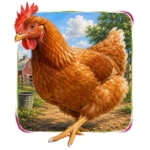
Rooster Fact Highlight
From the full animal facts page
More Animal Comparisons
Pick another animal matchup and keep exploring. Compare appearances, habitats, diets, abilities, and surprising differences.






Make an Animal Story
Turn this chicken vs rooster comparison into a clucking, crowing barnyard mystery with our free Animal Story Generator.
Source notes: References used for this comparison. See more See less
Try Another Matchup
Explore this comparison →