
Chicken vs Turkey: Farm Bird Comparison
Chickens and turkeys are familiar farm birds in the order Galliformes, but they differ greatly in size, sounds, feathers, and movement. Chickens are smaller birds known for clucking, scratching, and laying eggs. Turkeys are much larger, with long legs, fan-shaped tails, gobbles, and colorful bare skin on the head and neck.
About Chicken
- Type Bird
- Diet Omnivore
- Group Galliform
- Known for Eggs, clucking, scratching, pecking, combs, and life on farms and in backyards
- Special skill Scratching soil with strong feet to uncover seeds, insects, and other food
About Turkey
- Type Bird
- Diet Omnivore
- Group Galliform
- Known for Large size, gobbling, fan-shaped tail, snood, wattles, and powerful legs
- Special skill Running quickly and using powerful short flights to reach branches or escape danger
Chicken vs Turkey: Quick Answer
Chickens are smaller domesticated junglefowl relatives known for clucking, scratching, combs, and frequent egg laying. Turkeys are much larger North American birds known for gobbling, fan-shaped tails, snoods, wattles, and powerful legs. Both are social, ground-feeding, omnivorous birds.
Where Do They Fit?
Follow the branches to see how Chicken and Turkey are classified and related.
Chicken vs Turkey: Quick Comparison
| Feature | Chicken | Turkey |
|---|---|---|
| Animal type | Bird | Bird |
| Animal group | Galliform | Galliform |
| Known for | Clucking, eggs, scratching, combs, and pecking | Gobbling, large size, tail fans, snoods, and wattles |
| Main habitat | Farms, backyards, villages, and managed poultry areas | Forests, grasslands, farms, and managed poultry areas |
| Origins | Domestic ancestry in South and Southeast Asian junglefowl | Native ancestry in North America |
| Diet | Omnivore | Omnivore |
| Baby name | Chick | Poult |
| Typical size | Smaller and lighter | Larger and heavier |
| Main call | Cluck, crow, or cackle | Gobble, cluck, purr, or yelp |
| Special skill | Scratching and pecking for food | Fast running and short powerful flights |
How Are Chickens and Turkeys Alike?
- Both chickens and turkeys are birds in the order Galliformes.
- Both have feathers, wings, beaks, two legs, and babies that hatch from eggs.
- Both are omnivores that eat seeds, plants, insects, and other small foods.
- Both are social birds that communicate with many calls and body signals.
- Both spend much of the day walking, scratching, pecking, and searching on the ground.
How Are Chickens and Turkeys Different?
- Turkeys are generally much larger and heavier than chickens.
- Baby chickens are called chicks, while baby turkeys are called poults.
- Chickens cluck and roosters crow, while male turkeys are famous for gobbling.
- Turkeys have prominent snoods and wattles, while chickens usually have larger combs on top of the head.
- Wild turkeys are stronger runners and fliers than most domestic chickens.
Chicken vs Turkey Showdown
Farm-bird showdown: The turkey wins for size, speed, strength, and outdoor stealth because wild turkeys are large, powerful birds with excellent camouflage and quick bursts of running or flight. Social life is a tie because both form flocks and use complex calls. Swimming is also a tie because neither is a water bird. The turkey wins our weirdest-fact prize because its snood and bare head can change color with mood, excitement, health, and social signals.
Fun Chicken vs Turkey Facts
Junglefowl Relative vs North American Native
Domestic chickens descend mainly from red junglefowl of South and Southeast Asia, with genetic contributions from related junglefowl. Domestic turkeys descend from wild turkeys native to North America and were first domesticated by Indigenous peoples.
Chick vs Poult
A newly hatched chicken is called a chick, while a young turkey is called a poult. Both are precocial birds, meaning they hatch with down, open eyes, and the ability to walk and follow a parent soon after drying.
Cluck and Crow vs Gobble and Yelp
Chickens use clucks, cackles, alarm calls, food calls, and the rooster’s crow. Turkeys use gobbles, yelps, clucks, purrs, whistles, and other calls to keep contact or advertise.
Comb vs Snood
Chickens usually have a fleshy comb on top of the head and wattles beneath the beak. Turkeys have wattles too, plus a snood that hangs over the beak and a bumpy head and neck called caruncles.
Turkey Heads Can Change Color
Blood flow can make a turkey’s bare head, neck, wattles, and snood appear red, blue, white, or combinations of these colors. The changes can reflect excitement, courtship, stress, temperature, or social state.
Chicken vs Turkey Quiz
- Which bird is generally larger? Answer: Turkey.
- What is a baby chicken called? Answer: A chick.
- What is a baby turkey called? Answer: A poult.
- Which bird is famous for gobbling? Answer: Turkey.
- What is the fleshy flap over a turkey’s beak called? Answer: A snood.
Chicken vs Turkey FAQ
What is the main difference between a chicken and a turkey?
A chicken is generally smaller and is known for clucking, scratching, combs, and regular egg laying. A turkey is much larger and is known for gobbling, fan-shaped tails, snoods, wattles, and powerful legs.
Which is bigger, a chicken or a turkey?
Turkeys are generally much larger and heavier than chickens, although exact size varies by breed, sex, age, and whether the bird is wild or domestic.
Can chickens and turkeys fly?
Both can use their wings, but ability varies. Wild turkeys can fly strongly for short distances, while many heavy domestic turkey breeds and chicken breeds fly poorly.
Do chickens and turkeys eat the same food?
Both are omnivores, but they need feeds formulated for their species, age, and growth rate. Turkeys generally require different nutrient levels from chickens.
Can chickens and turkeys live together?
Keeping them together can create disease, nutrition, bullying, and space problems. In particular, chickens can carry organisms linked with blackhead disease without appearing sick, so expert poultry guidance is important.
Animal Words to Know
- Galliform: A ground-feeding bird in the order containing chickens, turkeys, pheasants, quail, and relatives.
- Poult: A young turkey.
- Comb: The fleshy crest on top of a chicken’s head.
- Snood: The fleshy structure hanging over a turkey’s beak.
- Precocial: Born or hatched well developed and able to move soon afterward.
Chicken and Turkey Farm-Bird Activity
Chicken and Turkey Farm-Bird Activity
Draw an adult hen beside a much larger male turkey on the same ground line. Give the hen a comb, wattles, scratching feet, and chicks. Give the turkey a fan-shaped tail, snood, long legs, and poults. Label size, comb, snood, chick, and poult.
Meet Each Animal
Want the full fact file? Here are quick highlights from each animal’s own facts page.
Chicken Fact Highlight
From the full animal facts page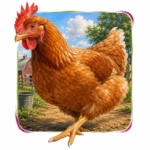
Turkey Fact Highlight
From the full animal facts page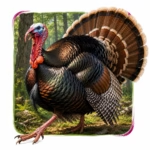
More Animal Comparisons
Pick another animal matchup and keep exploring. Compare appearances, habitats, diets, abilities, and surprising differences.



Make an Animal Story
Turn this chicken vs turkey comparison into a feathered farm adventure with our free Animal Story Generator.
Source notes: References used for this comparison. See more See less
Try Another Matchup
Explore this comparison →