
Sulphur-crested Cockatoo vs Rainbow Lorikeet: Australian Parrot Comparison
The Sulphur-crested Cockatoo and Rainbow Lorikeet are noisy, intelligent Australian parrots with curved bills, climbing feet, strong flock bonds, and tree-hollow nests. The cockatoo is a large white bird built to crack seeds and roots with a powerful bill. The much smaller lorikeet is a fast rainbow-colored flower visitor with a specialized brush-tipped tongue.
About Sulphur-crested Cockatoo
- Type Large crested cockatoo
- Diet Seed, nut, root, berry, and plant eater
- Group Cockatoo family, Cacatuidae
- Known for White plumage, a yellow movable crest, a powerful dark bill, loud calls, and problem solving
- Special skill Cracks tough food and manipulates objects with a strong hooked bill and hand-like zygodactyl feet
About Rainbow Lorikeet
- Type Small nectar-feeding parrot
- Diet Nectar, pollen, fruit, seed, and insect eater
- Group Old World parrot family, Psittaculidae
- Known for Rainbow plumage, fast noisy flocks, and a brush-tipped tongue for flowers
- Special skill Uses hair-like papillae on the tongue tip to collect nectar and pollen from flowers
Sulphur-crested Cockatoo vs Rainbow Lorikeet: Quick Answer
A Sulphur-crested Cockatoo is a large white cockatoo with a movable yellow crest and a heavy dark bill for cracking and tearing tough plant food. A Rainbow Lorikeet is a smaller green, blue, orange, and red parrot that gathers nectar and pollen with a brush-tipped tongue. Both are social, loud, clever hollow-nesters, but they differ greatly in size, color, feeding tools, and everyday diet.
Sulphur-crested Cockatoo vs Rainbow Lorikeet: Quick Comparison
| Feature | Sulphur-crested Cockatoo | Rainbow Lorikeet |
|---|---|---|
| Scientific name | Cacatua galerita | Trichoglossus moluccanus |
| Parrot family | Cacatuidae, the cockatoos | Psittaculidae, Old World parrots and lorikeets |
| Adult length | About 45 to 50 cm | About 28 to 32 cm |
| Appearance | Mostly white with a sulphur-yellow crest and dark bill | Green wings and back, blue head and belly, orange-yellow breast, and red bill |
| Special mouth tool | Large hooked bill for cracking, biting, digging, and climbing | Brush-tipped tongue for gathering nectar and pollen |
| Main food | Seeds, nuts, berries, roots, bulbs, shoots, and some crops | Nectar, pollen, fruit, seeds, and occasional insects |
| Social life | Small to huge flocks, often with one or more sentinels | Fast noisy flocks and large communal evening roosts |
| Movement | Strong steady flight plus powerful climbing with feet and bill | Fast direct flight between flowering trees plus agile climbing |
| Nest | Tree hollow prepared by both sexes with a wood-chip floor | Tree hollow, often with chewed decayed wood beneath the eggs |
| Eggs | Usually one to three eggs; both parents incubate and feed chicks | Usually two eggs; female incubates and both parents feed chicks |
How Cockatoos and Lorikeets Are Alike
- Both are Australian parrots with curved bills and two toes pointing forward and two backward.
- Both climb with their feet and bill and can hold food in a foot.
- Both live in social flocks and use loud calls to stay connected.
- Both lay white eggs inside tree hollows rather than building open cup nests.
- Both have adapted well to flowering trees, parks, gardens, and well-treed suburbs.
How Cockatoos and Lorikeets Are Different
- The Sulphur-crested Cockatoo is much larger and heavier than the Rainbow Lorikeet.
- The cockatoo is mostly white with a movable yellow crest, while the lorikeet has bright multicolored plumage and no large crest.
- The cockatoo’s heavy bill cracks tough seeds and roots, while the lorikeet’s brush tongue gathers nectar and pollen.
- Both cockatoo parents incubate, while only the female Rainbow Lorikeet normally incubates its eggs.
- Cockatoos often feed on the ground as well as in trees, while Rainbow Lorikeets concentrate strongly on flowers and fruit in the canopy.
Cockatoo vs Lorikeet Adaptation Showdown
Adaptation showdown: Sulphur-crested Cockatoo wins size because adults measure about 45 to 50 cm, compared with 28 to 32 cm for Rainbow Lorikeets. Rainbow Lorikeet wins speed because its compact pointed shape and rapid direct flight suit quick travel between scattered flowering trees. Sulphur-crested Cockatoo wins strength because its much larger body and heavy hooked bill can crack hard food and tear wood. Stealth is a Tie because both are brightly visible, noisy flock birds rather than secretive specialists. Social behavior is a Tie because cockatoos use sentinels and long family bonds while lorikeets feed, travel, and roost in energetic flocks. Swimming is a Tie because neither parrot is aquatic. Rainbow Lorikeet wins weirdest for unfolding hair-like tongue papillae into a living brush that sweeps nectar and pollen from flowers.
Fun Sulphur-crested Cockatoo vs Rainbow Lorikeet Facts
A Crest That Talks
A Sulphur-crested Cockatoo can raise or flatten its yellow crest. A high crest often signals alertness, excitement, surprise, or agitation.
Bill, Foot, and Climbing Team
Like other parrots, the cockatoo has two toes forward and two backward. It can grip with one foot and use its hooked bill as a third climbing point.
A Lookout Over the Flock
While Sulphur-crested Cockatoos feed on the ground, one or more birds may watch from a raised perch and call if danger appears.
A Tongue That Becomes a Brush
Hair-like papillae stand up at the tip of a Rainbow Lorikeet’s tongue when it feeds. The brush gathers liquid nectar and powdery pollen from flowers.
Rainbow Traffic at Sunset
Rainbow Lorikeets chatter and race between flowering trees by day, then many flocks may gather at a shared evening roost.
Cockatoo vs Lorikeet Quiz
- Which bird has a large movable yellow crest? Answer: The Sulphur-crested Cockatoo.
- Which bird uses a brush-tipped tongue? Answer: The Rainbow Lorikeet.
- What do the cockatoo’s feet have in common with other parrots? Answer: Two toes point forward and two point backward.
- What food dominates a Rainbow Lorikeet’s natural diet? Answer: Nectar and pollen, with fruit, seeds, and some insects too.
- Where do both birds normally lay their eggs? Answer: Inside tree hollows.
Sulphur-crested Cockatoo vs Rainbow Lorikeet FAQ
Is a lorikeet a type of cockatoo?
No. Both are parrots, but cockatoos form a separate family from Rainbow Lorikeets and other Old World parrots.
Which bird is bigger?
The Sulphur-crested Cockatoo is much larger, both longer and heavier.
Why does a Rainbow Lorikeet have a brush tongue?
The hair-like tip helps collect nectar and pollen efficiently from flowers.
Do cockatoos eat only nuts?
No. Sulphur-crested Cockatoos also eat seeds, berries, roots, bulbs, shoots, and other plant material.
Should wild parrots be given bread or sugary nectar?
No. Improper food can cause illness and crowding. Plant native flowering trees and follow local wildlife advice instead of hand-feeding.
Animal Words to Know
- Zygodactyl: Having two toes pointing forward and two backward, a gripping arrangement shared by parrots.
- Papillae: Tiny projections; on a lorikeet’s tongue they form a brush-like feeding surface.
- Nectar: A sugary liquid made by flowers that attracts pollinating animals.
- Sentinel: An individual that watches for danger while others feed or rest.
- Communal roost: A place where many birds gather to sleep.
Build Two Parrot Feeding Tools
Build Two Parrot Feeding Tools
Draw exactly one adult Sulphur-crested Cockatoo and exactly one adult Rainbow Lorikeet at honest relative scale, making the cockatoo clearly larger. Label the cockatoo’s yellow crest, heavy hooked bill, gripping foot, seed, root, and lookout perch. Label the lorikeet’s red bill, brush-tipped tongue, green wings, blue head, orange breast, flower, nectar, and pollen. Use arrows to show cracking versus brushing. Never touch, capture, or hand-feed wild parrots, and never offer bread, honey water, or dairy food.
Meet Each Animal
Want the full fact file? Here are quick highlights from each animal’s own facts page.
Sulphur-crested Cockatoo Fact Highlight
From the full animal facts page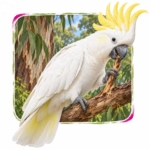
Rainbow Lorikeet Fact Highlight
From the full animal facts page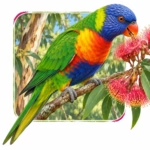
More Animal Comparisons
Pick another animal matchup and keep exploring. Compare appearances, habitats, diets, abilities, and surprising differences.





Make an Animal Story
Send a crest-raising seed cracker and a rainbow flower explorer through a parrot puzzle with our free Animal Story Generator.
Source notes: References used for this comparison. See more See less
Try Another Matchup
Explore this comparison →