
Coral Snake vs Kingsnake for Kids
“Coral snake” and “kingsnake” each describe more than one species, so this page compares two eastern United States neighbors: the Eastern Coral Snake, Micrurus fulvius, and the Eastern Kingsnake, Lampropeltis getula. The Coral Snake is slender, venomous and ringed red, yellow and black. The Eastern Kingsnake is larger, nonvenomous and usually black with pale chain-like bands. Never use color alone to handle a snake. Patterns vary, and the safest rule is to leave every wild snake alone.
About Eastern Coral Snake
- Type Living
- Diet Carnivore; mainly eats small snakes and lizards and may also take other small animals
- Group Venomous New World elapid; benchmark species Micrurus fulvius, also called the Harlequin Coralsnake
- Known for A slender body with red and black rings separated by narrow yellow rings, a black snout and powerful neurotoxic venom
- Special skill Uses short fixed front fangs to deliver venom that disrupts nerve-to-muscle signals in prey
About Eastern Kingsnake
- Type Living
- Diet Carnivore; eats snakes, lizards, rodents, birds, eggs, turtles and amphibians and kills larger prey by constriction
- Group Nonvenomous North American colubrid and constrictor (Lampropeltis getula), used here as the kingsnake benchmark
- Known for A shiny black body crossed by narrow white or yellow chain-like bands and an ability to overpower other snakes
- Special skill Resists the venom of some pit vipers and can squeeze and eat snakes, including venomous species
Quick Answer
The Eastern Coral Snake is usually 51–76 cm long, has a black snout and red and black rings divided by narrow yellow rings, and subdues prey with venom. The Eastern Kingsnake is usually about 91–122 cm long, has a black body crossed by pale chain bands, and kills larger prey by constriction. The familiar color rhyme is not a safe worldwide identification tool, so watch from a distance and ask an expert.
Eastern Coral Snake vs Eastern Kingsnake: Quick Comparison
| Feature | Eastern Coral Snake | Eastern Kingsnake |
|---|---|---|
| Scientific name | Micrurus fulvius | Lampropeltis getula |
| Snake family | Elapidae, the family containing cobras, kraits and mambas | Colubridae, a large and varied family of mostly nonvenomous snakes |
| Usual adult length | About 51–76 cm, with exceptional individuals longer | About 91–122 cm, and some adults exceed 1.2 m |
| Main pattern | Broad red and black rings separated by narrow yellow rings; black rounded snout | Glossy black or dark body crossed by narrow white or yellow bands that may look like a chain |
| Venom | Venomous, with a neurotoxic bite that needs emergency medical care | Nonvenomous and not dangerous to people, although any frightened wild snake may bite |
| How prey is stopped | Grips small prey and delivers venom through fixed front fangs | Wraps muscular coils around larger prey and kills it by constriction |
| Main food | Small snakes, lizards and other small reptiles | Snakes, lizards, rodents, birds, eggs, turtles and amphibians |
| Daily hiding place | Often underground, inside leaf litter or beneath logs and other cover | Often beneath rocks, logs, boards or debris and inside mammal burrows |
| Defense | Usually tries to escape; may hide its head and wave or curl the tail when trapped | May hiss, vibrate the tail, release musk or strike when it cannot escape |
| Safety clue | Do not touch; ring rhymes fail for some individuals and species | Do not touch based on a guess; let a trained local expert identify any wild snake |
How Are Coral Snakes and Kingsnakes Alike?
- Both are scale-covered reptiles that move without legs.
- Both lay eggs and their young hatch as miniature snakes.
- Both are carnivores that eat other snakes and lizards.
- Both are secretive and spend much time beneath ground cover.
- Both help ecosystems by eating animals that might otherwise become too numerous.
How Are Coral Snakes and Kingsnakes Different?
- The Eastern Coral Snake is venomous; the Eastern Kingsnake is nonvenomous.
- The Coral Snake stops prey with venom, while the Kingsnake uses constriction.
- The Coral Snake is usually much shorter and slimmer than the Eastern Kingsnake.
- The Coral Snake has a black snout and red, yellow and black rings; the Kingsnake usually has pale chain bands on black.
- Coral Snakes are elapids, while Kingsnakes belong to the colubrid family.
Coral Snake vs Kingsnake Showdown
- Size – Eastern Kingsnake: Its usual adult length is roughly one and a half times to twice that of the Eastern Coral Snake.
- Speed – Tie: Both can dart into cover, but no fair matched race shows a dependable winner.
- Strength – Eastern Kingsnake: Its larger muscular body can hold and constrict surprisingly strong prey.
- Stealth – Tie: Both vanish under leaves, logs and soil, using secretive lives rather than open chases.
- Social – Tie: Each normally travels and hunts alone, meeting others mainly during breeding.
- Swimming – Tie: Both can cross water when needed, but neither benchmark species is a swimming specialist.
- Weirdest – Eastern Kingsnake: A nonvenomous snake that resists some snake venom and eats venomous snakes is wonderfully strange.
Fun Coral Snake vs Kingsnake Facts
A Black-Nose Clue
The Eastern Coral Snake has a rounded black snout followed by a yellow head band.
Chains Instead of Coral Rings
Many Eastern Kingsnakes have narrow pale bands linked across a shiny black body like a loose chain.
The Rhyme Can Fail
Color rhymes describe some North American snakes but fail with unusual individuals and many species elsewhere.
A Snake-Eating Snake
Eastern Kingsnakes eat many prey types but are famous for overpowering other snakes, including venomous ones.
Hidden Most of the Time
Eastern Coral Snakes spend so much time underground or under leaf litter that people seldom see them.
Coral Snake vs Kingsnake Quiz
Which benchmark snake is venomous? A) Eastern Coral Snake B) Eastern Kingsnake C) Both Answer: A) Eastern Coral Snake
Which snake uses constriction? A) Eastern Coral Snake B) Eastern Kingsnake C) Neither Answer: B) Eastern Kingsnake
Which snake is usually longer? A) Eastern Coral Snake B) Eastern Kingsnake C) They are always equal Answer: B) Eastern Kingsnake
What color is the Eastern Coral Snake’s snout? A) Black B) Blue C) White Answer: A) Black
What is the safest rule for a wild snake? A) Pick it up B) Leave it alone C) Test a color rhyme Answer: B) Leave it alone
Coral Snake vs Kingsnake FAQ
Are All Coral Snakes and Kingsnakes Identical?
No. Both names cover many species and patterns. This page uses the Eastern Coral Snake and Eastern Kingsnake as clear benchmark species.
Can You Trust the Red-and-Yellow Rhyme?
No. It can describe common patterns in part of North America, but colors vary and many coral snakes elsewhere break the rule. Never touch a snake to test it.
Can an Eastern Kingsnake Kill a Coral Snake?
Kingsnakes can eat venomous snakes and have resistance to some snake venoms. That does not mean every meeting ends the same way or that the snake is immune to every venom.
What Should You Do After a Possible Coral Snake Bite?
Move away from the snake, keep still and get emergency medical help immediately. Do not cut the bite, suck venom or try to catch the snake.
Are Eastern Kingsnakes Helpful?
Yes. They eat rodents and many other small animals, including snakes. Like all native wildlife, they are best left unharmed in their habitat.
Animal Words to Know
- Constrictor: A snake that wraps coils around prey and tightens them.
- Elapid: A member of the venomous snake family that includes coral snakes and cobras.
- Mimicry: A resemblance that can change how predators respond to an animal.
- Neurotoxic: Able to harm the nervous system or interrupt messages between nerves and muscles.
- Venomous: Able to inject a harmful substance through a bite or sting.
Make a Snake Safety Field Card
Make a Snake Safety Field Card
Fold a card into two panels. Draw the benchmark Eastern Coral Snake with a black snout and red, yellow and black rings on one side. Draw the larger black Eastern Kingsnake with pale chain bands on the other. Across the bottom write your three safety rules: stop, step back and tell an adult or local expert. Never use a live snake for this activity.
Meet Each Animal
Want the full fact file? Here are quick highlights from each animal’s own facts page.
Eastern Coral Snake Fact Highlight
From the full animal facts page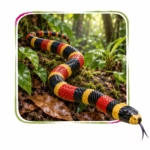
Eastern Kingsnake Fact Highlight
From the full animal facts page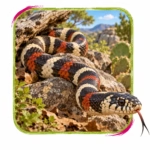
More Animal Comparisons
Pick another animal matchup and keep exploring. Compare appearances, habitats, diets, abilities, and surprising differences.




Make an Animal Story
Create a safe forest story about a hidden Coral Snake and a chain-patterned Kingsnake!