
Cormorant vs Shag: Cormorant Family Species Comparison
In Britain, the everyday name Cormorant usually means the Great Cormorant, Phalacrocorax carbo, while Shag means the European Shag, Gulosus aristotelis. Both are dark, hooked-billed diving birds, so even experienced birdwatchers can pause over an identification. The Cormorant is larger and stockier, with a pale throat patch and access to inland lakes and rivers. The Shag is smaller, slimmer and strongly coastal, with a steep forehead and a forward-curving crest in breeding plumage.
About Great Cormorant
- Type Living
- Diet Carnivore; mainly fish, with some other aquatic animals
- Group Cormorant family species (Phalacrocorax carbo)
- Known for Large stocky black body, white throat patch, breeding white thigh patches, hooked bill, deep dives and spread-wing drying pose
- Special skill Reduces buoyancy with wettable plumage, dives from the surface and propels itself underwater with large webbed feet
About European Shag
- Type Living
- Diet Carnivore; mainly small and medium-sized marine fish
- Group Cormorant family species (Gulosus aristotelis)
- Known for Slim dark-green body, narrow bill, steep forehead, yellow gape and a forward-curving crest during breeding season
- Special skill Uses its slim body and webbed feet to chase fish through coastal water, then returns to narrow rocky ledges
Great Cormorant vs European Shag: Quick Answer
A Great Cormorant is the larger, heavier bird. Adults often show a white throat or cheek area, and breeding birds develop white thigh patches. A European Shag is slimmer, with a narrower bill, steeper forehead and glossy green-black feathers. In the breeding season it grows a small curled crest. Cormorants use inland and coastal water; Shags are almost entirely marine.
Where Do They Fit?
Follow the branches to see how Great Cormorant and European Shag are classified and related.
Great Cormorant vs European Shag: Quick Comparison
| Feature | Great Cormorant | European Shag |
|---|---|---|
| Scientific name | Phalacrocorax carbo | Gulosus aristotelis |
| Length | About 80-100 cm | About 65-80 cm |
| Typical mass | Around 2.3 kg in BTO’s British summary | Around 1.8 kg in BTO’s British summary |
| Build | Large, heavy and stocky | Smaller, slimmer and more delicate |
| Head shape | Flatter crown and heavier, blockier head | Rounded crown with a noticeably steep forehead |
| Adult color clue | White throat or cheek patch; white thigh patch in breeding plumage | Glossy green-black adult plumage with a yellow gape |
| Breeding headwear | May show small pale filoplumes but no Shag-like front crest | Obvious short crest curling forward |
| Habitat | Both freshwater and saltwater | Rocky coasts and inshore sea |
| Nest sites | Trees, cliffs, islands or ground near water | Rock ledges, caves and crevices on coasts |
| Main food | Mostly fish from fresh or salt water | Mostly marine fish |
How Are Cormorants and Shags Alike?
- Both belong to the cormorant family and have long necks, hooked bills and four webbed toes on each foot.
- Both dive from the surface and swim underwater using their feet to chase fish.
- Both have feathers that become wet more easily than a duck’s and often rest with wings spread.
- Both nest in colonies and build untidy nests from sticks, seaweed or other available material.
- Both can look almost black from far away, especially in poor light.
How Are Cormorants and Shags Different?
- The Great Cormorant is larger and stockier; the European Shag is smaller and slimmer.
- A Cormorant has a heavier head and bill, while a Shag has a steep forehead and narrow bill.
- Breeding Shags grow a curled front crest; breeding Cormorants show obvious white thigh patches instead.
- Cormorants live beside inland lakes, rivers and canals as well as coasts, but Shags are strongly marine.
- Adult Shags can gleam green in sunlight, while adult Cormorants have more obvious white on the throat or face.
Cormorant vs Shag Adaptation Showdown
- Size – Great Cormorant: It is longer, heavier and more powerfully built than the European Shag.
- Speed – Tie: Both fly strongly and chase fish underwater, but no fair all-purpose test proves one faster.
- Strength – Great Cormorant: Its larger body, thicker neck and heavier bill provide more total power; this is not a fight prediction.
- Stealth – European Shag: Its slimmer body and dark green gloss can blend neatly with shadowed sea caves and wet rocks.
- Social – Tie: Both can nest and roost in colonies but often forage alone or in loose groups.
- Swimming – Tie: Both are expert foot-powered divers; habitat and prey differences make one overall winner impossible to justify.
- Weirdest – European Shag: For breeding season, it grows a small plume on its forehead that bends forward like a curled comma.
Fun Cormorant vs Shag Facts
All Four Toes Are Webbed
A cormorant-family foot has webbing connecting all four toes, an arrangement called totipalmate. Those broad feet provide thrust underwater.
Wet Feathers Can Help
Their plumage is less waterproof than a duck’s. Taking in some water reduces buoyancy, helping a bird stay below the surface while chasing fish.
A Seasonal Shag Crest
An adult European Shag grows a short forward-curving crest for the breeding season, then loses the showy shape later in the year.
From Cliff to City Canal
Great Cormorants once seemed mostly coastal in Britain, but many now use inland reservoirs, lakes, rivers and even urban waterways.
Color Hides in the Light
A Shag may look plain black at a distance, but sunlight can reveal deep bottle-green gloss. Its yellow gape is another useful adult clue.
Cormorant vs Shag Quiz
Which bird is larger and stockier? A) Great Cormorant B) European Shag C) They are equal Answer: A) Great Cormorant
Which bird grows a forward-curving breeding crest? A) Great Cormorant B) European Shag C) Neither Answer: B) European Shag
Which bird commonly uses inland lakes and canals? A) Great Cormorant B) European Shag C) Neither Answer: A) Great Cormorant
How do both birds mainly power themselves underwater? A) With their feet B) With their bills C) With bubbles Answer: A) With their feet
Which bird has a steep forehead and slimmer bill? A) Great Cormorant B) European Shag C) Both always Answer: B) European Shag
Cormorant vs Shag FAQ
Are cormorants and shags the same bird?
No. They are close relatives in the same family, but the Great Cormorant and European Shag are separate species.
Why do they spread their wings?
Their feathers become wet while diving, so a spread-wing pose may help dry and warm the plumage after fishing.
Can I identify a Shag by its crest all year?
No. The crest is mainly a breeding-season feature, so body build, forehead shape, bill and habitat matter too.
Do European Shags live on lakes?
They are strongly tied to rocky coasts and inshore sea. An inland dark diver is much more likely to be a Great Cormorant.
Are young birds easy to tell apart?
Not always. Juveniles are browner and lack some adult clues, so size, head shape, bill and location should be considered together.
Animal Words to Know
- Buoyancy: The upward force that makes an object or animal float in water.
- Colony: A place where many birds of the same species nest close together.
- Crest: A raised group of feathers on a bird’s head.
- Gape: The edges and corners of a bird’s open mouth.
- Totipalmate: Having all four toes joined by webbing.
Build a Dark Diver Field Guide
Build a Dark Diver Field Guide
Fold a page into two columns. Draw the larger Great Cormorant with a blocky head, white throat patch and white breeding thigh patch. Draw the slimmer European Shag with a steep forehead, narrow bill, yellow gape and curled crest. Add habitat cards for lake, canal, rocky coast and sea cave, then sort them under the birds.
Meet Each Animal
Want the full fact file? Here are quick highlights from each animal’s own facts page.
Great Cormorant Fact Highlight
From the full animal facts page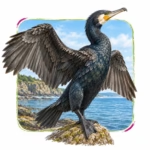
European Shag Fact Highlight
From the full animal facts page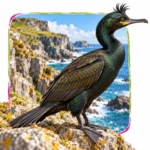
More Animal Comparisons
Pick another animal matchup and keep exploring. Compare appearances, habitats, diets, abilities, and surprising differences.



Make an Animal Story
Create a seabird story about a stocky lake diver meeting a green-glossed cliff specialist!
Source notes: References used for this comparison. See more See less
Try Another Matchup
Explore this comparison →