
Coyote vs Bobcat for Kids
Coyotes and bobcats share much of North America, and both are adaptable predators that hunt rabbits, rodents, and other small animals. A coyote is a long-legged wild canine with a pointed muzzle, upright ears, and a bushy tail carried low. A bobcat is a compact wild cat with spotted fur, ear tufts, and a short bobbed tail. Coyotes are generally larger, faster in published top-speed figures, more vocal, and more social. Bobcats are solitary climbing specialists that stalk with remarkable patience and step quietly into their own tracks.
About Coyote
- Type Mammal
- Diet Omnivore; mostly animal food
- Group Wild canine; family Canidae
- Known for Howls and yelps, adaptability, fast running, mousing pounces, and family packs
- Special skill Running up to 65 km/h and sometimes hunting rodents alongside a badger
About Bobcat
- Type Mammal
- Diet Carnivore
- Group Wild cat; family Felidae
- Known for A bobbed tail, spotted camouflage, silent stalking, pouncing, and climbing
- Special skill Placing hind feet into front-foot tracks to reduce hunting noise
Quick Answer
Quick answer: The coyote is generally larger and has a published top running speed of 65 kilometres per hour, compared with up to 48 kilometres per hour for the bobcat. Coyotes may form pairs or family packs, care for pups together, swim well, and use many calls. Bobcats are mostly solitary, excellent climbers, and exceptionally quiet stalkers. Both live in many habitats, hunt small mammals, use dens, defend home areas, and are most active from dusk through night.
Coyote vs Bobcat: Quick Comparison
| Feature | Coyote | Bobcat |
|---|---|---|
| Scientific identity | Canis latrans | Lynx rufus |
| Animal family | Canidae | Felidae |
| Published adult length | About 75-100 cm | About 65-105 cm, plus an 11-19 cm tail |
| Published adult mass | About 7-21 kg | About 4-15 kg |
| Published top speed | Up to about 65 km/h | Up to about 48 km/h |
| Adult appearance | Pointed muzzle, upright ears, long legs, bushy black-tipped tail | Spotted buff-brown coat, ear tufts, facial ruff, bobbed tail |
| Main habitat | Extremely broad range from wild country to farms and cities | Forests, semi-deserts, mountains, brush, swamps, and scrub |
| Social life | Alone, pairs, or family packs; both parents help pups | Mostly solitary; the mother raises kittens |
| Hunting style | Stalks, pounces, chases, and sometimes hunts as a team | Waits, stalks quietly, and pounces from close range |
| Memorable ability | Very good swimmer and occasional badger hunting partner | Excellent climber that places hind feet in front-foot tracks |
How Are Coyotes and Bobcats Alike?
- Both are native North American mammals in order Carnivora.
- Both hunt rabbits, rodents, birds, and other small animals, though coyotes also eat more plant food.
- Both are adaptable enough to live in forests, dry country, and some places close to people.
- Both use scent marks and other signals to communicate about territory or nearby animals.
- Both are most active around dusk, night, or dawn and usually avoid people.
How Are Coyotes and Bobcats Different?
- A coyote is a wild canine in family Canidae, while a bobcat is a wild cat in family Felidae.
- Coyotes generally weigh 7-21 kilograms, while bobcats weigh about 4-15 kilograms.
- Coyotes may live and hunt in pairs or family units, while adult bobcats are mainly solitary.
- Coyotes are very good swimmers but poor climbers, while bobcats are excellent climbers.
- Coyotes communicate with many howls and yelps, while bobcats rely heavily on scent and quiet stalking.
Coyote vs Bobcat Showdown
Adaptation showdown: Coyote wins size because its published mass range reaches 21 kilograms and it is generally the heavier animal, though length ranges overlap. Coyote wins speed because the cited figures reach 65 kilometres per hour versus 48 for the bobcat. Coyote wins whole-body strength as the generally larger, heavier predator; this is not a fight prediction. Bobcat wins stealth for patiently stalking and placing hind feet into front-foot tracks to cut noise. Coyote wins social behavior because pairs and family packs cooperate in hunting and pup care. Coyote wins swimming because it is specifically described as a very good swimmer, while bobcats are best documented here as climbers. Coyote wins weirdest for sometimes forming a rodent-hunting partnership with an American badger.
Fun Coyote vs Bobcat Facts
A Coyote Can Sprint Fast
Animal Diversity Web reports that coyotes can run up to 65 kilometres per hour and jump as far as 4 metres. They do not maintain top speed forever, but a short burst helps during a chase or escape.
Pups Get Help From Both Parents
A coyote litter averages about six pups, though the reported range is much wider. Both parents bring food after weaning, protect the pups, and give young coyotes time to learn hunting skills.
Badger Plus Coyote Teamwork
Coyotes sometimes hunt ground squirrels or other burrowing rodents near American badgers. A coyote is better at chasing prey above ground, while a badger is built for digging, so prey has fewer escape routes.
A Bobcat Walks Into Its Own Tracks
A bobcat may put each hind foot where the front foot on that side already stepped. Smithsonian explains that this reduces noise, helping the cat move quietly while hunting.
Kittens Learn From Their Mother
A female bobcat brings meat to her kittens and teaches them to hunt after weaning. The young remain with her for many months, while the male does not help raise them.
Coyote vs Bobcat Quiz
- Which animal belongs to the dog family? Answer: The coyote.
- Which animal has the higher published top running speed? Answer: The coyote.
- Which animal is an excellent climber? Answer: The bobcat.
- How does a bobcat reduce footstep noise? Answer: It places its hind feet into the spots used by its front feet.
- Which other predator sometimes hunts near a coyote? Answer: An American badger.
Coyote vs Bobcat FAQ
Which is bigger, a coyote or bobcat?
The coyote is generally heavier, with a published range of about 7-21 kilograms compared with about 4-15 kilograms for the bobcat. Their length ranges overlap.
Which is faster, a coyote or bobcat?
The cited top figures favor the coyote at up to about 65 kilometres per hour, compared with up to about 48 kilometres per hour for the bobcat.
Do coyotes and bobcats live in the same places?
Yes. Their ranges and habitats overlap across much of North America, including forests, dry country, brush, and some landscapes near people.
Are bobcats social?
Adult bobcats are mostly solitary. A mother stays with her kittens for months and teaches them to hunt before they become independent.
Would a coyote and bobcat fight?
This page compares adaptations, not a fight. Wild animals usually avoid risky conflicts when escape, hiding, or keeping distance is possible.
Animal Words to Know
- Canid: A member of the dog family Canidae.
- Felid: A member of the cat family Felidae.
- Crepuscular: Most active around dawn and dusk.
- Territory: An area an animal or group may mark or defend.
- Camouflage: Colors or patterns that help an animal blend into its surroundings.
Build a Twilight Track Trail
Build a Twilight Track Trail
Draw one adult coyote and one adult bobcat at honest relative scale beside two track paths. Give the coyote a longer-legged canine outline and the bobcat a compact spotted cat body with a short tail. Make cards for canine, felid, howl, scent mark, family pack, solitary hunter, good swimmer, excellent climber, overlapping tracks, and badger partnership. Sort each clue, then explain why this is an adaptation comparison rather than a fight.
Meet Each Animal
Want the full fact file? Here are quick highlights from each animal’s own facts page.
Coyote Fact Highlight
From the full animal facts page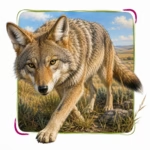
Bobcat Fact Highlight
From the full animal facts page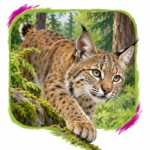
More Animal Comparisons
Pick another animal matchup and keep exploring. Compare appearances, habitats, diets, abilities, and surprising differences.



Make an Animal Story
Send a howling coyote and a silent bobcat into a twilight tracking mystery with our free Animal Story Generator.