
Dhole vs Black-backed Jackal: Canid Species Comparison
Dholes and Black-backed Jackals are wild members of the dog family, but they live on different continents and use different social teams. The Dhole, Cuon alpinus, is an endangered Asian canid with rounded ears and a rust-red coat. It often hunts in a pack and whistles to stay in contact. The Black-backed Jackal, Lupulella mesomelas, is a smaller African canid with pointed ears and a black-and-silver saddle. It usually travels alone, with a mate or in a family.
About Dhole
- Type Living
- Diet Carnivore; packs hunt deer, wild pigs and other mammals, while individuals also catch smaller prey
- Group Asian wild canid and the only living species in genus Cuon (Cuon alpinus)
- Known for Rust-red coat, rounded ears, broad short muzzle, dark bushy tail, whistling calls and highly cooperative packs
- Special skill Uses high whistles that travel through dense forest and help separated pack members keep in contact
About Black-backed Jackal
- Type Living
- Diet Opportunistic omnivore; catches insects, reptiles, rodents and small antelope and also eats carrion and fruit
- Group Small African canid in genus Lupulella (Lupulella mesomelas; older sources use Canis mesomelas)
- Known for Rust-colored sides, black-and-silver back saddle, tall pointed ears, narrow muzzle, black-tipped tail and wailing calls
- Special skill Switches quickly among hunting, scavenging and fruit eating and may bury extra food for later
Dhole vs Black-backed Jackal: Quick Answer
A Dhole is the larger, rounder-eared canid. It lives in Asia, forms cooperative packs and makes clear whistles that carry through forest. A Black-backed Jackal is smaller and more foxlike, with tall pointed ears and a dark saddle across its back. It lives in eastern and southern Africa and usually works alone, as a pair or with close family.
Where Do They Fit?
Follow the branches to see how Dhole and Black-backed Jackal are classified and related.
Dhole vs Black-backed Jackal: Quick Comparison
| Feature | Dhole | Black-backed Jackal |
|---|---|---|
| Scientific name | Cuon alpinus | Lupulella mesomelas; older sources use Canis mesomelas |
| Adult mass | Females about 10-13 kg; males about 15-20 kg | About 5-10 kg |
| Coat | Usually rust-red with pale underparts and a fluffy dark-tipped tail | Rusty sides with a black-and-silver saddle and black-tipped tail |
| Head and ears | Broader, shorter muzzle and rounded ears | Narrow pointed muzzle and tall pointed ears |
| Range | South, East and Southeast Asia | Eastern and southern Africa |
| Habitat | Forest, grassland, scrub and mountain country | Savanna, shrubland, semi-desert and farmland |
| Main food | Mostly hunted mammals such as deer and wild pigs | Small prey, insects, carrion and fruit |
| Social life | Cooperative pack, commonly about 5-12 animals | Long-term pair or family, with some helpers |
| Famous sound | Whistles, screams, mews and clucks | Wails, howls, yaps and barks |
| Water behavior | Readily enters water and may rest in shallow pools | Can drink and cross water but is not known as a water-loving specialist |
How Are Dholes and Black-backed Jackals Alike?
- Both are wild canids, members of the dog family Canidae.
- Both have long legs, keen hearing, sharp teeth and bushy tails.
- Both use scent marks and many calls to communicate.
- Both hunt animals but may also take small prey or food they did not kill.
- Both parents help care for pups, and other family or pack members may help too.
How Are Dholes and Black-backed Jackals Different?
- Dholes live in Asia, while Black-backed Jackals live in eastern and southern Africa.
- A Dhole is generally heavier, with rounded ears and a broader muzzle.
- A Black-backed Jackal has tall pointed ears and a dark saddle pattern that a Dhole lacks.
- Dholes regularly cooperate in packs, while Black-backed Jackals usually live in pairs or family groups.
- Dholes mainly hunt medium-sized mammals, while Black-backed Jackals eat a wider mix including insects, carrion and fruit.
Dhole vs Black-backed Jackal Adaptation Showdown
- Size – Dhole: Adult male Dholes may reach about 20 kg, roughly twice the Black-backed Jackal’s usual upper mass.
- Speed – Tie: Both are quick canids, but the selected sources do not provide a fair matched speed test.
- Strength – Dhole: Its heavier body and cooperative hunting role give it the cautious strength edge.
- Stealth – Black-backed Jackal: Its smaller frame, mostly pair-based searches and flexible night activity help it move quietly through open country.
- Social – Dhole: A coordinated pack hunts, shares food and helps feed pups and their mother.
- Swimming – Dhole: Dholes readily enter water and have been observed relaxing in shallow pools.
- Weirdest – Dhole: It uses birdlike whistles in forest and can reportedly leap more than 2 m straight upward.
Fun Dhole vs Black-backed Jackal Facts
The Whistling Hunter
A Dhole’s high whistle can travel through thick forest, helping pack members find one another.
A Pack Shares Dinner
Dholes often let pups eat first, and pack members may carry food back for pups or a nursing mother.
A Silver-Black Saddle
A Black-backed Jackal’s dark back is mixed with silvery hairs, creating a saddle-shaped identification mark.
A Hidden Pantry
A Black-backed Jackal may bury extra pieces of food and return to them later.
Two Family Plans
Dholes build larger cooperative packs, while Black-backed Jackals often form lifelong pairs helped by older offspring.
Dhole vs Black-backed Jackal Quiz
Which animal lives in Asia? A) Dhole B) Black-backed Jackal C) Both Answer: A) Dhole
Which animal has a black-and-silver saddle? A) Dhole B) Black-backed Jackal C) Neither Answer: B) Black-backed Jackal
Which animal regularly hunts in a pack? A) Dhole B) Black-backed Jackal C) Neither Answer: A) Dhole
What famous sound does a Dhole make? A) Whistle B) Croak C) Trumpet Answer: A) Whistle
What family contains both animals? A) Dog family B) Cat family C) Horse family Answer: A) Dog family
Dhole vs Black-backed Jackal FAQ
Is a Dhole a Jackal?
No. Both belong to the dog family, but the Dhole is the only living Cuon species and the Black-backed Jackal belongs to Lupulella.
Which Jackal does this page compare?
It uses the Black-backed Jackal. Side-striped and Golden Jackals differ in markings, range and biology.
Do Dholes really whistle?
Yes. Their high contact whistles carry through dense habitat and help pack members keep track of one another.
Do Black-backed Jackals live in packs?
They usually live alone, as a long-term pair or in a small family. Temporary groups can gather around rich food.
Are Dholes endangered?
Yes. Habitat loss, fewer wild prey, persecution and diseases spread by domestic dogs have greatly reduced them.
Animal Words to Know
- Canid: A member of the dog family, including wolves, foxes, Dholes and jackals.
- Carrion: The body of a dead animal used as food by another animal.
- Cooperative: Working together toward the same goal.
- Endangered: At very high risk of disappearing from the wild.
- Saddle: A patch of fur across the back that resembles a riding saddle in shape.
Decode the Wild-Canid Calls
Decode the Wild-Canid Calls
Make two listening cards. On the forest card, draw a rounded-eared rust-red Dhole and use a whistle symbol to show how pack members keep contact. On the savanna card, draw a smaller pointed-eared Black-backed Jackal with its dark saddle and use a wavy line for a wail. Add one social message each call might carry.
Meet Each Animal
Want the full fact file? Here are quick highlights from each animal’s own facts page.
Dhole Fact Highlight
From the full animal facts page
Black-backed Jackal Fact Highlight
From the full animal facts page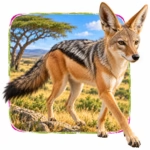
More Animal Comparisons
Pick another animal matchup and keep exploring. Compare appearances, habitats, diets, abilities, and surprising differences.





Make an Animal Story
Create a wild-dog story about a whistling Dhole pack and a clever Black-backed Jackal!
Source notes: References used for this comparison. See more See less
Try Another Matchup
Explore this comparison →