
Dingo vs Red Fox for Kids: Wild Dog and Clever Fox
The Australian Dingo and Red Fox both belong to the dog family, but a dingo is a larger Canis canid and a Red Fox is a smaller member of genus Vulpes. Dingoes arrived in Australia thousands of years ago and became major predators. Red Foxes were introduced much more recently and are highly adaptable hunters in natural, farm, and urban habitats.
About Australian Dingo
- Type Wild canid
- Diet Mostly carnivore and opportunistic omnivore
- Group Dog family, Canidae
- Known for Howling, cooperative hunting, and life across nearly every mainland habitat
- Special skill Cooperates in packs to hunt prey larger than one dingo could tackle
About Red Fox
- Type True fox
- Diet Omnivore
- Group Dog family, Canidae
- Known for A white-tipped brush, huge global range, adaptable diet, and high mousing pounce
- Special skill Pinpoints faint underground prey sounds and leaps high before a nose-first pounce
Quick Answer
Quick answer: An Australian Dingo is a lean, long-legged wild canid that may live and hunt in a pack. A Red Fox is smaller, lower to the ground, usually hunts alone, and has a very bushy white-tipped tail. Both are intelligent, adaptable canids with keen ears and noses, but dingoes usually take larger prey while foxes specialize in small prey and mixed foods.
Australian Dingo vs Red Fox: Quick Comparison
| Feature | Australian Dingo | Red Fox |
|---|---|---|
| Scientific name | Canis familiaris, with Canis lupus dingo also widely used | Vulpes vulpes |
| Canid branch | Genus Canis, with dogs, wolves, and jackals | Genus Vulpes, the true foxes |
| Body size | Body about 86 to 123 cm; roughly 12 to 24 kg | Body about 62 to 72 cm in many adults; commonly about 5 to 7 kg |
| Appearance | Lean ginger body, white points, erect ears, and bushy tail | Orange-red coat, dark lower legs, pointed face, and white-tipped brush |
| Native range | Wild form shaped in mainland Australia after ancient arrival | Native across much of Europe, Asia, North America, and northern Africa |
| Australian history | Present for at least several thousand years | Introduced by Europeans in the 1800s |
| Main food | Medium and large mammals plus small animals, carrion, and some plant food | Rodents, rabbits, birds, insects, worms, fruit, carrion, and food scraps |
| Hunting style | Hunts alone or cooperates with a pack on larger prey | Usually hunts alone, listens closely, stalks, and pounces |
| Social life | Stable packs may defend a territory and raise one litter | Pairs or small family groups share a territory, though adults often forage alone |
| Voice | Long howls are important; barking is uncommon | Barks, screams, whines, yelps, and other calls |
How Dingoes and Red Foxes Are Alike
- Both are canids in the dog family, with pointed muzzles, erect ears, fur, and bushy tails.
- Both have excellent hearing and smell and are especially active around dusk or night.
- Both are adaptable hunters that may also scavenge carrion or eat some plant foods.
- Both raise live-born pups or cubs in sheltered dens.
- Both use scent marks and vocal calls to communicate around a territory.
How Dingoes and Red Foxes Are Different
- The dingo is usually two to four times as heavy as the Red Fox and stands much taller.
- Dingoes may cooperate in packs, while Red Foxes usually search for food alone even when sharing a family territory.
- Dingoes often target larger mammals, while foxes concentrate more on rodents, rabbits, birds, insects, and fruit.
- A dingo belongs to genus Canis, while the Red Fox belongs to genus Vulpes.
- Dingoes reached Australia thousands of years ago, while Europeans introduced Red Foxes in the nineteenth century.
Dingo vs Red Fox Adaptation Showdown
Adaptation showdown: Australian Dingo wins size because adults commonly weigh about 12 to 24 kg, compared with roughly 5 to 7 kg for many Red Foxes. Australian Dingo wins speed because its taller legs and endurance suit longer pursuits across open ground. Australian Dingo wins strength because its larger body and cooperative packs can tackle substantially larger prey. Red Fox wins stealth because its small body, precise hearing, quiet stalk, and sudden pounce suit hidden prey. Australian Dingo wins social behavior because a stable pack can hunt, defend a territory, and raise pups together, while foxes usually forage alone. Swimming is a Tie because both can swim but neither is aquatic. Red Fox wins weirdest for hearing prey beneath snow or soil and launching a steep mousing leap before plunging nose-first at the sound.
Fun Australian Dingo vs Red Fox Facts
One Family, Different Branches
Dingoes and Red Foxes are both canids, but dingoes belong to genus Canis and foxes to genus Vulpes. Their lineages separated long before either reached Australia.
A High Mousing Pounce
A Red Fox pauses to listen for a rodent moving under grass, soil, or snow. It may leap high and drop front feet and nose toward the sound.
The Tail Called a Brush
A Red Fox’s long bushy tail is called a brush. It balances sharp turns, signals to other foxes, and can wrap around the face and feet in cold weather.
A Wild Canid That Rarely Barks
Dingoes can bark, but they rely heavily on long howls to contact pack members and advertise territories. Neighboring groups may answer.
Predator Balance
Healthy dingo populations can suppress foxes and feral cats through competition and direct encounters. This may reduce pressure on some smaller native animals.
Dingo vs Red Fox Quiz
- Which animal is generally much larger? Answer: The Australian Dingo.
- What is a fox’s bushy tail called? Answer: A brush.
- Which animal commonly uses a high mousing pounce? Answer: The Red Fox.
- Which canid may hunt in a cooperative pack? Answer: The Australian Dingo.
- Which animal was introduced to Australia in the 1800s? Answer: The Red Fox.
Australian Dingo vs Red Fox FAQ
Is a dingo a fox?
No. Both are canids, but dingoes are in genus Canis and Red Foxes are in genus Vulpes.
Which animal is bigger?
The Australian Dingo is much taller and commonly two to four times as heavy.
Do Red Foxes live in packs?
They may share a family territory, but adults usually hunt alone rather than in a cooperative hunting pack.
Do dingoes and foxes meet in Australia?
Yes. Their mainland ranges overlap, and dingoes may chase, kill, or displace foxes while competing for food and territory.
Can both animals live near people?
Yes, but wild canids should never be fed or approached because feeding changes behavior and can create danger for animals and people.
Animal Words to Know
- Canid: A member of the dog family, including dogs, wolves, dingoes, foxes, and jackals.
- Genus: A scientific group containing closely related species.
- Crepuscular: Most active around dawn and dusk.
- Mesopredator: A medium-sized predator below the largest predators in a food web.
- Introduced species: A species moved by people to a place outside its natural range.
Read Two Canid Track Stories
Read Two Canid Track Stories
Draw exactly one adult Australian Dingo and exactly one adult Red Fox at honest relative scale, making the dingo much taller and heavier. Add two non-contact tracking routes: a long dingo route with pack howl marks and a fox route ending in a high mousing pounce. Label ears, muzzle, legs, paws, tail, den, main prey sizes, and social style. Never leave food for wild canids or approach dens and young.
Meet Each Animal
Want the full fact file? Here are quick highlights from each animal’s own facts page.
Australian Dingo Fact Highlight
From the full animal facts page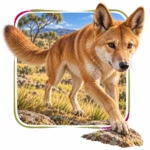
Red Fox Fact Highlight
From the full animal facts page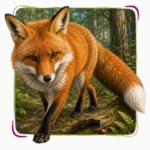
More Animal Comparisons
Pick another animal matchup and keep exploring. Compare appearances, habitats, diets, abilities, and surprising differences.





Make an Animal Story
Send a howling Dingo and a clever Red Fox across an Australian tracking mystery with our free Animal Story Generator.