
Dog vs Wolf: Canid Comparison
Dogs and wolves are close relatives in the canid family, but domestication shaped them for very different lives. Dogs live alongside people and occur in hundreds of breeds with enormous differences in size, coat, and behavior. Wolves are larger wild canids built for endurance, family-pack cooperation, and survival across demanding natural habitats.
About Dog
- Type Mammal
- Diet Omnivore
- Group Canid
- Known for Domestication, many breeds, companionship, trained work, and reading human cues
- Special skill Learning human gestures, following scents, and performing many specialized tasks
About Wolf
- Type Mammal
- Diet Carnivore
- Group Canid
- Known for Pack teamwork, howling, endurance, strong jaws, and long-distance travel
- Special skill Traveling long distances and cooperating with pack members to hunt and defend territory
Dog vs Wolf: Quick Answer
Dogs are domesticated canids bred into many sizes, shapes, and jobs. Wolves are wild canids with longer legs, larger teeth, stronger jaws, and bodies built for endurance. Dogs descended from ancient wolf populations, but modern dogs are not simply tame versions of living wolves.
Where Do They Fit?
Follow the branches to see how Dog and Wolf are classified and related.
Dog vs Wolf: Quick Comparison
| Feature | Dog | Wolf |
|---|---|---|
| Animal type | Mammal | Mammal |
| Animal group | Canid | Canid |
| Known for | Domestication, breeds, companionship, and trained work | Pack teamwork, howling, endurance, and wild hunting |
| Main habitat | Homes, farms, towns, cities, and working environments | Forests, tundra, grasslands, mountains, and deserts |
| Where found | Worldwide | North America, Europe, and Asia |
| Diet | Omnivore | Mainly carnivore |
| Baby name | Puppy | Pup |
| Social style | Bonds with humans and other dogs | Lives in family packs |
| Body design | Varies greatly among breeds | Long-legged, deep-chested, and built for endurance |
| Special skill | Learning human cues and performing trained tasks | Long-distance travel and cooperative hunting |
How Are Dogs and Wolves Alike?
- Both dogs and wolves are mammals in the canid family.
- Both have strong senses of smell, sharp hearing, padded paws, claws, and canine teeth.
- Both communicate with sounds, scents, facial expressions, and body postures.
- Both are social animals capable of forming close relationships.
- Both have young called pups, although baby dogs are usually called puppies.
How Are Dogs and Wolves Different?
- Dogs are domesticated and live closely with people, while wolves remain wild animals.
- Dogs occur in hundreds of breeds, while wolves have a more consistent athletic body shape.
- Wolves generally have longer legs, larger feet, stronger jaws, and greater endurance than most dogs.
- Dogs often bark frequently, while wolves rely more on howls, whines, growls, and body signals.
- Dogs may eat a varied omnivorous diet, while wolves depend mainly on meat from wild prey.
Dog vs Wolf Showdown
Canid showdown: The wolf wins for average size, speed, strength, and stealth because its body is built for wild travel and hunting. Social life and swimming are ties because both canids form strong bonds and can cross water. The dog wins our weirdest-fact prize because selective breeding has produced everything from tiny Chihuahuas to giant mastiffs within a single domesticated species.
Fun Dog vs Wolf Facts
Domesticated Canid vs Wild Canid
Dogs were domesticated from ancient wolf populations over many generations. Humans selected dogs for companionship, guarding, herding, hunting, hauling, scent work, and many other tasks, while wolves continued adapting to wild ecosystems.
Hundreds of Breeds vs One Athletic Shape
Domestic dogs vary enormously in height, weight, coat, muzzle length, ear shape, and behavior. Wolves vary too, but they generally share long legs, large paws, narrow chests, and strong bodies suited to efficient travel.
Barks vs Howls
Dogs use barks more frequently than adult wolves, partly because domestication changed how they communicate with people. Wolves howl to contact pack members, gather the family, and advertise territory across long distances.
Human Family vs Wolf Family Pack
Dogs often form strong attachments to humans and may treat household members as their social group. A wolf pack is usually a family made of breeding parents, their pups, and older offspring that help travel, hunt, and care for young.
Dogs Read Human Gestures Remarkably Well
Many dogs naturally follow human pointing, gaze, and voice cues better than wolves raised under similar conditions. Thousands of years of domestication strengthened their ability to cooperate and communicate with people.
Dog vs Wolf Quiz
- Which animal is domesticated? Answer: Dog.
- Which animal usually lives in a wild family pack? Answer: Wolf.
- Which animal comes in hundreds of breeds? Answer: Dog.
- Which animal is generally larger and stronger? Answer: Wolf.
- What family do dogs and wolves belong to? Answer: The canid family.
Dog vs Wolf FAQ
What is the main difference between a dog and a wolf?
A dog is a domesticated canid bred to live and work with people. A wolf is a wild canid adapted to hunting, traveling, and raising pups in a family pack.
Did dogs come from wolves?
Dogs descended from ancient wolf populations, but they did not develop directly from the modern wolves alive today. Dogs and living wolves share ancient ancestors.
Which is bigger, a dog or a wolf?
Wolves are larger than most dog breeds, although a few giant dog breeds may approach or exceed some wolves in weight. Wolves usually remain taller, longer-legged, and more athletic.
Can dogs and wolves have puppies together?
Yes. Dogs and gray wolves are closely related and can produce fertile wolf-dog hybrids, but these animals can be difficult to care for and are restricted in many places.
Do wolves bark like dogs?
Wolves can bark, but they do so less often. They communicate mainly with howls, whines, growls, scent marks, facial expressions, and body postures.
Animal Words to Know
- Canid: A member of the dog family, including dogs, wolves, foxes, and coyotes.
- Domestication: Long-term change caused by animals living and breeding under human care.
- Breed: A domesticated animal group selected for particular traits.
- Pack: A social family group of wolves or a group of dogs.
- Hybrid: An offspring produced by parents from two closely related groups or species.
Dog and Wolf Canid Activity
Dog and Wolf Canid Activity
Draw one named dog breed beside a gray wolf on the same ground line. Give the dog a collar and the chosen breed’s real body shape. Give the wolf long legs, large paws, a broad muzzle, and a family pack behind it. Label canid, puppy, pup, breed, domestication, bark, howl, and endurance.
Meet Each Animal
Want the full fact file? Here are quick highlights from each animal’s own facts page.
Dog Fact Highlight
From the full animal facts page
Wolf Fact Highlight
From the full animal facts page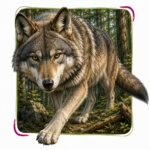
More Animal Comparisons
Pick another animal matchup and keep exploring. Compare appearances, habitats, diets, abilities, and surprising differences.






Make an Animal Story
Turn this dog vs wolf comparison into a howling woodland adventure with our free Animal Story Generator.
Source notes: References used for this comparison. See more See less
Try Another Matchup
Explore this comparison →