
Dragonfly vs Damselfly: Odonate Insect Comparison
Dragonflies and damselflies are colorful aerial hunters in the insect order Odonata, but their bodies, eyes, wings, and flight styles give away who is who. Dragonflies are usually sturdier, faster, and rest with their wings spread. Damselflies are slimmer, have widely separated eyes, and usually hold their wings together above the body.
About Dragonfly
- Type Insect
- Diet Carnivore
- Group Anisopteran Odonate
- Known for Powerful flight, huge eyes, broad bodies, open wings at rest, and aerial hunting
- Special skill Flying forward, backward, sideways, hovering, and intercepting prey in midair
About Damselfly
- Type Insect
- Diet Carnivore
- Group Zygopteran Odonate
- Known for Slender body, widely separated eyes, delicate flight, folded wings, and wetland hunting
- Special skill Maneuvering through reeds and low vegetation with light, precise flight
Dragonfly vs Damselfly: Quick Answer
Dragonflies usually have thick bodies, eyes that nearly touch, unequal wing pairs, and wings held open at rest. Damselflies usually have slender bodies, widely separated eyes, similarly shaped wings, and wings folded together above the abdomen. Both are predatory insects whose aquatic young are called nymphs or naiads.
Where Do They Fit?
Follow the branches to see how Dragonfly and Damselfly are classified and related.
Dragonfly vs Damselfly: Quick Comparison
| Feature | Dragonfly | Damselfly |
|---|---|---|
| Animal type | Insect | Insect |
| Animal group | Anisopteran odonate | Zygopteran odonate |
| Known for | Fast flight, broad body, huge eyes, and open wings | Slender body, separated eyes, delicate flight, and folded wings |
| Main habitat | Freshwater wetlands and nearby open areas | Freshwater wetlands and nearby vegetation |
| Eyes | Very large and usually touching or nearly touching | Clearly separated on opposite sides of the head |
| Body | Usually thicker and sturdier | Usually long and very slender |
| Wings at rest | Usually held open and flat | Usually folded together above the body |
| Wing shape | Hindwings broader near the base | Front and hindwings more similar in shape |
| Baby stage | Aquatic nymph or naiad | Aquatic nymph or naiad |
| Special skill | High-speed aerial interception | Precise flight through reeds and vegetation |
How Are Dragonflies and Damselflies Alike?
- Both dragonflies and damselflies are insects in the order Odonata.
- Both have six legs, two pairs of wings, large compound eyes, and chewing mouthparts.
- Both are carnivorous hunters as adults and as aquatic nymphs.
- Both lay eggs in or near freshwater.
- Both undergo incomplete metamorphosis and emerge from the water as winged adults.
How Are Dragonflies and Damselflies Different?
- Dragonflies usually have thicker bodies, while damselflies are more slender.
- Dragonfly eyes usually touch or nearly touch, while damselfly eyes are widely separated.
- Dragonflies usually rest with wings spread, while damselflies usually fold their wings above the body.
- Dragonfly hindwings are broader near the base, while damselfly wing pairs are more similar in shape.
- Dragonflies are generally faster and stronger fliers, while damselflies often fly more gently through vegetation.
Dragonfly vs Damselfly Showdown
Flying-insect showdown: The dragonfly wins for typical size, speed, and flight strength because its sturdier body and powerful wings support rapid aerial pursuit. The damselfly takes stealth through its slim shape and careful movement among reeds. Social life and swimming are ties because both are mostly solitary and both spend their young stage underwater. The dragonfly wins our weirdest-fact prize because its aquatic nymph can shoot water from its body for a jet-powered escape.
Fun Dragonfly vs Damselfly Facts
Thick Body vs Slender Body
Dragonflies usually have robust abdomens and broad chests filled with powerful flight muscles. Damselflies have narrow, stick-like abdomens and lighter bodies suited to weaving through stems and leaves.
Touching Eyes vs Separated Eyes
A dragonfly’s enormous compound eyes usually meet or nearly meet across the top of the head. A damselfly’s eyes sit far apart, creating a head that can look like a tiny hammer.
Open Wings vs Folded Wings
Most dragonflies rest with all four wings held out to the sides. Most damselflies bring their wings together above the abdomen, although a few groups hold them partly open.
Fast Interceptor vs Delicate Flyer
Dragonflies can accelerate, hover, reverse, and turn sharply while catching insects in flight. Damselflies are agile too, but many use a lighter fluttering style around reeds, grasses, and shaded stream edges.
Dragonfly Nymphs Use Jet Propulsion
A dragonfly nymph can draw water into a chamber in its abdomen and force it out quickly, pushing the insect forward. Damselfly nymphs usually swim by wriggling and using three leaf-like tail gills.
Dragonfly vs Damselfly Quiz
- Which insect usually rests with its wings spread open? Answer: Dragonfly.
- Which insect usually has widely separated eyes? Answer: Damselfly.
- What are young dragonflies and damselflies called? Answer: Nymphs or naiads.
- Which insect usually has the thicker body? Answer: Dragonfly.
- Which young insect can use water jet propulsion? Answer: Dragonfly nymph.
Dragonfly vs Damselfly FAQ
What is the main difference between a dragonfly and a damselfly?
Dragonflies are usually sturdier, have eyes that nearly touch, and hold their wings open at rest. Damselflies are usually slimmer, have separated eyes, and fold their wings above the body.
Are damselflies baby dragonflies?
No. Dragonflies and damselflies are separate adult insect groups within the order Odonata.
Which is faster, a dragonfly or a damselfly?
Dragonflies are generally faster and more powerful fliers, although exact performance varies by species.
Do dragonflies and damselflies bite people?
They use their jaws to catch small prey, but they do not sting and are not dangerous to people. A handled insect might nip weakly in defense, so it is best to observe without grabbing.
Why are dragonflies and damselflies found near water?
Their eggs and nymphs develop in freshwater, so adults return to ponds, streams, rivers, and wetlands to breed.
Animal Words to Know
- Odonata: The insect order containing dragonflies and damselflies.
- Nymph: A young insect stage that resembles a wingless adult and grows through molts.
- Naiad: Another name for the aquatic nymph of a dragonfly, damselfly, or similar insect.
- Compound eye: An eye made from many tiny visual units.
- Incomplete metamorphosis: Development from egg to nymph to adult without a pupal stage.
Dragonfly and Damselfly Wing Detective Activity
Dragonfly and Damselfly Wing Detective Activity
Draw a dragonfly and damselfly at the same enlarged scale. Give the dragonfly a sturdy body, eyes that nearly meet, broader hindwing bases, and wings spread open. Give the damselfly a slender body, widely separated eyes, and wings held together above its back in a typical resting pose. Add a nymph inset and label eyes, wings, abdomen, and aquatic young.
Meet Each Animal
Want the full fact file? Here are quick highlights from each animal’s own facts page.
Dragonfly Fact Highlight
From the full animal facts page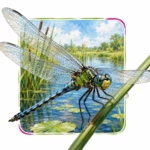
Damselfly Fact Highlight
From the full animal facts page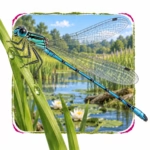
More Animal Comparisons
Pick another animal matchup and keep exploring. Compare appearances, habitats, diets, abilities, and surprising differences.






Make an Animal Story
Turn this dragonfly vs damselfly comparison into a dazzling wetland adventure with our free Animal Story Generator.
Source notes: References used for this comparison. See more See less
Try Another Matchup
Explore this comparison →