
Earwig vs Cockroach for Kids: Common Insect Comparison
The Common Earwig and German Cockroach are similarly sized, flattened nighttime insects, so a quick glimpse can be confusing. Look closer: the earwig carries forceps at its rear and mostly lives outdoors, while the German Cockroach has two dark stripes behind its head and depends strongly on warm human buildings.
About Common Earwig
- Type Winged insect
- Diet Omnivore, scavenger, and small predator
- Group Earwig family, Forficulidae
- Known for Rear forceps and attentive care of eggs
- Special skill Folds fanlike hind wings beneath unusually short forewings
About German Cockroach
- Type Winged insect
- Diet Scavenging omnivore
- Group Cockroach family, Ectobiidae
- Known for Fast running and two dark stripes behind the head
- Special skill Sprints into tiny cracks and produces new generations quickly in warm buildings
Quick Answer
Quick answer: A Common Earwig is usually an outdoor insect with a pair of forceps-like cerci and a mother that guards eggs. A German Cockroach is a fast indoor scavenger, recognized by two dark stripes on the shield behind its head. Both have wings, but neither normally relies on flight.
Common Earwig vs German Cockroach: Quick Comparison
| Feature | Common Earwig | German Cockroach |
|---|---|---|
| Scientific name | Forficula auricularia | Blattella germanica |
| Typical adult length | About 13 to 19 mm | About 10 to 16 mm |
| Best identification clue | A pair of obvious forceps at the rear | Two parallel dark stripes on the pronotum behind the head |
| Color and shape | Reddish to dark brown and long-bodied | Tan to light brown, oval, and flattened |
| Wings | Short forewings hide fanlike folded hind wings; flight is rare | Adults have wings but do not normally fly |
| Main habitat | Outdoor soil and cool moist cover beneath bark, stones, mulch, or boards | Warm humid cracks in kitchens, bathrooms, and other occupied buildings |
| Food | Plants, fungi, algae, decaying matter, aphids, and small arthropods | Food scraps, grease, starches, sweets, pet food, and many other organic materials |
| Egg strategy | Female lays eggs in a soil chamber and guards them | Female carries a capsule called an ootheca until near hatching |
| Young | Nymphs resemble small adults and pass through several molts | Nymphs resemble wingless adults and usually pass through five or six molts |
| Relationship with people | Usually a temporary indoor visitor and harmless to people | An indoor pest that can contaminate food and produce allergy-triggering material |
How Earwigs and German Cockroaches Are Alike
- Both are six-legged insects with long antennae and flattened bodies.
- Both hide in narrow, protected spaces during the day and forage mainly at night.
- Both are flexible omnivores that can eat plant and animal material.
- Both develop through egg, nymph, and adult stages without a pupa.
- Both adults have wings but usually escape danger by running rather than flying.
How Earwigs and German Cockroaches Are Different
- The earwig has large forceps-like cerci, while the German Cockroach has much shorter ordinary cerci.
- A German Cockroach has two dark stripes behind its head, a pattern the Common Earwig lacks.
- Common Earwigs mainly live outdoors, while German Cockroaches are closely tied to warm human buildings.
- An earwig mother tends loose eggs in a nest, while a female German Cockroach carries eggs inside a capsule.
- German Cockroaches may gather in large indoor hiding sites, while earwigs usually form smaller sheltering groups.
Earwig vs Cockroach Adaptation Showdown
Adaptation showdown: Size is a Tie because the adult length ranges overlap. German Cockroach wins speed with a rapid sprint that carries it into cover. Common Earwig wins strength because its rear forceps grip during defense, wing handling, and contests. German Cockroach wins stealth because its flattened body, nocturnal schedule, and crack-dwelling habits make it difficult to spot. German Cockroach wins social behavior because many individuals and life stages share aggregation sites. Swimming is a Tie because neither is an aquatic specialist. Common Earwig wins weirdest for combining origami-like folded wings, rear forceps, and careful mothering of eggs.
Fun Common Earwig vs German Cockroach Facts
Two Racing Stripes
A German Cockroach has two dark, nearly parallel stripes on the pronotum, the shield just behind its head. The marks help separate it from other small cockroaches.
An Egg Case Carried Along
A female German Cockroach carries a bean-shaped egg capsule called an ootheca until shortly before the young hatch. A case commonly contains around 30 to 40 eggs.
A Nest-Tending Earwig
A female Common Earwig stays in a soil chamber with her eggs. She cleans and rearranges them and may move them when moisture or danger changes.
Wings Rarely Used
Both insects have adult wings, yet running is their usual escape. An earwig must unfold its complicated hind wings, and a German Cockroach normally does not fly.
Built for Human Buildings
German Cockroaches thrive in warm, humid places with nearby food and water. In cool climates they usually remain inside heated buildings rather than living far outdoors.
Earwig vs Cockroach Quiz
- Which insect has obvious forceps at its rear? Answer: The Common Earwig.
- Which insect has two dark stripes behind its head? Answer: The German Cockroach.
- What is a cockroach egg capsule called? Answer: An ootheca.
- Which insect usually lives outdoors beneath damp cover? Answer: The Common Earwig.
- Why can German Cockroaches be a health concern indoors? Answer: They can contaminate food and leave material that triggers allergies or asthma in some people.
Common Earwig vs German Cockroach FAQ
Is an earwig a kind of cockroach?
No. Earwigs belong to the order Dermaptera, while cockroaches belong to Blattodea.
Which is bigger, an earwig or a German Cockroach?
Their adult sizes overlap, though a large Common Earwig may be slightly longer.
Do German Cockroaches fly?
Adults have wings, but this species normally runs and rarely if ever flies.
Do earwigs or German Cockroaches bite people?
Neither seeks people as food. They usually flee, and an earwig may pinch defensively only if trapped or handled.
Why should a cockroach sighting be reported to an adult?
An adult can store food safely, clean crumbs, reduce moisture, close cracks, and choose safe professional help if needed.
Animal Words to Know
- Pronotum: A shieldlike plate covering the top of an insect’s first body segment behind the head.
- Ootheca: A protective capsule that contains several insect eggs.
- Cerci: Paired appendages at the rear of an insect’s abdomen.
- Aggregation: A gathering of animals in one place.
- Allergen: A substance that can trigger an allergic reaction in some people.
Make an Insect Clue Card
Make an Insect Clue Card
Draw exactly one adult Common Earwig and exactly one adult German Cockroach at honest relative scale. Label the earwig’s forceps and short wing covers, then label the cockroach’s two pronotum stripes and oval body. Add one outdoor shelter for the earwig and one warm indoor crack for the cockroach. Study photographs or observe from a distance without handling insects.
Meet Each Animal
Want the full fact file? Here are quick highlights from each animal’s own facts page.
Common Earwig Fact Highlight
From the full animal facts page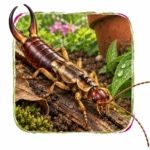
German Cockroach Fact Highlight
From the full animal facts page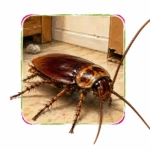
More Animal Comparisons
Pick another animal matchup and keep exploring. Compare appearances, habitats, diets, abilities, and surprising differences.






Make an Animal Story
Send a forceps-carrying Earwig and a speedy Cockroach through a tiny mystery with our free Animal Story Generator.