
European Bison vs American Bison: Bison Comparison
European Bison and American Bison are the two living bison species. Both are huge horned plant eaters, but their silhouettes are easy to separate. The European Bison, or wisent, stands taller on longer legs and often uses forest mixed with open meadows. The American Bison is stockier, with a much larger shoulder hump, heavier woolly forequarters and a beard. Its best-known home is the North American prairie.
About European Bison
- Type Living
- Diet Herbivore
- Group European wild cattle species, also called wisent (Bison bonasus; Bos bonasus in MDD)
- Known for Tall build, forest-meadow living and recovery after extinction in the wild
- Special skill Uses long legs and a flexible diet to move between thick woodland and open feeding areas
About American Bison
- Type Living
- Diet Herbivore
- Group North American wild cattle species (Bison bison; Bos bison in MDD)
- Known for Huge shoulder hump, shaggy front coat, prairie herds, dust wallows and speed
- Special skill A massive shoulder hump powers the head and neck through deep snow while the herd keeps moving
European Bison vs American Bison: Quick Answer
The European Bison is usually taller-legged, less shaggy and more evenly built from shoulders to hips. Its horns often point more outward and forward. The American Bison is generally heavier and has a towering shoulder hump, a huge woolly head and a thick beard. Both graze, form herds, wallow in dust or soil and survived terrible population crashes with human help.
Where Do They Fit?
Follow the branches to see how European Bison and American Bison are classified and related.
European Bison vs American Bison: Quick Comparison
| Feature | European Bison | American Bison |
|---|---|---|
| Common scientific name | Bison bonasus; current MDD uses Bos bonasus | Bison bison; current MDD uses Bos bison |
| Native continent | Europe | North America |
| Body build | Tall, long-legged and fairly even-backed | Stocky, front-heavy and strongly humped |
| Adult bull mass | Often about 400-920 kg, depending on population and source | Can reach about 900 kg, with some official accounts reporting more |
| Shoulder hump | Smaller and less rounded | Large, high and powered by strong muscles |
| Coat clue | Shorter front coat, smaller beard and less woolly-looking head | Very shaggy head, shoulders and forelegs with a full beard |
| Horn direction | Often longer and points outward or forward | Usually shorter and curves outward, upward and inward |
| Main habitat | Forest-and-meadow mosaics, clearings and woodland edges | Prairies, plains, grasslands, valleys and northern meadows |
| Feeding style | Grazes grass but also browses leaves, twigs and bark | Mainly grazes grasses, sedges and other low plants |
| Recovery story | Went extinct in the wild, then returned through captive breeding and releases | Nearly disappeared but a few wild and captive herds survived and helped rebuild populations |
How Are European and American Bison Alike?
- Both are enormous horned mammals in the cattle family Bovidae.
- Both are herbivores that spend much of the day grazing.
- Both form herds, with mothers protecting and feeding calves.
- Both roll in dusty or muddy wallows and rub against trees or rocks.
- Both suffered huge human-caused declines and now depend on careful conservation.
How Are European and American Bison Different?
- European bison stand taller on longer legs; American bison are stockier and generally heavier.
- The American species has a much larger shoulder hump and shaggier front coat.
- European bison use forest-and-meadow mosaics more often; American bison are strongly linked with open grasslands.
- European bison browse more leaves, shoots and bark alongside grass.
- European bison vanished completely from the wild before reintroduction; American bison survived in a few wild refuges and managed herds.
European Bison vs American Bison Adaptation Showdown
- Size – American Bison: It is generally heavier and far more front-heavy, although the European species can stand taller at the shoulder.
- Speed – Tie: Both can run surprisingly fast for such huge animals, and a safe, fair cross-species race does not exist.
- Strength – American Bison: Its massive hump anchors powerful neck and shoulder muscles used to sweep snow and push through obstacles.
- Stealth – European Bison: Its slimmer outline and forest-gray-brown coat can vanish among trunks, shade and tangled woodland edges.
- Social – Tie: Both form shifting female-and-calf herds while adult bulls often spend part of the year alone or in male groups.
- Swimming – Tie: Both can cross water, but neither is a swimming specialist and the sources offer no fair head-to-head test.
- Weirdest – European Bison: It disappeared from the wild entirely, yet descendants of a tiny captive population rebuilt free-ranging herds across Europe.
Fun European Bison vs American Bison Facts
A Species Returned From Zoos
The last wild European bison disappeared in the early 1900s. Captive animals were bred carefully, and their descendants were released from the 1950s onward.
The Hump Is Mostly Muscle
An American bison’s high shoulder hump is supported by long backbone spines and powerful muscles that move its heavy head.
Calves Wear Orange Coats
Newborn American bison calves are reddish-orange before their fur darkens. They are sometimes nicknamed red dogs.
Bison Are Not True Buffalo
American bison are often called buffalo, but true buffalo include African buffalo and Asian water buffalo in different branches of the cattle family.
One Name, Two Scientific Traditions
Many conservation sources use Bison bonasus and Bison bison. The current Mammal Diversity Database places both species inside Bos instead.
European Bison vs American Bison Quiz
Which bison has the larger shoulder hump? A) European Bison B) American Bison C) Neither Answer: B) American Bison
Which bison often uses forest mixed with meadows? A) European Bison B) American Bison C) Neither Answer: A) European Bison
Which species disappeared completely from the wild? A) European Bison B) American Bison C) Both Answer: A) European Bison
What does a bison calf drink? A) Milk B) Seawater C) Nectar Answer: A) Milk
What do both bison mainly eat? A) Plants B) Fish C) Insects only Answer: A) Plants
European Bison vs American Bison FAQ
Are European and American bison the same species?
No. They are two closely related species on different continents.
Which bison is bigger?
The American Bison is generally heavier and stockier, while the European Bison may stand taller on longer legs.
Is a bison the same as a buffalo?
No. Bison and true buffalo are different cattle relatives, although American bison are often nicknamed buffalo.
Why does an American bison have a hump?
The hump supports powerful shoulder and neck muscles that move the enormous head and help sweep snow aside.
Are European bison still endangered?
Their recovery moved them to Near Threatened in the 2020 IUCN update, but small isolated herds and low genetic diversity still need careful management.
Animal Words to Know
- Browse: Leaves, shoots, bark and other food taken from shrubs or trees.
- Graze: To feed mainly on grasses and other low plants.
- Herd: A social group of large grazing mammals.
- Reintroduction: Returning a species to a place where it once lived.
- Wallow: A shallow dusty or muddy hollow where an animal rolls.
Build Two Bison Silhouettes
Build Two Bison Silhouettes
Draw both bison at the same distance. Give the European Bison longer legs, a smaller hump and a forest-meadow background. Give the American Bison a huge shoulder hump, shaggy beard and prairie background. Add arrows to the hump, horns, coat, legs and favorite feeding area.
Meet Each Animal
Want the full fact file? Here are quick highlights from each animal’s own facts page.
European Bison Fact Highlight
From the full animal facts page
American Bison Fact Highlight
From the full animal facts page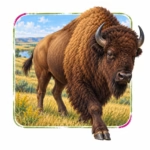
More Animal Comparisons
Pick another animal matchup and keep exploring. Compare appearances, habitats, diets, abilities, and surprising differences.






Make an Animal Story
Create a bison story that journeys from a European forest clearing to a North American prairie!
Source notes: References used for this comparison. See more See less
Try Another Matchup
Explore this comparison →