
European Hornet vs Asian Hornet: Hornet Species Comparison
The European Hornet, Vespa crabro, and the yellow-legged Asian Hornet, Vespa velutina, are social wasps that build paper nests. On this page, Asian Hornet means the yellow-legged species, not the much larger Asian Giant Hornet. European Hornets are usually larger, with reddish-brown heads and several yellow-brown bands. Yellow-legged Asian Hornets look darker, with an orange face, one broad orange-yellow band and yellow lower legs. Both deserve space and calm observation.
About European Hornet
- Type Living
- Diet Omnivore; adults take sugary tree sap and fruit, while workers hunt insects to feed larvae
- Group Social wasp species in the family Vespidae (Vespa crabro)
- Known for Large size, reddish-brown head and thorax, several yellow-and-brown abdominal bands and a deep buzzing flight
- Special skill Chews weathered wood into paper pulp and molds it into layered nest cells inside a sheltered cavity
About Asian Hornet
- Type Living
- Diet Omnivore; adults use sugary liquids, while workers catch bees and other insects for larvae
- Group Yellow-legged hornet, a social wasp species in the family Vespidae (Vespa velutina)
- Known for Mostly dark body, orange face, one broad orange-yellow abdominal band and bright yellow lower legs
- Special skill Hovers near flowers or beehives and catches flying insects in the air before carrying prey to the nest
European Hornet vs Asian Hornet: Quick Answer
A European Hornet is usually the larger, warmer-colored insect: look for a reddish-brown head and thorax plus several yellow-and-brown abdominal bands. A yellow-legged Asian Hornet is mostly blackish, with an orange face, one broad orange-yellow band near the rear and yellow lower legs. Never use color alone or approach a nest. Photograph a suspected invasive hornet only from a safe distance and follow local reporting advice.
Where Do They Fit?
Follow the branches to see how European Hornet and Asian Hornet are classified and related.
European Hornet vs Asian Hornet: Quick Comparison
| Feature | European Hornet | Asian Hornet |
|---|---|---|
| Scientific name | Vespa crabro | Vespa velutina |
| Name note | Europe’s native true hornet | Also called the yellow-legged hornet; not the Asian Giant Hornet |
| Usual size | Generally the larger of these two species | Generally smaller than the European Hornet |
| Head and thorax | Reddish-brown and yellow tones | Mostly dark, with an orange face |
| Abdomen | Several yellow-and-brown bands | Mostly dark with one broad orange-yellow band |
| Legs | Mostly brown or reddish | Dark above with bright yellow lower sections or yellow socks |
| Native range | Europe and temperate Asia | South, East and Southeast Asia |
| European status | Native in much of Europe | Invasive in several European countries |
| Nest | Paper combs inside a cavity or sheltered site | Paper nest, often enlarged high in a tree or on a structure |
| Food | Sap, ripe fruit and insects for larvae | Nectar or fruit for adults and many insects, including bees, for larvae |
How Are European and Asian Hornets Alike?
- Both are true hornets in the social-wasp genus Vespa.
- Both build nests from wood fibers chewed and mixed with saliva into paper pulp.
- Both have queens, female workers, males, eggs, larvae and pupae during the colony cycle.
- Both adults drink sugary liquids while workers hunt insect protein for growing larvae.
- Both can sting to defend themselves or their nests, so people should watch from a safe distance.
How Are European and Asian Hornets Different?
- The European Hornet is generally larger than the yellow-legged Asian Hornet.
- European Hornets have reddish-brown areas and several yellow bands; Asian Hornets look mostly dark.
- The Asian Hornet has bright yellow lower legs, while the European Hornet’s legs are brownish or reddish.
- Asian Hornets show one broad orange-yellow abdominal band instead of several bold yellow-brown bands.
- European Hornets are native to Europe, while yellow-legged Asian Hornets are invasive there and may need reporting.
European vs Asian Hornet Adaptation Showdown
- Size – European Hornet: It is generally longer and more heavily built than the yellow-legged Asian Hornet.
- Speed – Tie: Both are agile flying hunters, and available figures do not provide a fair matched speed contest.
- Strength – European Hornet: Its larger average body gives it more total carrying and cutting power; this is not a fight prediction.
- Stealth – Asian Hornet: Its mostly dark body can be harder to notice against deep shade, bark and a shadowed nest.
- Social – Tie: Both organize annual colonies around a queen and many cooperating female workers.
- Swimming – Tie: Neither is built to swim; water is mainly a place to drink or collect droplets.
- Weirdest – Asian Hornet: Its yellow socks and ability to hover while hunting flying insects make an unforgettable combination.
Fun European Hornet vs Asian Hornet Facts
The Asian Hornet Name Trap
Many insects are called Asian hornets. In Britain and much of Europe, the warning name usually means Vespa velutina, the yellow-legged hornet.
Paper Made by Jaws
Workers scrape wood, chew it with saliva and spread the pulp in thin layers. When it dries, it forms the nest’s light paper walls.
Yellow Socks
The lower parts of an Asian Hornet’s legs are bright yellow. These marks are useful when combined with its dark body and single orange band.
Hovering Hunters
Yellow-legged Asian Hornets may hover near busy insect routes and seize prey in flight. Bees can be part of this hunted food.
One Queen Restarts the Story
In cool regions, most of a colony dies before winter. New queens shelter alone, then each survivor may start a fresh nest in spring.
European Hornet vs Asian Hornet Quiz
Which hornet is generally larger? A) European Hornet B) Asian Hornet C) They are always identical Answer: A) European Hornet
Which species has bright yellow lower legs? A) European Hornet B) Asian Hornet C) Neither Answer: B) Asian Hornet
What do both hornets use to build a nest? A) Chewed wood pulp B) Mud bricks C) Spider silk Answer: A) Chewed wood pulp
What does Asian Hornet mean on this page? A) Yellow-legged hornet B) Asian Giant Hornet C) Every hornet in Asia Answer: A) Yellow-legged hornet
What should you do near a hornet nest? A) Keep away and tell an adult B) Touch it C) Shake the branch Answer: A) Keep away and tell an adult
European Hornet vs Asian Hornet FAQ
Is an Asian Hornet the same as an Asian Giant Hornet?
No. This page uses Asian Hornet for Vespa velutina, the smaller yellow-legged hornet. The Asian Giant Hornet is a different species.
How can I tell these hornets apart?
Check several clues together: overall size, body darkness, abdominal bands, face color and leg color. A photograph is safer than getting close.
Do European Hornets hunt honeybees?
They can catch bees and many other insects, but the invasive yellow-legged Asian Hornet is especially watched because it may hunt heavily around beehives.
Are hornets always aggressive?
No. Foraging hornets usually want food, not people. However, any social wasp may defend its nest, so never approach or disturb one.
What should I do if I see a possible Asian Hornet?
Stay well back, tell an adult and use the official reporting system for your country. Do not trap, touch or swat an uncertain insect.
Animal Words to Know
- Abdomen: The rear main section of an insect’s body.
- Colony: A social group living together around one nest.
- Invasive: Introduced to a place where a species can spread and harm native ecosystems.
- Larva: A young insect stage that looks very different from the winged adult.
- Pulp: A soft wet mixture that can be shaped and dried, such as chewed wood used for a wasp nest.
Make a Safe Hornet Clue Card
Make a Safe Hornet Clue Card
Fold a sheet into two columns. Draw a large European Hornet with reddish-brown areas and several yellow bands on one side. Draw a slightly smaller Asian Hornet with a dark body, orange face, one orange-yellow band and yellow lower legs on the other. Add a safety box: keep away from nests, photograph only from far away and tell an adult.
Meet Each Animal
Want the full fact file? Here are quick highlights from each animal’s own facts page.
European Hornet Fact Highlight
From the full animal facts page
Asian Hornet Fact Highlight
From the full animal facts page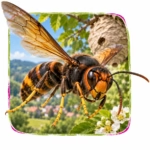
More Animal Comparisons
Pick another animal matchup and keep exploring. Compare appearances, habitats, diets, abilities, and surprising differences.





Make an Animal Story
Create a hornet story about two paper-nest engineers comparing stripes, yellow socks and safe ways to study wildlife!
Source notes: References used for this comparison. See more See less
Try Another Matchup
Explore this comparison →