
Giraffe vs Camel: Large Mammal Comparison
Giraffes and camels are tall, long-legged herbivores, but they are adapted to very different landscapes. Giraffes are the tallest living animals and browse from African treetops. Camels are desert specialists with fat-storing humps, padded feet, and body systems that help them cope with heat, cold, sand, and scarce water.
About Giraffe
- Type Mammal
- Diet Herbivore
- Group Giraffid
- Known for Towering height, long neck, spotted coat, long tongue, and high browsing
- Special skill Reaching high leaves with a long neck and grasping tongue
About Camel
- Type Mammal
- Diet Herbivore
- Group Camelid
- Known for One or two humps, padded feet, desert endurance, and water conservation
- Special skill Crossing hot or cold deserts while conserving water and energy
Giraffe vs Camel: Quick Answer
Giraffes are taller and have extremely long necks, spotted coats, horn-like ossicones, and split hooves. Camels are shorter but have one or two fat-storing humps, broad padded feet, long eyelashes, and special adaptations for desert travel. Both are herbivorous mammals, and both have babies called calves.
Where Do They Fit?
Follow the branches to see how Giraffe and Camel are classified and related.
Giraffe vs Camel: Quick Comparison
| Feature | Giraffe | Camel |
|---|---|---|
| Animal type | Mammal | Mammal |
| Animal group | Giraffid | Camelid |
| Known for | Long neck, spots, height, and treetop browsing | Humps, padded feet, endurance, and desert travel |
| Main habitat | African savannas and open woodlands | Deserts, steppes, scrublands, and dry grasslands |
| Where found | Africa | Native to Africa and Asia; domesticated elsewhere |
| Diet | Herbivore | Herbivore |
| Baby name | Calf | Calf |
| Special body feature | Very long neck and grasping tongue | One or two fat-storing humps |
| Feet | Two-toed hooves | Two broad toes with spreading pads |
| Special skill | Browsing leaves high above the ground | Traveling across dry, sandy, or cold deserts |
How Are Giraffes and Camels Alike?
- Both giraffes and camels are mammals and herbivores.
- Both have long legs, long necks, two-toed feet, and babies called calves.
- Both can survive in dry habitats where water may be difficult to find.
- Both have tough lips that help them eat thorny or coarse plants.
- Both are social animals that may travel or feed in groups.
How Are Giraffes and Camels Different?
- Giraffes are the tallest living animals, while camels are shorter and more heavily built for desert travel.
- Giraffes have spotted coats and ossicones, while camels have one or two humps and shaggy or short coats.
- Giraffes browse mainly from trees, while camels eat grasses, shrubs, leaves, and tough desert plants.
- Giraffes have hard split hooves, while camels have broad spreading foot pads that help prevent sinking into sand.
- Wild giraffes live only in Africa, while camels originated in Africa and Asia and have been domesticated across many regions.
Giraffe vs Camel Showdown
Large-mammal showdown: The giraffe wins for size by height and for camouflage because its patches help break up its outline among sunlit trees. The camel takes speed over short desert bursts, social travel, and our weirdest-fact prize because its hump stores fat rather than water. Strength and swimming are ties because both are powerful animals but neither is mainly adapted for life in water.
Fun Giraffe vs Camel Facts
Tallest Animal vs Desert Traveler
Giraffes can reach about 4.5 to 6 meters in height, making them the tallest living animals. Camels are far shorter, but their sturdy bodies and long legs are built to carry weight and travel across difficult dry terrain.
Long Neck vs Fat-Storing Hump
A giraffe uses its long neck to reach leaves high in trees. A camel stores fat in one hump or two, depending on the species, and can use that stored energy when food is scarce.
Hooves vs Padded Desert Feet
Giraffes walk on two hard hoofed toes on each foot. Camels also have two toes, but they spread apart over a wide, flexible pad that helps support the animal on loose sand.
Two Different Thorny-Plant Tools
A giraffe uses a long, dark, prehensile tongue and tough lips to pull leaves from thorny branches. A camel has thick lips and a tough mouth lining that help it eat dry, prickly, and salty plants.
Camel Humps Do Not Store Water
A camel hump stores fat, not a tank of water. Camels survive dry conditions through several adaptations, including conserving water, tolerating changes in body temperature, and producing concentrated urine.
Giraffe vs Camel Quiz
- Which animal is the tallest living animal? Answer: Giraffe.
- What does a camel store in its hump? Answer: Fat.
- What are baby giraffes and camels called? Answer: Calves.
- Which animal has broad padded feet for sand? Answer: Camel.
- Which animal uses a long grasping tongue to reach tree leaves? Answer: Giraffe.
Giraffe vs Camel FAQ
What is the main difference between a giraffe and a camel?
A giraffe is an extremely tall African browser with a long neck and spotted coat. A camel is a desert-adapted camelid with one or two humps, broad foot pads, and strong water-saving abilities.
Which is taller, a giraffe or a camel?
The giraffe is much taller and is the tallest living animal.
Do camels store water in their humps?
No. Camel humps store fat, which can supply energy when food is scarce. Water conservation comes from several other body adaptations.
Do giraffes and camels have the same number of neck bones?
Both usually have seven neck vertebrae, like most mammals. A giraffe’s vertebrae are simply much longer.
Can giraffes and camels live together in the wild?
Their natural ranges and preferred habitats differ. Giraffes live in sub-Saharan Africa, while wild and domestic camels are associated mainly with arid parts of Africa and Asia.
Animal Words to Know
- Giraffid: A member of the mammal family containing giraffes and okapis.
- Camelid: A member of the mammal family containing camels, llamas, alpacas, guanacos, and vicuñas.
- Ossicone: A skin-covered horn-like structure on a giraffe’s head.
- Prehensile: Able to grasp or hold an object.
- Hump: A raised fat-storage structure on a camel’s back.
Giraffe and Camel Habitat Activity
Giraffe and Camel Habitat Activity
Draw a giraffe beside a camel on the same ground line. Make the giraffe much taller, with a long neck, ossicones, spots, and a tongue reaching for leaves. Give the camel one or two humps according to the species, broad padded feet, and long eyelashes. Label neck, hump, ossicones, tongue, foot pad, savanna, desert, and calf.
Meet Each Animal
Want the full fact file? Here are quick highlights from each animal’s own facts page.
Giraffe Fact Highlight
From the full animal facts page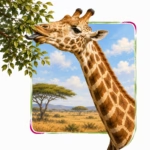
Camel Fact Highlight
From the full animal facts page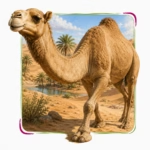
More Animal Comparisons
Pick another animal matchup and keep exploring. Compare appearances, habitats, diets, abilities, and surprising differences.





Make an Animal Story
Turn this giraffe vs camel comparison into a towering desert story with our free Animal Story Generator.
Source notes: References used for this comparison. See more See less
Try Another Matchup
Explore this comparison →