
Great White Shark vs Hammerhead Shark: Shark Comparison
Great white sharks and hammerhead sharks are both powerful ocean predators, but their bodies reveal very different hunting strategies. The great white has a streamlined torpedo shape, broad triangular teeth, and explosive ambush speed. Hammerheads carry a wide flattened head called a cephalofoil, which spreads their senses, improves maneuverability, and gives them an unmistakable silhouette.
About Great White Shark
- Type Fish
- Diet Carnivore
- Group Mackerel Shark
- Known for Large serrated teeth, countershading, powerful swimming, regional warm-bodiedness, and ambush hunting
- Special skill Keeping parts of its body warmer than the surrounding water and accelerating rapidly during ambush attacks
About Hammerhead Shark
- Type Fish
- Diet Carnivore
- Group Hammerhead Shark
- Known for Wide hammer-shaped head, electroreception, broad vision, tight turns, and schooling in some species
- Special skill Using a wide cephalofoil to spread sensory organs across a broader area and maneuver sharply while searching for prey
Great White Shark vs Hammerhead Shark: Quick Answer
Great white sharks are usually larger and heavier, with pointed snouts and broad triangular teeth built for powerful ambush attacks. Hammerhead sharks have wide hammer-shaped heads that improve sensory coverage, vision, and turning ability. Both are cartilaginous fish with gills, replaceable teeth, electroreception, and live-born pups.
Where Do They Fit?
Follow the branches to see how Great White Shark and Hammerhead Shark are classified and related.
Great White Shark vs Hammerhead Shark: Quick Comparison
| Feature | Great White Shark | Hammerhead Shark |
|---|---|---|
| Animal type | Fish | Fish |
| Animal group | Mackerel shark | Hammerhead shark |
| Known for | Ambush speed, serrated teeth, countershading, and power | Hammer-shaped head, electroreception, broad vision, and maneuverability |
| Main habitat | Mainly temperate and subtropical coastal and offshore waters | Mainly tropical and warm-temperate coastal and offshore waters |
| Head shape | Pointed and conical | Wide and flattened into a cephalofoil |
| Teeth | Broad, triangular, and serrated | Smaller pointed or blade-like teeth, varying by species |
| Typical diet | Fish, rays, seals, sea lions, carrion, and other marine prey | Fish, squid, crustaceans, rays, and other marine prey |
| Baby name | Pup | Pup |
| Social style | Usually solitary | Varies; some species form large schools |
| Special skill | Explosive ambush attacks | Wide sensory scanning and sharp turning |
How Are Great White Sharks and Hammerhead Sharks Alike?
- Both great white sharks and hammerhead sharks are predatory fish.
- Both have cartilage skeletons, gills, replaceable teeth, and powerful tails.
- Both use smell, vision, vibration detection, and electroreception to locate prey.
- Both give birth to live pups rather than laying eggs outside the body.
- Both can travel long distances through coastal and open-ocean habitats.
How Are Great White Sharks and Hammerhead Sharks Different?
- Great whites have pointed snouts, while hammerheads have wide flattened heads called cephalofoils.
- Great whites are generally larger and heavier than most hammerhead species.
- Great white teeth are broad and triangular, while hammerhead teeth vary but are often narrower.
- Great whites usually hunt alone, while some hammerhead species form large schools.
- Hammerheads spread their eyes and electroreceptors across a wide head, giving them a broader sensory field.
Great White Shark vs Hammerhead Shark Showdown
Shark showdown: The great white wins for size, burst speed, strength, and stealth because its heavy torpedo-shaped body, countershading, and ambush strategy produce powerful surprise attacks. The hammerhead takes social life because some species form large schools, and it wins swimming for exceptional turning control created by the cephalofoil. The hammerhead also wins our weirdest-fact prize because its wide head spreads eyes and electrical sensors across a living sensory wing.
Fun Great White Shark vs Hammerhead Shark Facts
Torpedo Head vs Hammer Head
A great white has a pointed, conical snout that helps streamline its body during fast swimming. A hammerhead’s skull expands sideways into a flattened structure called a cephalofoil, with an eye near each end.
Triangle Teeth vs Narrower Teeth
Great white sharks have broad triangular teeth with serrated edges for cutting large prey. Hammerhead teeth vary by species but are often narrower and suited to gripping fish, squid, crustaceans, and rays.
Straight-Line Power vs Tight Turns
The great white’s robust tail and streamlined body support rapid acceleration during ambushes. A hammerhead’s wide head can help generate lift and improve control during sharp turns, especially while searching along the seafloor.
Solo Hunter vs Schooling Shark
Great whites are generally solitary, although several may gather near food or seasonal hotspots. Some hammerhead species form large daytime schools, then spread out to hunt, while other species remain mostly solitary.
Hammerheads Carry a Wide Electric Map
Sharks detect weak electrical fields through pores called ampullae of Lorenzini. A hammerhead’s wide head spreads these pores over a larger area, helping it scan the seafloor and locate hidden prey such as stingrays.
Great White Shark vs Hammerhead Shark Quiz
- Which shark usually has the pointed snout? Answer: Great white shark.
- What is the hammerhead’s wide head called? Answer: A cephalofoil.
- Which shark is generally larger? Answer: Great white shark.
- What are baby great whites and hammerheads called? Answer: Pups.
- What sense helps both sharks detect weak electrical fields? Answer: Electroreception.
Great White Shark vs Hammerhead Shark FAQ
What is the main difference between a great white shark and a hammerhead shark?
A great white has a pointed snout, broad triangular teeth, and a body built for powerful ambushes. A hammerhead has a wide cephalofoil that spreads its eyes and sensory pores and improves maneuverability.
Which is bigger, a great white shark or a hammerhead shark?
Great white sharks generally reach greater maximum lengths and masses than hammerheads, although the great hammerhead is a very large shark.
Which shark is faster?
Great whites are generally credited with stronger straight-line burst speed. Hammerheads are highly maneuverable, but exact speeds vary by species, individual, behavior, and measurement method.
Why do hammerhead sharks have hammer-shaped heads?
The cephalofoil spreads their eyes and electroreceptors, improves sensory coverage, and helps with lift and turning. Different benefits may matter differently among hammerhead species.
Are great white sharks and hammerhead sharks dangerous to people?
Both are wild predators, but bites are rare compared with the number of people entering the ocean. Swimmers should follow local beach and wildlife guidance and never approach or feed sharks.
Animal Words to Know
- Cephalofoil: The wide flattened head structure of a hammerhead shark.
- Cartilage: Flexible supporting tissue that forms a shark’s skeleton.
- Electroreception: The ability to detect weak electrical fields produced by living organisms.
- Countershading: Dark coloring above and pale coloring below that helps an animal blend into the water.
- Ampullae of Lorenzini: Jelly-filled sensory pores that help sharks detect electrical fields.
Great White and Hammerhead Shark Detective Activity
Great White and Hammerhead Shark Detective Activity
Draw a great white shark beside a great hammerhead at realistic relative scale. Give the great white a pointed snout, torpedo-shaped body, triangular teeth, and countershading. Give the hammerhead a wide cephalofoil with eyes at the outer ends and a tall dorsal fin. Label snout, cephalofoil, eyes, teeth, and electroreception.
Meet Each Animal
Want the full fact file? Here are quick highlights from each animal’s own facts page.
Great White Shark Fact Highlight
From the full animal facts page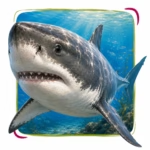
Hammerhead Shark Fact Highlight
From the full animal facts page
More Animal Comparisons
Pick another animal matchup and keep exploring. Compare appearances, habitats, diets, abilities, and surprising differences.





Make an Animal Story
Turn this great white shark vs hammerhead shark comparison into a thrilling ocean adventure with our free Animal Story Generator.
Source notes: References used for this comparison. See more See less
Try Another Matchup
Explore this comparison →