
Impala vs Thomson’s Gazelle: Antelope Species Comparison
Gazelle is a name for many different antelope species, so a fair comparison needs one example. This page compares the Impala, Aepyceros melampus, with Thomson’s Gazelle, Eudorcas thomsonii. The Impala is larger, redder and often lives where grassland meets light woodland. Males have long lyre-shaped horns. Thomson’s Gazelle is smaller and built for open short-grass plains, with a bold black stripe along each side and shorter ringed horns that females may also carry.
About Impala
- Type Living
- Diet Herbivore and mixed feeder; grazes grass and browses herbs, shrubs, shoots and fruit
- Group Medium-sized African antelope in its own genus (Aepyceros melampus)
- Known for Reddish-brown coat, black rump stripes, male-only lyre-shaped horns and spectacular high bounding leaps
- Special skill Springs in long, high bounds and changes direction as a herd, confusing predators and crossing obstacles
About Thomson’s Gazelle
- Type Living
- Diet Herbivore; mainly short grasses, with seeds, twigs and leaves during dry conditions
- Group Small East African gazelle species in the cattle family Bovidae (Eudorcas thomsonii)
- Known for Small tan body, bold black side stripe, white belly and rump, ringed horns and fast zigzagging escape
- Special skill Stots with stiff-legged high jumps and can sprint around 70 kilometers per hour across open ground
Impala vs Thomson’s Gazelle: Quick Answer
An Impala is usually larger and more reddish, with black vertical marks on the rump and long lyre-shaped horns only on males. Thomson’s Gazelle is smaller and paler, with a bold horizontal black stripe separating its tan side from its white belly. Both are fast herd antelopes, but the Impala switches between grazing and browsing, while the gazelle specializes more strongly in short grass on open plains.
Where Do They Fit?
Follow the branches to see how Impala and Thomson’s Gazelle are classified and related.
Impala vs Thomson’s Gazelle: Quick Comparison
| Feature | Impala | Thomson’s Gazelle |
|---|---|---|
| Scientific name | Aepyceros melampus | Eudorcas thomsonii |
| Adult mass | Usually about 40-60 kg; some males are heavier | About 15-35 kg |
| Shoulder height | Roughly around 1 meter | About 55-82 cm |
| Main color | Warm reddish-brown fading to pale sides and belly | Light tan above with a white belly and rump |
| Black pattern | Thin back line and vertical stripes on tail and rear thighs | Bold horizontal stripe along each side |
| Horns | Long ridged lyre shape on males only | Shorter ringed horns on males; females may have small horns or none |
| Habitat | Grassland and light-woodland edges near water | Open short-grass plains and savanna |
| Food | Flexible grazer and browser | Mostly short grass, plus some browse and seeds |
| Social life | Female herds, male territories and bachelor groups | Fluid herds that split, join and sometimes migrate |
| Alarm movement | Long high bounds and quick direction changes | Fast zigzags and stiff-legged stotting jumps |
How Are Impalas and Thomson’s Gazelles Alike?
- Both are hoofed African antelopes in the cattle family Bovidae.
- Both have tan or reddish coats, white underparts and black markings that help animals recognize one another.
- Both live in social herds whose members watch and listen for predators.
- Both are herbivores that eat grass and may also take leaves, seeds or other plant food.
- Both use explosive running, high jumps and sudden turns to escape predators.
How Are Impalas and Thomson’s Gazelles Different?
- An Impala is taller and usually weighs about twice as much as a Thomson’s Gazelle.
- The Impala has vertical black rump marks; Thomson’s Gazelle has a bold horizontal side stripe.
- Only male Impalas grow horns, while female Thomson’s Gazelles may carry small slender horns.
- Impalas favor grassland-woodland edges, while Thomson’s Gazelles favor open short-grass plains.
- Impalas readily switch between grass and browse; Thomson’s Gazelles depend more strongly on short grass.
Impala vs Thomson’s Gazelle Adaptation Showdown
- Size – Impala: Its normal adult mass is roughly double that of Thomson’s Gazelle, and it stands taller at the shoulder.
- Speed – Tie: Both are extremely quick, and reported top speeds vary with measurement, terrain and the length of a sprint.
- Strength – Impala: Its larger frame and long male horns provide more total body power; this is not a fight prediction.
- Stealth – Tie: The Impala blends into broken woodland light, while the gazelle’s tan back matches dry open grass.
- Social – Tie: Both form flexible herds, use many eyes for safety and change group patterns with season and breeding.
- Swimming – Tie: Neither is a water specialist, although both can cross water when necessary.
- Weirdest – Impala: A startled herd explodes into huge, seemingly jumbled bounds that actually help keep animals in contact and confuse a pursuer.
Fun Impala vs Thomson’s Gazelle Facts
A Gazelle Benchmark
Gazelle is not one species. Scientists recognize many gazelles, so this page uses the small East African Thomson’s Gazelle as a clear benchmark.
The Impala’s Black M
An Impala has a black line on its tail and a vertical black mark on each rear thigh. From behind, these marks can suggest a letter M.
Horns Tell a Story
Only male Impalas grow long lyre-shaped horns. Male Thomson’s Gazelles usually have stronger ringed horns, but females may have small thin horns or none.
Stotting Signals
A Thomson’s Gazelle may spring upward with fairly stiff legs and its head high. This movement, called stotting, can alert nearby gazelles during danger.
Two Ways to Eat
When rain grows fresh grass, Impalas graze. When grass dries, they can browse herbs, shrubs and shoots instead, helping them handle seasonal change.
Impala vs Gazelle Quiz
Which animal is larger? A) Impala B) Thomson’s Gazelle C) They are the same Answer: A) Impala
Which animal has a bold black horizontal side stripe? A) Impala B) Thomson’s Gazelle C) Neither Answer: B) Thomson’s Gazelle
Which Impalas grow horns? A) Males B) Females C) All newborns Answer: A) Males
What is stotting? A) A stiff-legged high jump B) Digging a burrow C) Swimming underwater Answer: A) A stiff-legged high jump
Why is Thomson’s Gazelle named in this comparison? A) Gazelle includes many species B) It is an Impala baby C) All gazelles are identical Answer: A) Gazelle includes many species
Impala vs Thomson’s Gazelle FAQ
Is an Impala a gazelle?
No. It is a distinct antelope in its own genus, although its slim body and speed can make it look gazelle-like.
Which gazelle does this page compare?
It uses Thomson’s Gazelle, a small East African species. Other gazelles can differ in size, markings and habitat.
Which animal is faster?
Both are rapid escape runners. Because published speeds and test conditions differ, it is safer to call the speed contest a tie.
Do female Impalas have horns?
No. In Impalas, horns grow on males. Female Thomson’s Gazelles may have small, thin or irregular horns.
Can Impalas and Thomson’s Gazelles share a herd?
They can feed near one another and sometimes join mixed-species groups, especially where their East African ranges overlap.
Animal Words to Know
- Antelope: A varied group of hoofed mammals in the cattle family, including Impalas and gazelles.
- Bachelor group: A social group made mainly of adult or nearly adult males.
- Browse: To eat leaves, shoots or twigs from bushes and trees.
- Graze: To feed mainly on grass or other low plants.
- Stotting: A high, stiff-legged jump used by some antelopes during alarm or escape.
Map the Antelope Markings
Map the Antelope Markings
Draw both animals from the side and rear. Give the larger Impala a reddish coat, long male lyre horns and three vertical black rump marks. Give the smaller Thomson’s Gazelle a tan back, white belly, bold horizontal side stripe and shorter ringed horns. Circle each clue, then cover the names and quiz a friend.
Meet Each Animal
Want the full fact file? Here are quick highlights from each animal’s own facts page.
Impala Fact Highlight
From the full animal facts page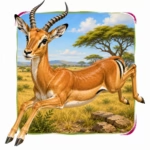
Thomson’s Gazelle Fact Highlight
From the full animal facts page
More Animal Comparisons
Pick another animal matchup and keep exploring. Compare appearances, habitats, diets, abilities, and surprising differences.





Make an Animal Story
Create an antelope story about a high-bounding Impala meeting a striped gazelle that speaks in stotting jumps!
Source notes: References used for this comparison. See more See less
Try Another Matchup
Explore this comparison →