
Indian Rhino vs Javan Rhino: Asian Rhino Comparison
Indian rhinos and Javan rhinos are close cousins with one horn, folded gray skin and a gripping upper lip. Their worlds are very different. Indian rhinos live around rivers and tall grass in India and Nepal. Javan rhinos survive in one Indonesian rainforest. Comparing these two species shows how habitat shapes size, food and daily behavior.
About Indian Rhino
- Type Living
- Diet Herbivore, mainly a grazer
- Group Greater one-horned rhinoceros (Rhinoceros unicornis)
- Known for Huge body, one horn, armor-like skin folds and frequent wallowing
- Special skill Wades, swims and can feed on aquatic plants with a grasping upper lip
About Javan Rhino
- Type Living
- Diet Herbivore, mainly a browser
- Group Javan rhinoceros (Rhinoceros sondaicus)
- Known for Extreme rarity, one small horn and folded gray skin
- Special skill Moves quietly through thick rainforest while plucking leaves, shoots and fruit
Indian Rhino vs Javan Rhino: Quick Answer
The Indian Rhino, also called the greater one-horned rhino, is usually larger and spends lots of time in floodplain grasslands and water. The Javan Rhino is smaller, lives in dense tropical forest and mainly browses leaves and shoots. Both have one horn, but an adult female Javan Rhino often has only a tiny bump or no visible horn. The Javan Rhino is also far rarer.
Where Do They Fit?
Follow the branches to see how Indian Rhino and Javan Rhino are classified and related.
Indian Rhino vs Javan Rhino: Quick Comparison
| Feature | Indian Rhino | Javan Rhino |
|---|---|---|
| Scientific name | Rhinoceros unicornis | Rhinoceros sondaicus |
| Wild range | India and Nepal | Ujung Kulon National Park, Indonesia |
| Conservation status | Vulnerable | Critically Endangered |
| Adult mass | About 1,800-2,700 kg in the IRF account | About 900-2,300 kg in the IRF account |
| Shoulder height | About 1.75-2 m | About 1.5-1.7 m |
| Horn | One horn, often about 20-61 cm | One small horn in males, about 25 cm; females often lack a visible horn |
| Skin | Thick gray skin with deep, armor-like folds | Dusky gray skin with folds that form a saddle-like pattern |
| Main habitat | Floodplain grassland, wetland and woodland | Dense lowland tropical rainforest |
| Main feeding style | Mostly grazes grasses and also eats aquatic plants | Browses leaves, shoots, twigs and fallen fruit |
| Daily clue | Often wallows, wades and feeds in water | Often follows forest paths to browse and visit mud wallows |
How Are Indian Rhinos and Javan Rhinos Alike?
- Both are living Asian rhinos in the genus Rhinoceros.
- Both have thick gray skin divided by deep folds.
- Both are plant eaters with a grasping upper lip.
- Both usually live alone and mothers raise one calf at a time.
- Both use mud wallows that cool the skin and may help control biting insects.
How Are Indian Rhinos and Javan Rhinos Different?
- Indian rhinos live in India and Nepal; Javan rhinos now survive only in Indonesia.
- Indian rhinos are generally taller and heavier.
- Indian rhinos mostly graze in open floodplains; Javan rhinos browse in dense rainforest.
- The Indian rhino’s horn is usually larger; female Javan rhinos often have no visible horn.
- The Indian rhino has recovered to more than 4,000 animals, while only about 50 Javan rhinos remain.
Indian Rhino vs Javan Rhino Adaptation Showdown
- Size – Indian Rhino: It has the higher typical adult mass and shoulder height, although the species’ ranges overlap.
- Speed – Tie: Both can move quickly for heavy animals, but no fair same-course race has been measured.
- Strength – Indian Rhino: Its larger average frame gives it more whole-body power; this is an anatomy comparison, not a predicted fight.
- Stealth – Javan Rhino: Its smaller body and quiet forest life help it disappear into dense tropical vegetation.
- Social – Indian Rhino: It is still mostly solitary, but individuals often share grazing areas, wallows and communal dung middens.
- Swimming – Indian Rhino: Sources directly describe frequent swimming, diving and feeding on plants in water.
- Weirdest – Javan Rhino: Many adult females have only a tiny horn bump or no visible horn, even though rhino means nose horn.
Fun Indian Rhino vs Javan Rhino Facts
Armor That Can Bend
An Indian rhino’s deep shoulder and rump folds make its hide look like plates of armor. The skin is living tissue, not a hard shell.
A Rhino That Loves Water
Indian rhinos wallow, wade and swim. They can even dip underwater to reach aquatic plants.
A Horn May Be Almost Invisible
Male Javan rhinos carry one small horn. Adult females often have only a bump or no horn that can be seen.
One Forest Holds the Whole Species
Every surviving wild Javan rhino lives in Ujung Kulon National Park on the island of Java.
Dung Becomes a Message Board
Indian rhinos often use shared dung piles called middens. Smells there can tell other rhinos who has visited.
Indian Rhino vs Javan Rhino Quiz
Which rhino is generally larger? A) Indian Rhino B) Javan Rhino C) They are always equal Answer: A) Indian Rhino
Where do all wild Javan rhinos live today? A) Nepal B) Ujung Kulon in Indonesia C) Africa Answer: B) Ujung Kulon in Indonesia
Which rhino mostly grazes floodplain grasses? A) Indian Rhino B) Javan Rhino C) Neither Answer: A) Indian Rhino
What may an adult female Javan rhino lack? A) Ears B) A visible horn C) Skin folds Answer: B) A visible horn
What do both rhinos use to cool their skin? A) Mud wallows B) Snow caves C) Feather fans Answer: A) Mud wallows
Indian Rhino vs Javan Rhino FAQ
Are Indian and Javan rhinos the same species?
No. They are two species in the same genus, Rhinoceros.
Which is bigger, an Indian rhino or a Javan rhino?
The Indian rhino is generally bigger, though the published adult mass ranges overlap.
Do both species have one horn?
Males of both species do. Female Javan rhinos often have only a small bump or no visible horn.
Why are Javan rhinos so hard to see?
Very few remain, and they live quietly inside dense rainforest. Camera traps do much of the counting.
Can Indian rhinos swim?
Yes. They often enter water, swim well and may feed on aquatic plants.
Animal Words to Know
- Browser: An animal that mainly eats leaves, shoots and woody plants.
- Grazer: An animal that mainly eats grasses and other low plants.
- Midden: A place repeatedly used for dung or other waste.
- Prehensile: Able to grasp or hold, like the rhinos’ flexible upper lips.
- Wallow: A muddy pool or depression where an animal rolls or rests.
Design Two Rhino Habitats
Design Two Rhino Habitats
Fold a sheet in half. Draw an Indian rhino floodplain with tall grass, a river and a mud wallow on one side. Draw a Javan rhino rainforest with thick leaves, fallen fruit and a muddy trail on the other. Add five labels that show how food, water and cover differ.
Meet Each Animal
Want the full fact file? Here are quick highlights from each animal’s own facts page.
Indian Rhino Fact Highlight
From the full animal facts page
Javan Rhino Fact Highlight
From the full animal facts page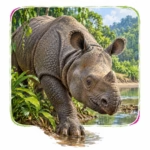
More Animal Comparisons
Pick another animal matchup and keep exploring. Compare appearances, habitats, diets, abilities, and surprising differences.



Make an Animal Story
Create a rhino story that travels from a grassy riverbank to a hidden rainforest trail!
Source notes: References used for this comparison. See more See less
Try Another Matchup
Explore this comparison →