
Manatee vs Dugong: Sea Cow Comparison
Manatees and dugongs are gentle aquatic mammals often called sea cows, but they are not the same animal. Manatees have broad rounded paddle tails and can live in freshwater, brackish water, or the sea. Dugongs have whale-like tail flukes, remain entirely marine, and are highly specialized for grazing seagrass.
About Manatee
- Type Mammal
- Diet Herbivore
- Group Sirenian
- Known for Rounded paddle tail, gentle grazing, flexible lips, slow swimming, and life in fresh, brackish, or coastal water
- Special skill Living in fresh, brackish, and marine water and continually replacing worn molars from the back of the jaw
About Dugong
- Type Mammal
- Diet Herbivore
- Group Sirenian
- Known for Whale-like fluked tail, downturned snout, seagrass grazing, tusks, and fully marine life
- Special skill Using a downturned muscular snout to uproot and crop seagrass while swimming efficiently with whale-like tail flukes
Manatee vs Dugong: Quick Answer
Manatees have rounded paddle-shaped tails, more flexible split upper lips, and can live in rivers as well as coastal seas. Dugongs have whale-like fluked tails, downturned snouts, tusks, and live only in marine habitats across the Indo-Pacific. Both are herbivorous sirenians with calves.
Where Do They Fit?
Follow the branches to see how Manatee and Dugong are classified and related.
Manatee vs Dugong: Quick Comparison
| Feature | Manatee | Dugong |
|---|---|---|
| Animal type | Aquatic mammal | Marine mammal |
| Animal group | Sirenian | Sirenian |
| Known for | Rounded paddle tail, flexible lips, and freshwater tolerance | Fluked tail, downturned snout, tusks, and seagrass grazing |
| Main habitat | Rivers, springs, estuaries, lagoons, and coastal shallows | Warm coastal seas and seagrass meadows |
| Tail shape | Broad, rounded paddle | Two pointed flukes like a whale |
| Snout | Shorter, with a split flexible upper lip | Strongly downturned for bottom grazing |
| Diet | Many freshwater and marine plants | Mainly seagrasses |
| Teeth | Molars move forward and are continually replaced | Molars plus tusk-like incisors, especially visible in mature males |
| Baby name | Calf | Calf |
| Special skill | Moving between fresh, brackish, and salt water | Specialized marine seagrass grazing |
How Are Manatees and Dugongs Alike?
- Both manatees and dugongs are mammals in the order Sirenia.
- Both breathe air, give birth to calves, and feed their young milk.
- Both are mostly herbivorous and spend many hours grazing aquatic plants.
- Both have dense bones that help control buoyancy in shallow water.
- Both are generally gentle, slow-moving animals with strong mother-calf bonds.
How Are Manatees and Dugongs Different?
- Manatees have rounded paddle tails, while dugongs have two whale-like tail flukes.
- Manatees can live in freshwater, brackish water, and the sea, while dugongs are strictly marine.
- Manatees eat a wider variety of aquatic plants, while dugongs specialize mainly in seagrasses.
- Dugongs have more strongly downturned snouts and may develop visible tusks.
- Manatees continually replace worn molars, while dugong teeth follow a different pattern and are not replaced in the same conveyor-belt way.
Manatee vs Dugong Showdown
Sea-cow showdown: The manatee wins for typical size and total body strength because some species grow larger and heavier. Speed and social life are ties because both are generally slow and usually solitary or loosely grouped. The dugong takes stealth and swimming with its streamlined marine body, seafloor coloring, and whale-like flukes. The manatee wins our weirdest-fact prize because new molars continuously form at the back and move forward like teeth on a conveyor belt.
Fun Manatee vs Dugong Facts
Paddle Tail vs Whale Flukes
A manatee has one broad, rounded tail shaped like a paddle. A dugong has two pointed tail flukes with a central notch, resembling the tail of a whale or dolphin.
Flexible Lip vs Downturned Snout
Manatees use a split, muscular upper lip to grasp leaves and stems. Dugongs have a strongly downturned snout with stiff bristles that helps them crop and uproot seagrass from the seafloor.
River Visitor vs Marine Specialist
Depending on species, manatees may travel through rivers, springs, estuaries, and coastal seas. Dugongs live only in saltwater and depend heavily on shallow marine seagrass meadows.
Plant Generalist vs Seagrass Specialist
Manatees graze many kinds of freshwater and marine vegetation. Dugongs mainly eat seagrasses and can leave winding feeding trails where they have cropped plants from the seabed.
Manatee Teeth March Forward
A manatee’s coarse plant diet wears down its molars. New teeth grow at the back of the jaw and slowly move forward, replacing older teeth that eventually fall out.
Manatee vs Dugong Quiz
- Which animal has a rounded paddle tail? Answer: Manatee.
- Which animal has whale-like tail flukes? Answer: Dugong.
- What are baby manatees and dugongs called? Answer: Calves.
- Which animal can live in freshwater? Answer: Manatee.
- Which animal specializes mainly in eating seagrass? Answer: Dugong.
Manatee vs Dugong FAQ
What is the main difference between a manatee and a dugong?
A manatee has a rounded paddle tail and can use fresh, brackish, or salt water. A dugong has whale-like tail flukes, a more downturned snout, and lives only in marine habitats.
Which is bigger, a manatee or a dugong?
Manatees are generally bulkier and some species can grow larger and heavier, although size varies by species, sex, age, and individual.
Are manatees and dugongs related?
Yes. Both belong to the mammal order Sirenia, but manatees belong to the family Trichechidae and dugongs belong to the family Dugongidae.
Do manatees and dugongs have tusks?
Dugongs have tusk-like upper incisors, especially visible in mature males and sometimes older females. Living manatees do not have external tusks.
Why are they called sea cows?
They spend much of their time slowly grazing aquatic plants, which reminded people of cows feeding in a pasture.
Animal Words to Know
- Sirenian: A member of the aquatic mammal order containing manatees and dugongs.
- Seagrass: A flowering marine plant that grows in shallow coastal water.
- Brackish: Water that is partly fresh and partly salty.
- Fluke: One half of a whale-like horizontal tail.
- Buoyancy: The ability to float or remain suspended in water.
Manatee and Dugong Sea-Cow Detective Activity
Manatee and Dugong Sea-Cow Detective Activity
Draw a manatee and dugong at realistic relative scale. Give the manatee a rounded paddle tail, split upper lip, and river-to-coast habitat. Give the dugong whale-like flukes, a downturned snout, a seagrass meadow, and small visible tusks on an adult male. Label sirenian, tail, snout, habitat, and seagrass.
Meet Each Animal
Want the full fact file? Here are quick highlights from each animal’s own facts page.
Manatee Fact Highlight
From the full animal facts page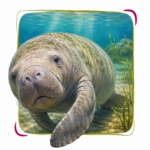
Dugong Fact Highlight
From the full animal facts page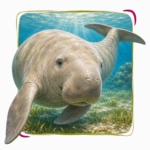
More Animal Comparisons
Pick another animal matchup and keep exploring. Compare appearances, habitats, diets, abilities, and surprising differences.


Make an Animal Story
Turn this manatee vs dugong comparison into a gentle seagrass adventure with our free Animal Story Generator.
Source notes: References used for this comparison. See more See less
Try Another Matchup
Explore this comparison →