
Megalodon vs Whale Shark: Giant Shark Comparison
Megalodon and the whale shark are two of the largest sharks known to science, but they could hardly be more different. Megalodon was an extinct ocean predator with enormous serrated teeth. The living whale shark is a peaceful filter feeder that cruises warm seas collecting plankton and other tiny food.
About Megalodon
- Type Extinct Fish
- Diet Carnivore
- Group Lamniform Shark
- Known for Enormous serrated teeth, gigantic size, powerful jaws, and hunting marine mammals
- Special skill Using a huge body, serrated teeth, and powerful bite to hunt large marine prey
About Whale Shark
- Type Fish
- Diet Filter Feeder
- Group Carpet Shark
- Known for Largest living fish, white spots, enormous mouth, gentle behavior, and filter feeding
- Special skill Filtering plankton, fish eggs, and tiny animals from large volumes of seawater
Megalodon vs Whale Shark: Quick Answer
Megalodon was an extinct predatory shark with huge serrated teeth and a body possibly longer than the largest known whale sharks. The whale shark is the largest living fish, but it eats plankton, fish eggs, and other tiny organisms by filter feeding. Fossil evidence suggests whale sharks or very close representatives of the living species existed during part of megalodon’s time, although direct encounters are unknown.
Where Do They Fit?
Follow the branches to see how Megalodon and Whale Shark are classified and related.
Megalodon vs Whale Shark: Quick Comparison
| Feature | Megalodon | Whale Shark |
|---|---|---|
| Animal type | Extinct shark | Living shark |
| Animal group | Lamniform shark | Carpet shark |
| Known for | Huge teeth, giant size, and hunting marine mammals | Spots, giant mouth, gentle behavior, and filter feeding |
| Main habitat | Warm and temperate seas around the world | Tropical and warm-temperate oceans |
| Time period | Lived millions of years ago | Lives today |
| Diet | Large marine animals | Plankton, fish eggs, and small swimming animals |
| Baby name | Pup | Pup |
| Teeth | Large, thick, and serrated | Thousands of tiny teeth |
| Feeding style | Active predator | Filter feeder |
| Special clue | Known mainly from fossil teeth and vertebrae | Unique white spot pattern on each individual |
How Were Megalodon and Whale Sharks Alike?
- Both megalodon and whale sharks were or are sharks, which are cartilaginous fish.
- Both grew to enormous sizes compared with most other fish.
- Both lived in warm seas and could travel through open ocean.
- Whale sharks produce live young, and megalodon is inferred to have reproduced in a similar live-bearing way.
- Both had multiple rows of teeth, although those teeth served very different jobs.
How Were Megalodon and Whale Sharks Different?
- Megalodon is extinct, while whale sharks live in oceans today.
- Megalodon was a powerful predator, while whale sharks are filter feeders.
- Megalodon had enormous serrated teeth, while whale sharks have thousands of tiny teeth.
- Megalodon probably hunted whales and other large marine animals, while whale sharks eat plankton, fish eggs, and small schooling animals.
- Megalodon size and appearance must be reconstructed from fossils, while living whale sharks can be measured and observed directly.
Megalodon vs Whale Shark Showdown
Giant-shark showdown: Megalodon takes size, estimated speed, strength, and predatory stealth, although scientists must infer these abilities from fossils and comparisons with living sharks. The whale shark wins social life because seasonal feeding gatherings can contain many individuals. Swimming is a tie because both were fully ocean-going sharks. The whale shark wins our weirdest-fact prize for becoming the largest living fish while feeding mostly on some of the ocean’s smallest animals.
Fun Megalodon vs Whale Shark Facts
Extinct Super-Predator vs Living Filter Feeder
Megalodon used large serrated teeth to seize marine mammals and other substantial prey. Whale sharks open their enormous mouths and strain tiny organisms from seawater using filtering structures near the gills.
Huge Teeth vs Tiny Teeth
The largest known megalodon teeth are more than 17 centimeters tall and were built for gripping and cutting. Whale sharks have thousands of tiny teeth, but filter pads rather than teeth perform most of the feeding work.
Fossil Estimate vs Living Measurement
No complete megalodon skeleton has been found because shark skeletons are made mostly of cartilage. Scientists estimate its size from fossil teeth and vertebrae, so proposed maximum lengths differ. Whale sharks can be photographed, tagged, and measured alive.
Both Are Sharks, Not Whales
The whale shark received its name because it grows whale-sized and filter feeds, not because it is a whale. Both animals are sharks with cartilage skeletons, gill slits, fins, and replaceable teeth.
Every Whale Shark Has a Spot ID
The pattern of pale spots and stripes on a whale shark is unique to each individual. Researchers photograph the area behind the gills and use pattern-matching software to recognize sharks seen at different places and times.
Megalodon vs Whale Shark Quiz
- Which shark is extinct? Answer: Megalodon.
- Which shark is the largest living fish? Answer: Whale shark.
- Which shark had huge serrated teeth? Answer: Megalodon.
- How does a whale shark collect most of its food? Answer: By filter feeding.
- Could whale sharks and megalodon have lived during the same broad period? Answer: Possibly yes, but no fossil proves that the two interacted.
Megalodon vs Whale Shark FAQ
What is the main difference between megalodon and a whale shark?
Megalodon was an extinct giant predator with enormous cutting teeth. The whale shark is a living giant filter feeder that mainly eats plankton and other tiny organisms.
Which was bigger, megalodon or the whale shark?
Current reconstructions allow exceptionally large megalodons to exceed the largest measured whale sharks, but megalodon estimates remain uncertain because no complete skeleton is known.
Is the whale shark dangerous to people?
Whale sharks are not active hunters of people. They are powerful wild animals and should still be approached only under responsible wildlife rules that avoid touching, chasing, or blocking them.
Did megalodon eat whale sharks?
No direct fossil evidence proves that it did. Fossils suggest whale sharks or very close representatives of the living species existed during part of megalodon’s time, but a specific predator-prey relationship is unknown.
Is megalodon still alive?
No credible scientific evidence shows that megalodon survives today. Its youngest accepted fossils are millions of years old.
Animal Words to Know
- Cartilage: Flexible supporting tissue that forms a shark’s skeleton.
- Filter feeder: An animal that strains tiny food particles from water.
- Serrated: Having a saw-like cutting edge.
- Fossil: Preserved evidence of ancient life.
- Plankton: Small organisms that drift through water.
Megalodon and Whale Shark Scale Activity
Megalodon and Whale Shark Scale Activity
Draw a cautious megalodon reconstruction beside a living whale shark, using a diver or school bus for scale. Give megalodon large serrated teeth and a streamlined predatory body. Give the whale shark a broad head, pale spots, and plankton near its mouth. Label extinct, living, predator, filter feeder, and estimated size.
Meet Each Animal
Want the full fact file? Here are quick highlights from each animal’s own facts page.
Megalodon Fact Highlight
From the full animal facts page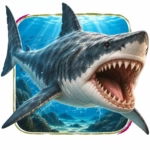
Whale Shark Fact Highlight
From the full animal facts page
More Animal Comparisons
Pick another animal matchup and keep exploring. Compare appearances, habitats, diets, abilities, and surprising differences.






Make an Animal Story
Turn this megalodon vs whale shark comparison into a giant ocean adventure with our free Animal Story Generator.
Source notes: References used for this comparison. See more See less
Try Another Matchup
Explore this comparison →