
Moose vs Reindeer: Forest-Moose-to-Tundra-Reindeer Cervid Comparison
Moose and reindeer are northern members of the deer family, but their bodies solve winter in very different ways. The moose is the world’s largest living deer: tall, long-legged, usually solitary, and built to browse shrubs, wade through wetlands, and reach aquatic plants. The reindeer is the smaller Rangifer deer called caribou in North America: compact, broad-hoofed, social, and often adapted for tundra travel, snow cratering, and herd migration. Bull moose grow broad palmate antlers, while male and many female reindeer grow slimmer branching antlers. Both swim, grow and shed bone antlers, digest plants as ruminants, and need plenty of safe viewing space.
About Moose
- Type Mammal
- Diet Herbivore browsing willow, birch, aspen, dogwood, mountain ash, twigs, bark, leaves, grasses, sedges, horsetails, pondweeds, and other aquatic plants; the menu shifts with snow, plant growth, fire, wetland access, and region
- Group Moose, Alces alces in family Cervidae; taxonomists recognize several geographic forms across the northern forests of Eurasia and North America, where the same animal is often called elk in European English, so this page uses the North American common name moose
- Known for The largest living deer, with very long legs, a shoulder height commonly around 1.5–2.1 meters, and major variation by sex and region; Alaska bulls can approach about 725 kilograms, while cows are smaller, and mature bulls carry broad palm-like antlers rather than permanent horns
- Special skill Exceptionally long legs step through deep snow, marsh water, and fallen branches; large spreading hooves support wet ground; a flexible upper lip strips browse; dense hollow winter hair traps insulating air; a large nose helps condition cold air; bulls regrow heavy palmate antlers each year; and powerful swimming lets moose cross broad water and feed in lakes
About Reindeer
- Type Mammal
- Diet Herbivore eating ground and tree lichens, dried sedges, grasses, willow and birch leaves, forbs, mushrooms, and shrubs; winter cratering for food is famous, but no population survives on lichen alone and diets differ among tundra, forest, island, mountain, wild, and managed herds
- Group Reindeer, the Eurasian common name for Rangifer tarandus in family Cervidae; caribou is the North American name for the same widely recognized species, although geography, wild or managed status, selective breeding, and proposed taxonomic revisions create important differences among populations
- Known for A medium-to-large cold-adapted deer, generally much smaller and shorter than a moose, with a compact deep chest, short ears and tail, dense two-layer coat, pale neck and rump, broad spreading hooves, and irregular branching antlers; both males and many females grow antlers
- Special skill Broad concave hooves spread across snow and soft tundra, dig feeding craters, grip ice, and paddle in water; hollow guard hairs and dense underfur conserve heat and add buoyancy; a specialized nose recovers heat and moisture from cold air; both sexes often carry antlers; and leg tendons can make an audible clicking sound as the animal walks
Moose vs Reindeer: Quick Answer
A moose is much larger and taller, with very long legs, a long overhanging muzzle, a throat bell, and broad palmate antlers on adult bulls. A reindeer is smaller and more compact, with a dense pale-necked coat, wide snowshoe-like hooves, and branching antlers in males and many females. Moose usually live alone in forests and wetlands; reindeer commonly form herds on tundra, taiga, and northern mountains. Reindeer and caribou are the same widely recognized species.
Where Do They Fit?
Follow the branches to see how Moose and Reindeer are classified and related.
Moose vs Reindeer: Quick Comparison
| Feature | Moose | Reindeer |
|---|---|---|
| Scientific name | Alces alces | Rangifer tarandus in the widely used classification |
| Other regional name | Often called elk in European English; not the North American wapiti | Called caribou in North America |
| Typical build | Much taller and heavier, with very long legs and a long muzzle | Smaller, more compact, shorter-eared, and heavily insulated |
| Adult mass example | Large Alaska bulls can approach about 725 kg; cows are smaller | Mass varies widely, but adults are generally far lighter than moose |
| Antlers | Normally adult bulls only; broad beams often form large palms | Males and many females; irregular branching beams, sometimes with forward brow shovels |
| Main habitat | Boreal forest, shrub regrowth, river valley, bog, lake, and wetland edge | Tundra, taiga, peatland, northern mountain, lichen woodland, and managed range |
| Social pattern | Usually solitary outside cow-calf and breeding associations | Usually herd-forming, sometimes in very large seasonal aggregations |
| Hooves | Large spreading hooves for mud, snow, wading, and forest travel | Very broad concave hooves for snow support, digging, ice grip, soft ground, and paddling |
| Feeding style | Mainly browses shrubs and trees and often eats aquatic plants | Grazes and browses, with lichens important in many winter ranges |
| Cold-weather silhouette | Tall dark body, shoulder hump, long face, and dangling throat bell | Compact body, pale neck, short ears, dense coat, and broad feet |
How Are Moose and Reindeer Alike?
- Both are even-toed hoofed mammals in deer family Cervidae, with cloven hooves, four-chambered ruminant stomachs, seasonal coats, strong senses, and a calf as the usual single birth.
- Both grow true antlers made from living velvet-covered bone, then shed and regrow them on a seasonal cycle; antlers are not permanent keratin-covered horns.
- Both eat changing mixtures of leaves, shrubs, grasses, sedges, fungi, lichens, bark, and other plant material rather than one identical food throughout the year.
- Both can run over rough northern ground, cross snow, swim cold water, use scent and sound to communicate, and move seasonally when forage, snow, insects, breeding, or birth demands it.
- Both are powerful wild deer that should be watched from a long distance, never fed, approached, surrounded, touched, or treated as safe because they appear calm.
How Are Moose and Reindeer Different?
- Moose belong to genus Alces and are the largest living deer; reindeer belong to genus Rangifer and are generally far smaller, shorter, and more compact.
- Adult bull moose normally grow very broad palm-shaped antlers, while cow moose are normally antlerless. Both male and many female reindeer grow branching antlers, and pregnant females may retain theirs through winter.
- Moose usually live alone or in cow-calf pairs in forest and wetland mosaics. Reindeer commonly form herds, and some wild populations migrate and aggregate on a huge scale.
- Moose use long legs and large hooves to step through shrubs, snow, bog, and shallow water. Reindeer use unusually broad concave hooves as snowshoes, digging scoops, ice grips, and paddles.
- Moose strongly browse woody plants and may wade or submerge their heads for aquatic vegetation. Reindeer can rely heavily on lichens and dried sedges in winter before switching toward green leaves, forbs, grasses, and mushrooms.
- Moose and reindeer also differ in their common names: reindeer and caribou refer to the same widely recognized Rangifer species, while the animal called elk in Europe is the same species North Americans call moose.
Moose vs Reindeer Adaptation Showdown
Forest giant versus tundra traveler showdown: Moose wins size because it is the largest living deer and outweighs even large reindeer by a wide margin. Speed is a tie because both can sprint and travel quickly, while published maximum figures are not standardized direct trials. Moose wins absolute whole-body strength from its much greater mass; this is not a fight prediction. Stealth is a tie because moose disappear among dark forest, willow, and wetland shadows while reindeer coats blend with tundra, rock, lichen, and snow. Reindeer wins social behavior for its stable herds and the immense seasonal gatherings of some wild populations. Moose wins swimming for routinely crossing broad water, wading deeply, and feeding on submerged plants, though reindeer are also capable river swimmers with paddle-like feet. Reindeer wins strangest adaptation for combining female antlers, snowshoe-shovel-paddle hooves, clicking tendons, hollow buoyant hair, and a heat-saving nose. These fields compare survival adaptations, not combat.
Fun Moose vs Reindeer Facts
Reindeer and Caribou Are the Same Widely Recognized Species
Rangifer tarandus is generally called reindeer in Europe and Asia and caribou in North America. In North America, reindeer often especially means domesticated or semi-domesticated descendants of Eurasian stock, while caribou means native wild populations. Geography, husbandry, selective breeding, and proposed taxonomic splits can change appearance and behavior, but “reindeer” is not a third deer beside moose and caribou.
A Moose Is the Largest Living Deer
Long legs place an adult moose’s shoulder above the head of many people, and Alaska bulls can weigh up to about 725 kilograms. The high body lets a moose step over deep snow and tangled shrubs while reaching willow leaves far above smaller deer. Reindeer are sturdy northern deer, but their lower compact bodies trade giant height for efficient herd travel and cold protection.
Their Antlers Follow Different Rules
A mature bull moose may grow broad palms edged with tines, then shed the entire rack after the rut. Cow moose are normally antlerless. Reindeer antlers are more irregular and branching, and both bulls and many cows grow them. Mature reindeer bulls often shed after the rut, while pregnant cows can keep antlers through winter and use them around feeding craters.
Reindeer Feet Are Snowshoes, Shovels and Paddles
A reindeer’s wide toes spread over snow and soft tundra, and the hard hoof edges grip seasonal ice. The concave foot can scrape a crater to uncover lichens and sedges, then help paddle during a river crossing. Moose hooves also spread on mud and snow, but their much longer legs are especially useful for stepping through bogs, brush, and deep water.
Moose Dive for Dinner but Reindeer Travel for It
Moose often wade into ponds and lakes to pull up pondweeds and other aquatic plants, submerging the muzzle and sometimes much of the head. Reindeer are famous instead for moving across tundra and taiga to follow seasonal food and digging through snow for winter forage. Not every reindeer migrates far, and not every moose feeds deeply underwater, so habitat and population matter.
Moose vs Reindeer Quiz
- Which animal is the largest living deer? Answer: The moose.
- What is a reindeer called in North America when referring to native wild Rangifer? Answer: A caribou.
- Which sex normally grows antlers in moose? Answer: Adult males or bulls.
- Name two jobs of a reindeer hoof. Answer: Any two of snow support, digging, ice grip, soft-ground travel, or paddling.
- Which animal usually forms the larger herds? Answer: The reindeer.
Moose vs Reindeer FAQ
Is a reindeer a type of moose?
No. Both belong to deer family Cervidae, but moose are Alces alces and reindeer are Rangifer tarandus. Reindeer are the same widely recognized species as caribou, not young or female moose.
Which is bigger, a moose or reindeer?
The moose is much bigger. It is the largest living deer, and a large Alaska bull can approach about 725 kilograms. Reindeer size varies by population, sex, season, and managed or wild history, but even large adults are normally far shorter and lighter than mature moose.
Do female moose and female reindeer have antlers?
Female moose normally do not, although rare hormone-related exceptions occur. Many female reindeer do grow antlers and pregnant cows commonly retain them through winter until near calving, after mature bulls have shed theirs.
Can moose and reindeer swim?
Yes. Moose cross lakes and channels and often wade or feed in water. Reindeer also swim rivers during seasonal movement, aided by broad hooves and air-trapping fur. Water, current, ice, distance, age, and condition change the difficulty for either animal.
Are moose dangerous?
Moose and reindeer are not predators, but both are strong wild animals. Moose can charge and kick, especially if crowded, surprised, protecting a calf, stressed by a dog, or approached during the rut. Reindeer also need space. Observe from a long distance and never feed, touch, follow, block, or stand between an adult and calf.
Animal Words to Know
- Cervid: A member of deer family Cervidae, including moose, reindeer, elk, and many animals called deer.
- Antler: A branching structure of bone that grows under velvet and is usually shed and regrown each year.
- Palma: The broad flattened section of a mature moose antler, edged with projecting tines.
- Ruminant: A hoofed herbivore whose multi-compartment stomach and microbes help digest fibrous plants.
- Cratering: Digging through snow with the hooves to uncover winter food such as lichens and sedges.
Moose and Reindeer Scale Activity
Moose and Reindeer Scale Activity
Draw a mature male moose and reindeer on the same ground line and at the same scale. Make the moose much taller, with long legs, a broad overhanging muzzle, and wide palmate antlers beside a wetland. Give the reindeer a compact body, branching antlers, broad hooves, and a tundra herd. Add a note that reindeer and caribou are the same species. Label size, antlers, hooves, wetland, tundra, and migration.
Meet Each Animal
Want the full fact file? Here are quick highlights from each animal’s own facts page.
Moose Fact Highlight
From the full animal facts page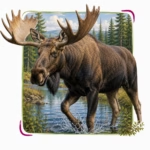
Reindeer Fact Highlight
From the full animal facts page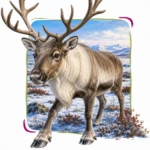
More Animal Comparisons
Pick another animal matchup and keep exploring. Compare appearances, habitats, diets, abilities, and surprising differences.

Make an Animal Story
Turn this moose vs reindeer comparison into a forest-lake and tundra-migration adventure with our free Animal Story Generator.
Source notes: References used for this comparison. See more See less
Try Another Matchup
Explore this comparison →