
Numbat vs Wombat for Kids
Numbats and Common Wombats are both Australian marsupials, but their rhyming names hide two very different lives. A Numbat, Myrmecobius fasciatus, is a small striped animal that searches for termites during the day. A Common Wombat, Vombatus ursinus, is a heavy, blunt-nosed grazer that usually feeds after dark. Both can dig, yet the Numbat uses small shelters while the Wombat builds a roomy underground home.
About Numbat
- Type Living
- Diet Specialist insectivore; eats almost only termites and may take up to about 20,000 in one day
- Group Small Australian marsupial and the only living member of family Myrmecobiidae (Myrmecobius fasciatus)
- Known for White back stripes, a pointed snout, a bushy tail and an almost all-termite diet
- Special skill Uses smell, sharp front claws and a long sticky tongue to find and collect termites in daylight
About Common Wombat
- Type Living
- Diet Herbivore; grazes grasses, sedges, herbs, roots and bark with ever-growing front teeth
- Group Large burrowing Australian marsupial, also called the Bare-nosed Wombat (Vombatus ursinus)
- Known for A barrel-shaped body, blunt bare nose, tiny tail, powerful legs and deep burrows
- Special skill Digs strong tunnel systems with short muscular legs, broad feet and flattened claws
Quick Answer
A Numbat is only about 35–45 cm long including its bushy tail and has clear white stripes across its back. It probes termite tunnels with a long sticky tongue. A mainland Common Wombat averages about 1 m long and 27 kg. It has a squat body, powerful digging claws and teeth made for cropping plants. The Wombat is vastly larger, but the Numbat is the more specialized feeder.
Numbat vs Common Wombat: Quick Comparison
| Feature | Numbat | Common Wombat |
|---|---|---|
| Scientific name | Myrmecobius fasciatus | Vombatus ursinus |
| Adult size | About 35–45 cm long including the tail; small and slender | Mainland adults average about 1 m and 27 kg; broad and heavy |
| Body clues | Pointed snout, small rounded ears, four-to-eleven pale rump bands and a bushy tail | Blunt bare nose, small ears, barrel body, short legs and an almost hidden tail |
| Main food | Termites, with only a tiny amount of other invertebrate food | Grasses, sedges, herbs, roots and bark |
| Busy time | Diurnal; follows termites near the soil surface during daylight | Mostly nocturnal; often leaves the burrow around dusk to graze |
| How it feeds | Opens shallow termite galleries and licks insects up with a sticky tongue | Crops and grinds tough plants with strong jaws and continuously growing incisors |
| Shelter | Hollow logs, tree hollows or a small burrow lined with dry plant material | A deep tunnel system dug into banks and slopes |
| Main defense | Freezes, runs to cover or wedges into a hollow using its strong rump | Dashes to its burrow and can block the tunnel with its hard-backed rump |
| Young | Joeys cling to the mother’s underside because she has no fully formed pouch | Usually one joey develops in a backward-opening pouch |
| Conservation | Threatened and protected; recovery relies on predator control, habitat care and reintroductions | Widespread overall, though local populations and island forms still need protection |
How Are Numbats and Wombats Alike?
- Both are marsupials found only in Australia.
- Both have strong front claws and can dig into soil.
- Both raise tiny newborns that drink milk and grow while attached to the mother.
- Both depend on native woodland or forest habitats with safe cover.
- Both usually forage alone instead of hunting or feeding in a herd.
How Are Numbats and Wombats Different?
- A Common Wombat is many times heavier and longer than a Numbat.
- A Numbat eats termites, while a Wombat eats plants.
- The Numbat is active by day; the Wombat usually feeds at night.
- A Numbat is slim and striped with a bushy tail; a Wombat is round and plain with a tiny tail.
- Numbat joeys cling to an exposed belly, while a Wombat joey grows inside a true backward-opening pouch.
Numbat vs Wombat Showdown
- Size – Common Wombat: A mainland adult averages about a metre long and 27 kg, towering over a tiny Numbat.
- Speed – Tie: Both can sprint to cover, but no fair matched race gives either species a dependable win.
- Strength – Common Wombat: Its heavy body, broad feet and powerful shoulders can move a great amount of soil.
- Stealth – Numbat: Its rusty coat and broken white bands help it disappear among bark, leaves and woodland shadows.
- Social – Tie: Both usually live and feed alone except when breeding or when mothers raise young.
- Swimming – Tie: Either may cross water if necessary, but neither is built as a swimming specialist.
- Weirdest – Numbat: It is a pouchless daytime marsupial that can eat about 20,000 termites in a day.
Fun Numbat vs Wombat Facts
A Marsupial Without a Pouch
A mother Numbat has folds of belly skin and curly protective hair instead of a complete pouch.
Twenty Thousand Tiny Meals
One Numbat may eat up to about 20,000 termites in a single day.
Teeth That Keep Growing
A Wombat’s front teeth grow throughout life as rough plants wear them down.
A Backward Nursery
A Wombat’s pouch opens toward the rear, helping keep soil away from the joey while its mother digs.
Opposite Work Shifts
Numbats search for termites in daylight, while Common Wombats usually graze after sunset.
Numbat vs Wombat Quiz
Which animal eats termites? A) Numbat B) Common Wombat C) Both Answer: A) Numbat
Which animal is much larger? A) Numbat B) Common Wombat C) They are equal Answer: B) Common Wombat
When is the Numbat usually active? A) Day B) Night only C) Underwater Answer: A) Day
What does a Common Wombat eat? A) Grasses and other plants B) Only termites C) Fish Answer: A) Grasses and other plants
Which animal has white rump stripes? A) Numbat B) Common Wombat C) Neither Answer: A) Numbat
Numbat vs Wombat FAQ
Is a Numbat a Kind of Wombat?
No. Both are marsupials, but they belong to different families and have very different bodies, diets and daily routines.
Which Animal Is Bigger?
The Common Wombat by a huge margin. A mainland Wombat averages about 1 m and 27 kg, while a Numbat is only about 35–45 cm long including its tail.
Do Numbats Really Eat Only Termites?
Almost. Termites make up nearly all of their natural diet, although tiny amounts of other invertebrates may be swallowed too.
Why Does a Wombat’s Pouch Face Backward?
The rear opening helps stop loose soil from filling the pouch while the mother digs forward with her front feet.
Can Either Animal Be a Pet?
No. Both are protected wild marsupials with special habitat and food needs. Watch them only through responsible wildlife programs or from a safe distance.
Animal Words to Know
- Diurnal: Mainly active during the day.
- Herbivore: An animal that eats plants.
- Insectivore: An animal that mainly eats insects or other small invertebrates.
- Marsupial: A mammal whose very small newborns continue growing while attached to the mother’s milk supply, often in a pouch.
- Territorial: Defending or marking an area against others of the same species.
Build Two Australian Body Shapes
Build Two Australian Body Shapes
Cut one long narrow Numbat shape and one large round Wombat shape from paper. Add a striped bushy tail and sticky tongue to the Numbat. Add broad digging feet and a tiny tail to the Wombat. Place paper termites near a hollow log and paper grass beside a burrow, then explain which animal each food and shelter belongs to.
Meet Each Animal
Want the full fact file? Here are quick highlights from each animal’s own facts page.
Numbat Fact Highlight
From the full animal facts page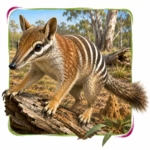
Common Wombat Fact Highlight
From the full animal facts page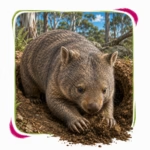
More Animal Comparisons
Pick another animal matchup and keep exploring. Compare appearances, habitats, diets, abilities, and surprising differences.



Make an Animal Story
Create an Australian adventure about a termite-tracking Numbat and a tunnel-building Wombat!