
Ostrich vs Emu: Flightless Bird Comparison
Ostriches and emus are enormous flightless birds with long legs, small wings, and impressive running skills, but they live on different continents and have several easy-to-spot differences. Ostriches come from Africa, grow much larger, and have two toes on each foot. Emus come from Australia, have three toes, shaggy feathers, and males that incubate the eggs and care for the chicks.
About Ostrich
- Type Bird
- Diet Omnivore
- Group African Ratite
- Known for World’s largest living bird, two-toed feet, powerful running, huge eggs, long neck, and open-country life
- Special skill Running at very high speed with long springy legs and using powerful kicks for defense
About Emu
- Type Bird
- Diet Omnivore
- Group Australian Ratite
- Known for Shaggy double-shafted feathers, three-toed feet, fast running, booming calls, and devoted fathers
- Special skill Walking long distances across dry country while the male incubates the eggs and raises striped chicks
Ostrich vs Emu: Quick Answer
Ostriches are the world’s largest living birds. They live in Africa, have two toes on each foot, and can run faster than emus. Emus are the second-tallest living birds, live naturally in Australia, have three toes, and are covered in shaggy double-shafted feathers. In emus, the father incubates the eggs and raises the chicks.
Where Do They Fit?
Follow the branches to see how Ostrich and Emu are classified and related.
Ostrich vs Emu: Quick Comparison
| Feature | Ostrich | Emu |
|---|---|---|
| Animal type | Bird | Bird |
| Animal group | African ratite | Australian ratite |
| Known for | Largest living bird, two toes, giant eggs, and extreme running speed | Shaggy feathers, three toes, booming calls, and devoted fathers |
| Natural range | Africa | Australia |
| Typical height | Up to about 2.7 meters | Up to about 1.9 meters |
| Toes per foot | Two | Three |
| Top running ability | Faster, with long sustained strides | Fast, agile runner over rough country |
| Feathers | Loose feathers, with striking black-and-white adult males | Shaggy brown feathers with two shafts from many feather bases |
| Baby name | Chick | Chick |
| Main incubator | Both sexes may share incubation, depending on the nesting group | Male |
How Are Ostriches and Emus Alike?
- Both ostriches and emus are large flightless birds called ratites.
- Both have long necks, strong legs, small wings, and feathers that are looser than the flight feathers of flying birds.
- Both are omnivores that eat plants, seeds, fruits, insects, and other small food items.
- Both lay large eggs and hatch striped or patterned chicks.
- Both can run quickly and use strong legs to escape danger.
How Are Ostriches and Emus Different?
- Ostriches are native to Africa, while emus are native to Australia.
- Ostriches are larger, taller, heavier, and faster than emus.
- Ostriches have two toes on each foot, while emus have three.
- Adult male ostriches are often black and white, while emus are mostly shaggy brown.
- Ostrich adults may share incubation duties, while male emus incubate the eggs and care for the chicks.
Ostrich vs Emu Showdown
Flightless-bird showdown: The ostrich wins size, speed, and strength because it is the largest living bird, has extremely long running legs, and can deliver powerful defensive kicks. The emu takes stealth because its shaggy brown feathers blend into Australian scrub and woodland. Social life is a tie because both may live alone, in pairs, families, or loose groups. Swimming is also a tie because both can swim when necessary but are built mainly for running. The emu wins our weirdest-fact prize because many of its feathers grow as two similar shafts from one base, creating a shaggy insulating coat.
Fun Ostrich vs Emu Facts
Two Toes vs Three Toes
An ostrich has only two toes on each foot, fewer than any other living bird. An emu has three forward-pointing toes, which help it grip uneven ground while walking and running.
World’s Largest vs Second-Tallest
Ostriches are the largest and tallest living birds and can reach roughly 2.7 meters in height. Emus are the second-tallest living birds and may stand close to 1.9 meters.
African Sprinter vs Australian Trekker
Ostriches can sprint at around 70 kilometers per hour for short periods and sustain impressive running speeds. Emus are slower but can travel long distances through Australia’s dry and uneven landscapes.
Shared Nest Duties vs Super Dad
A dominant female ostrich often lays eggs in a communal nest, and a male and major female commonly share incubation. In emus, the male incubates the clutch for about eight weeks and then protects and guides the chicks.
Double-Shafted Emu Feathers
Many emu feathers develop two similar shafts from a single feather base. Their loose structure traps air and helps shield the bird from intense sunlight while allowing heat to escape.
Ostrich vs Emu Quiz
- Which bird is the largest living bird? Answer: Ostrich.
- Which bird is native to Australia? Answer: Emu.
- How many toes does an ostrich have on each foot? Answer: Two.
- Which parent incubates emu eggs? Answer: The male.
- Which bird has shaggy double-shafted feathers? Answer: Emu.
Ostrich vs Emu FAQ
What is the main difference between an ostrich and an emu?
Ostriches are larger African birds with two toes on each foot. Emus are smaller Australian birds with three toes and shaggy brown feathers.
Which is faster, an ostrich or an emu?
The ostrich is faster. It can sprint at roughly 70 kilometers per hour, while emus can run at about 50 kilometers per hour.
Which is taller, an ostrich or an emu?
The ostrich is taller and can reach about 2.7 meters. An emu may reach about 1.9 meters.
Can ostriches and emus fly?
No. Both are flightless ratites with small wings and strong legs adapted for running.
Who looks after emu eggs and chicks?
The male emu incubates the eggs without regular feeding and then cares for the striped chicks for several months.
Animal Words to Know
- Ratite: A member of a group of mostly large flightless birds with a flat breastbone lacking the keel used by strong flying birds.
- Incubate: To keep eggs warm and protected while embryos develop.
- Clutch: A group of eggs laid for one nesting attempt.
- Omnivore: An animal that eats both plant and animal foods.
- Double-shafted feather: A feather form in which two similar shafts grow from one base, as commonly seen in emus.
Ostrich and Emu Flightless Activity
Ostrich and Emu Flightless Bird Detective Activity
Draw an adult male ostrich and emu at realistic relative scale. Make the ostrich taller, with long bare legs, two toes on each foot, a pale neck, and black-and-white plumage. Make the emu smaller and shaggy brown, with three toes on each foot; add a male emu guarding striped chicks. Label size, feathers, two toes, three toes, and chick care.
Meet Each Animal
Want the full fact file? Here are quick highlights from each animal’s own facts page.
Ostrich Fact Highlight
From the full animal facts page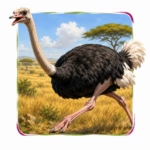
Emu Fact Highlight
From the full animal facts page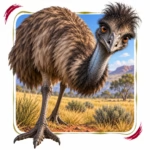
More Animal Comparisons
Pick another animal matchup and keep exploring. Compare appearances, habitats, diets, abilities, and surprising differences.





Make an Animal Story
Turn this ostrich vs emu comparison into a giant flightless-bird adventure with our free Animal Story Generator.
Source notes: References used for this comparison. See more See less
Try Another Matchup
Explore this comparison →