
Otter vs Beaver: Water Mammal Comparison
Otters and beavers are furry mammals often seen in rivers, lakes, and wetlands, but they use the water in very different ways. Otters are streamlined carnivores that chase fish and other aquatic prey. Beavers are plant-eating rodents whose powerful teeth, flat tails, dams, and lodges can reshape entire landscapes.
About Otter
- Type Mammal
- Diet Carnivore
- Group Mustelid
- Known for Playful swimming, sleek bodies, webbed feet, sensitive whiskers, and underwater hunting
- Special skill Swimming rapidly with webbed feet, flexible bodies, strong tails, and water-repelling fur
About Beaver
- Type Mammal
- Diet Herbivore
- Group Rodent
- Known for Tree cutting, dam building, lodges, orange teeth, and wetland engineering
- Special skill Felling trees and changing waterways by building dams, canals, food caches, and lodges
Otter vs Beaver: Quick Answer
Otters are sleek carnivorous mustelids built to chase prey through water. Beavers are heavy herbivorous rodents with flat tails and ever-growing teeth used to cut wood. Otters are faster and more agile swimmers, while beavers are famous for constructing dams and creating wetlands.
Where Do They Fit?
Follow the branches to see how Otter and Beaver are classified and related.
Otter vs Beaver: Quick Comparison
| Feature | Otter | Beaver |
|---|---|---|
| Animal type | Mammal | Mammal |
| Animal group | Mustelid | Rodent |
| Known for | Swimming, hunting, whiskers, and playful behavior | Dams, lodges, tree cutting, and orange teeth |
| Main habitat | Rivers, lakes, wetlands, estuaries, and coasts | Freshwater rivers, streams, ponds, lakes, and wetlands |
| Where found | Africa, Asia, Europe, and the Americas | North America, Europe, and Asia |
| Diet | Carnivore | Herbivore |
| Baby name | Pup or kit | Kit |
| Tail | Long, muscular, and usually tapered | Broad, flat, and paddle-shaped |
| Teeth | Sharp teeth for gripping prey | Ever-growing orange incisors for cutting wood |
| Special skill | Fast underwater hunting | Building dams and engineering wetlands |
How Are Otters and Beavers Alike?
- Both otters and beavers are mammals that spend much of their lives in or beside water.
- Both have dense fur, strong tails, webbed feet, and bodies adapted for swimming.
- Both use dens, burrows, lodges, or sheltered banks to rest and raise young.
- Both can close or protect parts of the ears and nose while underwater.
- Both influence wetland ecosystems and provide food or shelter opportunities for other wildlife.
How Are Otters and Beavers Different?
- Otters are mustelids related to weasels, while beavers are rodents.
- Otters are carnivores that hunt fish and other animals, while beavers are herbivores that eat bark, twigs, leaves, and aquatic plants.
- Otters have long tapered tails, while beavers have broad flat tails.
- Otters use sharp teeth to grip prey, while beavers use ever-growing incisors to cut wood.
- Otters chase prey through water, while beavers build dams, lodges, canals, and underwater food stores.
Otter vs Beaver Showdown
Water-mammal showdown: Size is a tie because species range from small river otters to heavy sea otters and large beavers. The otter wins speed, stealth, and swimming with its streamlined hunting body. The beaver takes strength and social teamwork through tree cutting and family construction, plus our weirdest-fact prize for orange, iron-hardened front teeth that never stop growing.
Fun Otter vs Beaver Facts
Aquatic Hunter vs Wetland Engineer
Otters search rivers, lakes, wetlands, or coasts for fish, crabs, frogs, shellfish, and other prey. Beavers feed on plants and change habitats by cutting woody stems and, where needed, building dams that slow flowing water.
Tapered Tail vs Paddle Tail
An otter’s long muscular tail helps with steering, balance, and propulsion. A beaver’s broad flat tail helps with balance, fat storage, swimming, and slapping the water as an alarm signal.
Carnivore Teeth vs Wood-Cutting Teeth
Otters have pointed canine teeth and crushing back teeth suited to catching slippery prey or cracking hard shells. Beavers have large incisors that grow continuously and stay sharp because the softer material behind the enamel wears away faster.
Dens vs Lodges
River otters commonly rest in bank dens, hollow logs, or abandoned burrows, while sea otters rest in the water. Beavers may dig bank burrows or build lodges with underwater entrances that lead to a dry chamber above the waterline.
Beaver Teeth Contain Iron
The front enamel of beaver incisors contains iron-rich compounds that make it strong and give the teeth an orange color. The incisors keep growing, so regular gnawing prevents them from becoming too long.
Otter vs Beaver Quiz
- Which animal is a carnivorous hunter? Answer: Otter.
- Which animal is a rodent? Answer: Beaver.
- Which animal has a broad flat tail? Answer: Beaver.
- Which animal is generally the faster, more agile swimmer? Answer: Otter.
- What are baby beavers called? Answer: Kits.
Otter vs Beaver FAQ
What is the main difference between an otter and a beaver?
An otter is a carnivorous mustelid with a long tapered tail and a body built for chasing prey. A beaver is a herbivorous rodent with a flat tail and large incisors used to cut wood.
Which is bigger, an otter or a beaver?
It depends on the species. Many beavers outweigh river otters, while large sea otters can equal or exceed beavers in weight.
Do otters build dams?
No. Otters may use dens, burrows, logs, or beaver-built wetlands, but they do not construct dams. Beavers build dams when deeper, safer water is needed.
Do beavers eat fish?
No. Beavers are herbivores that eat bark, twigs, leaves, shoots, roots, and aquatic plants.
Can otters and beavers live in the same wetland?
Yes. Their ranges and habitats overlap in many places. Otters may hunt in ponds and channels created by beaver dams, while the two animals generally eat different foods.
Animal Words to Know
- Mustelid: A member of the weasel family, including otters, badgers, ferrets, and wolverines.
- Rodent: A mammal with continuously growing front incisors used for gnawing.
- Herbivore: An animal that eats plants.
- Dam: A barrier that slows or holds back moving water.
- Wetland engineer: An animal that changes a wet habitat in ways that affect many other species.
Otter and Beaver Wetland Activity
Otter and Beaver Wetland Activity
Draw a North American river otter swimming after a fish and a North American beaver carrying a branch in the same wetland. Give the otter a sleek body, whiskers, webbed feet, and a tapered tail. Give the beaver orange incisors, a broad flat tail, a lodge, and a dam. Label body shape, tail, diet, and home.
Meet Each Animal
Want the full fact file? Here are quick highlights from each animal’s own facts page.
Otter Fact Highlight
From the full animal facts page
Beaver Fact Highlight
From the full animal facts page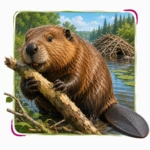
More Animal Comparisons
Pick another animal matchup and keep exploring. Compare appearances, habitats, diets, abilities, and surprising differences.

Make an Animal Story
Turn this otter vs beaver comparison into a splashing wetland adventure with our free Animal Story Generator.
Source notes: References used for this comparison. See more See less
Try Another Matchup
Explore this comparison →