
Peacock vs Peahen: Living Bird Adult-Male-to-Adult-Female Comparison
A peacock and peahen are not separate species. Peacock means an adult male peafowl, peahen means an adult female, and peachick means a youngster. Using Indian peafowl as the familiar example, the peacock is larger and brilliantly blue, with a spectacular eyespotted train used in courtship. The peahen is smaller and mottled brown, buff, gray, and green, giving her better camouflage while nesting and raising chicks. Both wear crests, forage on the ground, eat a broad omnivorous diet, call loudly, run well, fly short distances, and sleep high in trees.
About Peacock
- Type Bird
- Diet Omnivore that forages mainly on the ground for seeds, grain, berries, fruit, shoots, insects, and other small animals, with diet changing by habitat and season
- Group An adult male peafowl; this page uses the Indian or common peafowl (Pavo cristatus) as the familiar representative
- Known for A very large pheasant relative with a metallic cobalt-blue head and neck, fan-shaped crest, bronze-green back, chestnut wing feathers, long sturdy legs, and an enormous iridescent train of elongated upper-tail coverts carrying many eye-like ocelli; mature males may weigh up to about 6 kilograms and look far longer when the train is included
- Special skill Huge shimmering upper-tail covert train, adjustable fan display, eyespots, feather vibration, brilliant structural colors, loud contact and alarm calls, fast ground running, short powerful escape flight, strong legs, and elevated tree roosting
About Peahen
- Type Bird
- Diet The same flexible omnivorous diet of seeds, grain, fruit, shoots, insects, and small animals gathered mainly while walking and scratching on the ground
- Group An adult female peafowl; this page uses the female Indian or common peafowl (Pavo cristatus) as the representative
- Known for A large ground-foraging pheasant relative that is smaller and much shorter-looking than the male because she lacks his enormous eyespotted train, with a crest, whitish facial patches, greenish lower neck, mottled brown, buff, gray, and green body plumage, strong legs, functional wings, and a normal short true tail
- Special skill Mottled camouflage for nesting and chick care, strong running legs, alert group vigilance, loud alarm and contact calls, independent egg incubation, protective brooding, chick leadership, short escape flight, and high tree roosting
Peacock vs Peahen: Quick Answer
A peacock is an adult male peafowl, while a peahen is an adult female. In Indian peafowl, the peacock is larger, metallic blue and green, and carries a huge fan-shaped train covered with eyespots. The peahen is smaller, lacks the long eyespotted train, and wears mottled earth colors that help her blend into nesting cover. Both are Pavo cristatus, both have crests, and both can run, call, forage, and fly to high roosts.
Where Do They Fit?
Follow the branches to see how Peacock and Peahen are classified and related.
Peacock vs Peahen: Quick Comparison
| Feature | Peacock | Peahen |
|---|---|---|
| Main meaning | Adult male peafowl | Adult female peafowl |
| Representative | Male Indian peafowl, Pavo cristatus | Female Indian peafowl, Pavo cristatus |
| Typical size | Usually heavier, with far greater total length when the train is included | Usually lighter and much shorter-looking without the long train |
| Main colors | Metallic blue neck, green and bronze body areas, chestnut wings, iridescent train | Mottled brown, buff, gray, and green with a greenish lower neck |
| Ornamental train | Huge fan of elongated upper-tail coverts with many eyespots | No enormous eyespotted train; has a much shorter covering of feathers |
| True tail | Short, stiff tail feathers hidden beneath and used to support the train | Short true tail without the male display train |
| Breeding role | Displays, calls, and may hold a small lek territory | Selects a mate, nests, incubates eggs, and raises peachicks |
| Camouflage | Brilliant display plumage is conspicuous | Earth-toned plumage blends better with ground vegetation |
| Flight | Can make strong short flights and reach tree roosts despite the train | Can make strong short flights and reach tree roosts |
| Diet | Omnivorous ground forager | Omnivorous ground forager |
| Conservation | Indian peafowl is globally Least Concern | The same globally Least Concern species |
How Are Peacocks and Peahens Alike?
- Peacock and peahen are the adult male and female terms for peafowl; in this page both representatives are Indian peafowl, Pavo cristatus.
- Both belong to the pheasant family Phasianidae and have crests, strong scratching legs, short rounded wings, loud voices, sharp vision, and a short true tail.
- Both spend much of the day walking and foraging for seeds, fruit, shoots, insects, and other small food items.
- Both can run quickly, launch into powerful short flights, and roost above the ground in trees even though they are not long-distance soaring birds.
- Both use calls and group vigilance to stay connected and notice danger, and both need habitat with feeding areas, cover, water, and safe roosts.
How Are Peacocks and Peahens Different?
- The peacock is an adult male and the peahen an adult female; they are sex terms rather than separate species names.
- An adult Indian peacock is usually larger and far longer-looking because of his enormous train, while the peahen is smaller and lacks that display fan.
- The peacock has brilliant blue, green, bronze, and chestnut plumage; the peahen is mostly mottled brown, buff, gray, and green, which improves concealment on a ground nest.
- The peacock’s train contains many iridescent eyespots and is fanned, angled, and vibrated during courtship; the peahen has no comparable ornament.
- The peacock displays and may defend a small lek area, while the peahen chooses a mate, makes the nest, incubates the eggs, and raises the peachicks.
- The mature male drops the long train feathers after the breeding season and regrows them; the peahen does not undergo this giant annual train cycle.
Peacock vs Peahen Adaptation Showdown
Peafowl adaptation showdown: Peacock wins typical size and absolute strength because an adult male Indian peafowl is usually heavier, although individuals overlap. Speed is a tie because reliable sex-specific maxima are not comparable. Peahen wins stealth for mottled nesting camouflage, while social skill is a tie: the male manages display and lek signals and the female manages mate choice, chick communication, and maternal care. Swimming is a tie because neither is a water specialist. Peacock wins the weirdest-adaptation prize for a train that is not his true tail and can be spread and vibrated into a shimmering visual-and-sound display. These categories compare adaptations, not combat.
Fun Peacock vs Peahen Facts
Peacock and Peahen Are Sex Words
Peafowl is the broad group word. Peacock means an adult male, peahen means an adult female, and peachick means a young bird. People often casually call every peafowl a peacock, but a brown adult female Indian peafowl is correctly a peahen.
The Famous Train Is Not the True Tail
A peacock’s spectacular fan is made mainly of greatly elongated upper-tail covert feathers. Beneath it sits a much shorter set of stiff true tail feathers that lifts and supports the display. The colorful eye-like markings are called ocelli.
The Train Shimmers and Rattles
During courtship, a peacock raises the train into a wide fan, turns it toward a visiting peahen, and vibrates feathers rapidly. The movement produces visible shimmer and a rustling or rattling signal. Females evaluate a whole display, so one simple eyespot-count rule cannot explain every choice.
The Peahen Runs the Nursery
An Indian peahen makes a shallow ground nest, incubates the eggs, and raises the peachicks without routine help from the displaying male. The downy chicks are precocial: soon after hatching they can walk and peck, but they still depend on their mother for warmth, warning, guidance, and protection.
Big Ground Birds Can Still Fly
Peafowl prefer walking and running for everyday travel, yet both sexes can burst into flight and reach high branches for nighttime safety. The peacock can fly even while carrying a mature train, though the huge feathers affect his shape and are shed after the breeding season before regrowing.
Peacock vs Peahen Quiz
- What do peacock and peahen mean? Answer: Peacock is an adult male peafowl and peahen is an adult female.
- Are the two representatives different species? Answer: No. Both are Indian peafowl, Pavo cristatus.
- Which bird has the enormous eyespotted train? Answer: The mature peacock.
- Is the famous train the peacock’s true tail? Answer: No. It is mainly elongated upper-tail coverts supported by a short true tail.
- Which parent normally incubates the eggs and raises peachicks? Answer: The peahen.
Peacock vs Peahen FAQ
What is the main difference between a peacock and peahen?
A peacock is an adult male peafowl and a peahen is an adult female. In Indian peafowl, the male is larger and brilliantly colored with an enormous eyespotted train; the female is smaller, earth-toned, and lacks that giant display.
Is a peahen a female peacock?
In casual speech people say that, but the clearer wording is that a peahen is a female peafowl. Peacock already means male.
Do peahens have tails?
Yes. Both sexes have true tail feathers. A peahen lacks the peacock’s enormous fan of elongated upper-tail coverts, which people commonly mistake for the true tail.
Can peacocks and peahens fly?
Yes. Both can make strong short flights, especially to escape danger or reach a high night roost. They usually walk and run rather than fly long distances.
Do all peafowl look like these Indian representatives?
No. Indian, green, and Congo peafowl differ in color, size, range, display feathers, and the degree of male-female contrast. This page uses Pavo cristatus because it is the familiar blue peafowl seen in many parks and collections.
Animal Words to Know
- Peafowl: The broad name for birds whose adult males are peacocks and adult females are peahens.
- Peacock: An adult male peafowl.
- Peahen: An adult female peafowl.
- Train: The peacock’s long display fan, made mainly of elongated upper-tail covert feathers rather than the true tail.
- Ocellus: An eye-like colored marking; the plural is ocelli.
Peacock and Peahen Display Activity
Peacock and Peahen Display Activity
Draw an Indian peacock and peahen. Give both a crest, strong legs, short true tail, and small wings. Add the peacock’s blue neck and huge eye-spotted train, then show the short stiff tail feathers supporting it. Give the peahen mottled brown plumage beside peachicks. Label peafowl, peacock, peahen, train, true tail, eye spot, and camouflage.
Meet Each Animal
Want the full fact file? Here are quick highlights from each animal’s own facts page.
Peacock Fact Highlight
From the full animal facts page
Peahen Fact Highlight
From the full animal facts page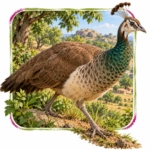
More Animal Comparisons
Pick another animal matchup and keep exploring. Compare appearances, habitats, diets, abilities, and surprising differences.






Make an Animal Story
Turn this peacock vs peahen comparison into a jeweled-train and hidden-nest adventure with our free Animal Story Generator.
Source notes: References used for this comparison. See more See less
Try Another Matchup
Explore this comparison →