
Prairie Dog vs Gopher for Kids
A Black-Tailed Prairie Dog is not a dog, and a Plains Pocket Gopher is not simply another name for it. Both are North American burrowing rodents of open country, but the prairie dog is a ground squirrel that spends daylight above ground with a highly social town. The pocket gopher belongs to a different family and lives mostly alone underground, using giant foreclaws, exposed incisors, and external cheek pouches as a tunneling toolkit.
About Black-Tailed Prairie Dog
- Type Mammal
- Diet Herbivore; mostly grasses and leafy plants
- Group Ground squirrel; family Sciuridae
- Known for Busy prairie towns, family coteries, lookouts, and bark-like calls
- Special skill Using varied calls, raised mounds, and many neighbors to detect danger
About Plains Pocket Gopher
- Type Mammal
- Diet Herbivore; mainly roots, tubers, stems, and leaves
- Group Pocket gopher; family Geomyidae
- Known for Solitary tunnels, crescent mounds, huge digging claws, and cheek pouches
- Special skill Digging with claws and incisors while closing lips behind the teeth
Quick Answer
Quick answer: The Black-Tailed Prairie Dog is usually larger, more visible, and far more social. It lives in colonies called towns, where family coteries groom, play, watch for predators, and use bark-like alarm calls. The Plains Pocket Gopher is smaller, solitary, and far more secretive. It spends most of its life in a private tunnel system and carries food in fur-lined cheek pouches that open outside the mouth.
Black-Tailed Prairie Dog vs Plains Pocket Gopher: Quick Comparison
| Feature | Black-Tailed Prairie Dog | Plains Pocket Gopher |
|---|---|---|
| Scientific identity | Cynomys ludovicianus | Geomys bursarius |
| Rodent family | Sciuridae, the squirrel family | Geomyidae, the pocket gopher family |
| Published adult mass | About 705-1,675 g | About 300-450 g |
| Published adult length | About 35-42 cm | About 19-36 cm |
| Best-known habitat | Dry, flat short- or mixed-grass prairie | Open land with deep sandy or crumbly soils |
| Body clues | Tan body, black tail tip, small ears, long-nailed toes | Thick body, tiny eyes and ears, large foreclaws, nearly bare tail |
| Burrow pattern | Many nearby burrows form a social town | Usually one adult occupies a private tunnel system |
| Surface activity | Active above ground by day; does not truly hibernate | Spends most of life underground and plugs tunnel exits |
| Food transport | Carries food in the mouth | Uses fur-lined external cheek pouches for food and nesting material |
| Communication | Many calls, including alarms and jump-yips | Relies strongly on touch and scent underground |
How Are Prairie Dogs and Gophers Alike?
- Both are North American rodents adapted to digging in grassland or other open soils.
- Both have strong front feet and claws for excavating underground tunnels.
- Both mainly eat plants, including grasses, leaves, roots, or tubers.
- Both raise pups in protected underground nest chambers.
- Both move and aerate soil, changing the ground for plants and other animals.
How Are Prairie Dogs and Gophers Different?
- The Black-Tailed Prairie Dog is a ground squirrel, while the Plains Pocket Gopher belongs to the pocket gopher family.
- The prairie dog is generally larger and has a black-tipped tail, while the pocket gopher has tiny eyes, tiny ears, and a nearly hairless sensing tail.
- Prairie dogs live in social towns, while one adult pocket gopher normally lives alone in a tunnel system.
- Prairie dogs spend much of the day above ground, while pocket gophers spend most of life underground and plug exits.
- Pocket gophers have fur-lined cheek pouches opening outside the mouth, while prairie dogs do not.
Prairie Dog vs Plains Pocket Gopher Showdown
Adaptation showdown: Black-Tailed Prairie Dog wins size because its published adult mass range is much higher. Speed is a Tie because the sources do not give a matched surface or tunnel race. Plains Pocket Gopher wins functional digging strength for its reinforced skull, strong jaw muscles, fast-growing foreclaws, and ability to move large amounts of soil; this is not a fight prediction. Plains Pocket Gopher wins stealth because it spends most of life underground and normally plugs exits. Black-Tailed Prairie Dog wins social behavior for cooperative coteries, sentinels, grooming, play, and alarm calls. Swimming is a Tie because neither animal is a specialized swimmer and no fair comparison is published. Plains Pocket Gopher wins weirdest for external fur-lined cheek pouches, lips that close behind the incisors, and a tail used as a backward feeler.
Fun Black-Tailed Prairie Dog vs Plains Pocket Gopher Facts
A Town Has Family Neighborhoods
A Black-Tailed Prairie Dog colony is called a town. Inside it, family groups called coteries cooperate in grooming, play, burrow care, raising young, watching for predators, and defending their space.
The Mound Is a Lookout
Soil piled around a prairie dog entrance helps keep rain out and gives a higher place for watching. When a lookout spots danger, bark-like calls can warn neighbors to dive below ground.
A Prairie Dog Is a Squirrel
Black-Tailed Prairie Dogs belong to family Sciuridae with squirrels, chipmunks, marmots, and groundhogs. Their name comes from bark-like calls, not from any close relationship to dogs.
Pockets Open Outside the Mouth
A Plains Pocket Gopher has large fur-lined cheek pouches that open outside its mouth. It carries food and nesting material in them, but not the dirt excavated from its tunnels.
A Face Built for Dirt
A pocket gopher can close its lips behind its front teeth, so it can dig with exposed incisors without filling its mouth with soil. Toe hairs sweep dirt, and the sensitive tail helps when backing up.
Prairie Dog vs Gopher Quiz
- Which animal lives in social towns? Answer: The Black-Tailed Prairie Dog.
- Which animal has external fur-lined cheek pouches? Answer: The Plains Pocket Gopher.
- Why does a prairie dog stand on a mound? Answer: To watch and listen for danger.
- How does a pocket gopher keep dirt out while tooth-digging? Answer: It closes its lips behind its incisors.
- Which animal wins the stealth category? Answer: The Plains Pocket Gopher, because it stays mostly underground and plugs exits.
Black-Tailed Prairie Dog vs Plains Pocket Gopher FAQ
Is a prairie dog really a dog?
No. A Black-Tailed Prairie Dog is a rodent in the squirrel family.
Is a prairie dog a gopher?
No. Prairie dogs and pocket gophers are both rodents, but they belong to different families and have very different social lives.
Which is bigger, a prairie dog or gopher?
The Black-Tailed Prairie Dog is generally larger. Its published adult mass range is about 705 to 1,675 grams, compared with about 300 to 450 grams for Plains Pocket Gophers.
Do prairie dogs hibernate?
Black-Tailed Prairie Dogs do not truly hibernate. They can remain underground during harsh weather but may emerge in milder winter conditions.
What are a pocket gopher’s pockets for?
The external cheek pouches carry food and nesting material. They are not used to carry excavated soil.
Animal Words to Know
- Coterie: A close family neighborhood inside a prairie dog town.
- Sentinel: An animal that watches for danger and warns others.
- Fossorial: Adapted for digging and living underground.
- External cheek pouch: A fur-lined pocket that opens outside the mouth and carries food.
- Soil aeration: Mixing or loosening soil so air and water can move through it more easily.
Build a Burrow Detective Board
Build a Burrow Detective Board
Draw exactly one adult Black-Tailed Prairie Dog above a social town and exactly one adult Plains Pocket Gopher inside a private tunnel at honest relative scale. Make ten clue cards for black tail tip, lookout mound, alarm call, family coterie, open eyes, cheek pouch, plugged exit, tiny eyes, sensing tail, and digging incisors. Sort each clue under Prairie Dog, Gopher, or Both, then explain which clues could be seen safely from above ground without people handling wildlife.
Meet Each Animal
Want the full fact file? Here are quick highlights from each animal’s own facts page.
Black-Tailed Prairie Dog Fact Highlight
From the full animal facts page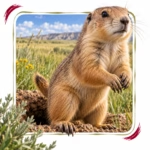
Plains Pocket Gopher Fact Highlight
From the full animal facts page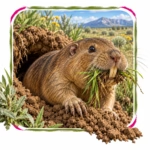
More Animal Comparisons
Pick another animal matchup and keep exploring. Compare appearances, habitats, diets, abilities, and surprising differences.


Make an Animal Story
Send a prairie lookout and a pocket-pouch tunnel expert into an underground mystery with our free Animal Story Generator.