
Sable Antelope vs Roan Antelope: Antelope Species Comparison
Sable and Roan Antelopes are close relatives in the genus Hippotragus, a name meaning horse-goat. Both are large, muscular grazers with manes, black-and-white faces and long curved horns in males and females. Adult male Sables become dark brown or almost black and often carry the longer, more deeply curved horns. Roans are usually a little larger, with a reddish-gray coat, an especially bold face mask and very long ears ending in dark tassels.
About Sable Antelope
- Type Living
- Diet Herbivore and mainly a grazer; eats grass plus occasional herbs, leaves and shrubs
- Group Horse-like antelope in genus Hippotragus (Hippotragus niger)
- Known for Near-black adult males, white belly and face markings, upright mane and extremely long ringed horns sweeping backward
- Special skill Uses enormous scimitar-shaped horns and a high arched-neck display that makes the animal look even more powerful
About Roan Antelope
- Type Living
- Diet Herbivore and mainly a grazer; eats grasses with some herbs, shrubs and pods
- Group Large horse-like antelope in genus Hippotragus (Hippotragus equinus)
- Known for Reddish or gray-brown roan coat, dramatic black-and-white face mask, long tasselled ears and backward-curving horns
- Special skill Combines a horse-like muscular build, long horns and keen senses with regular travel between grass and water
Sable Antelope vs Roan Antelope: Quick Answer
Look first at coat color, face and ears. An adult male Sable Antelope is dark brown to nearly black, with a white belly and long horns that sweep far backward. A Roan Antelope is generally larger and red-gray or brown, with a sharp black-and-white mask and extra-long tasselled ears. Both sexes of both species normally grow horns, so horns alone do not identify them.
Where Do They Fit?
Follow the branches to see how Sable Antelope and Roan Antelope are classified and related.
Sable Antelope vs Roan Antelope: Quick Comparison
| Feature | Sable Antelope | Roan Antelope |
|---|---|---|
| Scientific name | Hippotragus niger | Hippotragus equinus |
| Typical adult mass | About 220-238 kg in common summaries | About 225-300 kg |
| Overall build | Powerful and barrel-chested | Usually taller, heavier and horse-like |
| Adult male coat | Dark brown to almost black | Gray, reddish-brown or roan |
| Face | White eyebrow and cheek markings on a dark face | Very bold black-and-white mask |
| Ears | Long, but less dramatically tasselled | Very long and pointed with dark tassels |
| Horns | Very long ringed scimitars, often more deeply curved | Long ringed horns sweeping backward, usually shorter |
| Habitat | Miombo and other savanna woodland with grass clearings | Light woodland and taller open grassland |
| Water | Usually stays fairly close to water | Needs regular water and often drinks daily |
| Social group | Small female herd with one adult bull nearby | Female-led herd, often with one adult bull |
How Are Sable and Roan Antelopes Alike?
- Both are large African antelopes in the horse-like genus Hippotragus.
- Both have strong bodies, upright neck manes and sharply contrasting black-and-white faces.
- Both males and females normally grow permanent ringed horns that curve backward.
- Both eat mainly grass and need dependable access to drinking water.
- Both form herds with ranked females, young calves and usually one adult bull nearby.
How Are Sable and Roan Antelopes Different?
- Roan Antelopes are usually taller and somewhat heavier than Sable Antelopes.
- An adult male Sable becomes almost black, while a Roan stays reddish, gray or brown.
- The Roan’s black-and-white face mask is broader and more clown-like.
- Roan Antelopes have especially long pointed ears with dark tassels.
- Sable horns can grow longer and usually sweep backward in a deeper curve.
Sable vs Roan Antelope Adaptation Showdown
- Size – Roan Antelope: Its typical upper mass and shoulder height are greater, making it one of Africa’s largest antelopes.
- Speed – Tie: Both have powerful galloping builds, but no fair matched data proves one is reliably faster.
- Strength – Tie: The Roan has more body mass, while the Sable may carry longer horns, so neither wins every kind of strength.
- Stealth – Tie: Dark Sables merge with woodland shade, while a Roan’s red-gray coat fits dry grass and sunlit savanna.
- Social – Tie: Both live in structured female herds and send maturing males into bachelor life.
- Swimming – Tie: Both can cross water, but neither has a special swimming body.
- Weirdest – Sable Antelope: A sandy calf can grow into a nearly black adult bull crowned with horns as long as a child is tall.
Fun Sable Antelope vs Roan Antelope Facts
A Horse-Goat Name
Hippotragus combines Greek roots linked to horse and goat. Both antelopes earn the name with tall shoulders, flowing manes and strong builds.
The Darkening Sable
Sable calves begin sandy or reddish-brown. Males darken as they mature and may become almost black, making the white markings stand out.
Roan Means a Color
Roan describes a reddish or gray-brown shade. It gives the Roan Antelope both its name and a useful clue for identification.
Horns on Males and Females
Both sexes in both species grow horns. Male horns are usually thicker and longer, especially in the Sable Antelope.
Calves in Hiding
A mother usually hides her newborn in tall grass or bush for its earliest days. She returns to nurse until the calf is ready to join the herd.
Sable Antelope vs Roan Antelope Quiz
Which animal is usually larger? A) Sable Antelope B) Roan Antelope C) They are always identical Answer: B) Roan Antelope
Which adult male may become almost black? A) Sable Antelope B) Roan Antelope C) Neither Answer: A) Sable Antelope
Which animal has especially long tasselled ears? A) Sable Antelope B) Roan Antelope C) Both equally Answer: B) Roan Antelope
Which sexes normally grow horns? A) Males and females B) Males only C) Females only Answer: A) Males and females
What do both animals mainly eat? A) Grass B) Fish C) Insects Answer: A) Grass
Sable Antelope vs Roan Antelope FAQ
Are Sable and Roan Antelopes closely related?
Yes. They are different species in the same genus, Hippotragus, and share a horse-like build.
Which animal has longer horns?
Sable Antelope horns can reach greater lengths and often make a deeper backward curve, although individual sizes vary.
Are all Sable Antelopes black?
No. Females and young are commonly chestnut or brown, and even adult color varies by sex, age and population.
Can female Roan and Sable Antelopes have horns?
Yes. Females of both species normally have horns, though they are usually slimmer and shorter than a bull’s.
Why do these antelopes stay near water?
Their grass-based diets and hot habitats make regular drinking important, especially in dry seasons.
Animal Words to Know
- Bachelor group: A group made mainly of young or adult males without a breeding herd.
- Genus: A scientific group of closely related species.
- Grazer: An animal that feeds mainly on grass.
- Mane: A line or mass of longer hair along the neck or back.
- Roan: A reddish-brown or grayish coat color.
Design Two Horse-Antelope Masks
Design Two Horse-Antelope Masks
Draw two life-size paper face patterns. Give the Sable a darker face, white eyebrows and long sweeping horn outlines. Give the Roan a broad black-and-white mask, red-gray forehead and extra-long tasselled ears. Place them beside body silhouettes showing the Roan slightly larger and the adult male Sable much darker.
Meet Each Animal
Want the full fact file? Here are quick highlights from each animal’s own facts page.
Sable Antelope Fact Highlight
From the full animal facts page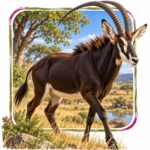
Roan Antelope Fact Highlight
From the full animal facts page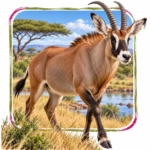
More Animal Comparisons
Pick another animal matchup and keep exploring. Compare appearances, habitats, diets, abilities, and surprising differences.




Make an Animal Story
Create an antelope story about two horse-like cousins comparing bold masks, long horns and life beside the waterhole!
Source notes: References used for this comparison. See more See less
Try Another Matchup
Explore this comparison →