
Seal vs Walrus: Pinniped Comparison
Seals and walruses are both pinnipeds, the flipper-footed mammals of the sea, but they are easy to tell apart. Seals are generally sleeker, faster swimmers and occur in many oceans. Walruses are enormous Arctic specialists with long tusks, thick blubber, stiff whiskers, and a talent for finding clams beneath the seafloor.
About Seal
- Type Mammal
- Diet Carnivore
- Group Seal Pinniped
- Known for Streamlined body, flippers, strong swimming, diving, whiskers, and life along coasts or sea ice
- Special skill Swimming and diving efficiently with a streamlined body, sensitive whiskers, and oxygen-storing muscles
About Walrus
- Type Mammal
- Diet Carnivore
- Group Walrus Pinniped
- Known for Long tusks, thick blubber, bristly whiskers, huge size, Arctic herds, and clam feeding
- Special skill Finding buried shellfish with sensitive whiskers and sucking soft prey from shells with a powerful mouth
Seal vs Walrus: Quick Answer
Seals are usually smaller, more streamlined, and better suited to fast, agile swimming. Walruses are much larger, live only in the Arctic, have long tusks and thick whiskers, and mainly search shallow seafloors for shellfish. Both are air-breathing pinniped mammals with flippers and insulating blubber.
Where Do They Fit?
Follow the branches to see how Seal and Walrus are classified and related.
Seal vs Walrus: Quick Comparison
| Feature | Seal | Walrus |
|---|---|---|
| Animal type | Marine mammal | Marine mammal |
| Animal group | Seal pinniped | Walrus pinniped |
| Known for | Streamlined body, swimming, diving, and flippers | Tusks, whiskers, thick blubber, and Arctic herds |
| Main habitat | Oceans and coasts worldwide, depending on species | Shallow Arctic seas, pack ice, and northern coasts |
| Typical size | Usually smaller, though elephant seals are enormous | Usually much larger than most seals |
| Teeth | Sharp teeth for catching fish, squid, or other prey | Large upper canine tusks plus ordinary teeth |
| Diet | Fish, squid, crustaceans, penguins, or other prey depending on species | Mainly clams and other bottom animals, plus occasional fish or other prey |
| Baby name | Pup | Calf |
| Social style | Varies from solitary to large breeding colonies | Often forms large social herds |
| Special skill | Agile swimming and deep diving | Seafloor foraging with whiskers and suction |
How Are Seals and Walruses Alike?
- Both seals and walruses are pinnipeds, or flipper-footed marine mammals.
- Both breathe air with lungs and must return to the surface.
- Both have blubber that stores energy and reduces heat loss.
- Both give birth to live young and feed them milk.
- Both haul out on land or ice to rest, breed, molt, or care for young.
How Are Seals and Walruses Different?
- Most seals are smaller and more streamlined, while walruses are huge and bulky.
- Walruses have long tusks, while seals do not.
- Walruses live only in Arctic and subarctic regions, while seals occur in many oceans, including Antarctica.
- Seals usually chase swimming prey, while walruses commonly search the seafloor for clams and other bottom animals.
- Seal babies are usually called pups, while walrus babies are called calves.
Seal vs Walrus Showdown
Pinniped showdown: The walrus wins for size and strength because adults can weigh well over a tonne and use powerful bodies and tusks around ice and crowded haul-outs. The seal takes speed, stealth, and swimming with its sleeker shape and agile underwater hunting. The walrus wins social life because it often gathers in enormous herds. It also takes our weirdest-fact prize because its whiskers can detect buried clams before its mouth vacuums the soft animal from the shell.
Fun Seal vs Walrus Facts
Sleek Swimmer vs Arctic Heavyweight
Most seals have streamlined bodies designed for quick turns and efficient pursuit underwater. Walruses are broader, heavier, and wrapped in thick blubber, trading some agility for insulation, strength, and survival in icy Arctic seas.
No Tusks vs Giant Tusks
Seals have ordinary canine teeth inside the mouth. Walruses grow elongated upper canine teeth into tusks, and both males and females can have them, although male tusks are usually larger.
Pup vs Calf
A baby seal is generally called a pup. A baby walrus is called a calf and may remain closely dependent on its mother for two years or longer while learning Arctic survival skills.
Fish Chaser vs Seafloor Forager
Many seals chase fish, squid, krill, penguins, or crustaceans through the water, depending on species. Walruses commonly sweep their whiskers across muddy bottoms to find clams and other buried invertebrates.
Walruses Can Vacuum Clams
A walrus can seal its lips around a clam and pull back its tongue to create powerful suction. This helps remove the soft animal from its shell, often without swallowing much shell material.
Seal vs Walrus Quiz
- Which animal usually has long tusks? Answer: Walrus.
- Which animal is generally the faster and more agile swimmer? Answer: Seal.
- What is a baby seal called? Answer: A pup.
- What is a baby walrus called? Answer: A calf.
- What do walruses use to detect prey on the seafloor? Answer: Sensitive whiskers.
Seal vs Walrus FAQ
What is the main difference between a seal and a walrus?
Seals are generally smaller, sleeker swimmers without tusks. Walruses are huge Arctic pinnipeds with tusks, thick whiskers, heavy blubber, and a diet focused strongly on seafloor animals.
Are walruses a type of seal?
Walruses and seals are both pinnipeds, but walruses belong to their own family, Odobenidae. True seals and eared seals belong to different pinniped families.
Which is bigger, a seal or a walrus?
A walrus is larger than most seal species. However, the biggest elephant seals can rival or exceed walruses in body mass.
Why do walruses have tusks?
Walruses use tusks in social displays, defense, and interactions around ice or crowded resting sites. Tusks may also help them steady themselves at ice edges, although they are not mainly clam-digging tools.
Can seals and walruses live together?
Some Arctic seals and walruses use the same broad seas and ice habitats, but they have different diets, resting patterns, and ecological roles.
Animal Words to Know
- Pinniped: A flipper-footed marine mammal such as a seal, sea lion, or walrus.
- Tusk: A greatly enlarged tooth that projects outside the mouth.
- Blubber: A thick layer of fat that stores energy and insulates marine mammals.
- Vibrissae: Sensitive whiskers used to detect touch and movement.
- Haul-out: A place where marine mammals leave the water to rest on land or ice.
Seal and Walrus Pinniped Detective Activity
Seal and Walrus Pinniped Detective Activity
Use a harbor seal as your seal example and draw it beside a much bulkier walrus. Give the seal a streamlined body, short front flippers, and no tusks. Give the walrus long tusks, thick whiskers, heavy blubber, and clams beside Arctic sea ice. Label pinniped, size, tusks, whiskers, and food.
Meet Each Animal
Want the full fact file? Here are quick highlights from each animal’s own facts page.
Seal Fact Highlight
From the full animal facts page
Walrus Fact Highlight
From the full animal facts page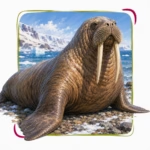
More Animal Comparisons
Pick another animal matchup and keep exploring. Compare appearances, habitats, diets, abilities, and surprising differences.





Make an Animal Story
Turn this seal vs walrus comparison into an icy pinniped adventure with our free Animal Story Generator.
Source notes: References used for this comparison. See more See less
Try Another Matchup
Explore this comparison →