
Shrew vs Vole for Kids
Common Shrews and Field Voles can both dart beneath long grass, but they are not close look-alikes once you inspect the face and food. The shrew is a tiny insect-hunting mammal with a long pointed snout and sharp teeth. The larger vole is a plant-eating rodent with a blunt face, gnawing incisors, hidden ears, and a very short tail.
About Common Shrew
- Type Mammal
- Diet Carnivore and insectivore; earthworms, spiders, insect larvae, slugs, snails, and other small prey
- Group Eulipotyphlan insectivore; family Soricidae
- Known for A long pointed snout, tiny eyes, fierce territorial behavior, and an extremely fast metabolism
- Special skill Shrinks parts of its skull, brain, and organs for winter, then regrows them in spring
About Field Vole
- Type Mammal
- Diet Herbivore; grasses, leaves, seeds, roots, stems, and other plant material
- Group Rodent; family Cricetidae
- Known for A blunt rounded face, hidden ears, short tail, grass runways, burrows, and large population cycles
- Special skill Builds concealed runways and burrows through dense grass while turning plants into food for many predators
Quick Answer
Quick answer: A Common Shrew is usually 5 to 8 centimeters long and 5 to 14 grams, with a pointed snout and a diet of worms, spiders, and other small prey. A Field Vole is usually 8 to 13 centimeters long and 20 to 50 grams, with a rounder face and a diet of grasses, leaves, seeds, and roots. The vole is a rodent; the shrew is not.
Common Shrew vs Field Vole: Quick Comparison
| Feature | Common Shrew | Field Vole |
|---|---|---|
| Scientific identity | Sorex araneus | Microtus agrestis |
| Mammal group | Shrew family; not a rodent | Rodent in the hamster-and-vole family |
| Body length | About 5-8 cm, plus a 2-4 cm tail | About 8-13 cm, plus a 3-4 cm tail |
| Weight | About 5-14 g | About 20-50 g |
| Face | Long pointed snout, tiny eyes, tiny ears | Blunt rounded snout, small eyes, ears hidden in fur |
| Teeth | Many small sharp teeth for animal prey | Paired gnawing incisors for plants |
| Main foods | Earthworms, spiders, insect larvae, slugs, and snails | Grasses, leaves, seeds, roots, and stems |
| Daily rhythm | Active in short bursts by day and night; must eat every few hours | Active by day and night along grassy runs |
| Winter | Does not hibernate; body and skull shrink seasonally | Does not hibernate; stays in sheltered runs, nests, and burrows |
| Young | Often about 5-7 young; pups may follow in a nose-to-tail caravan | Often about 4-7 pups, with several litters possible in a season |
How Are Shrews and Voles Alike?
- Both are small mammals that often move beneath grass and low ground cover.
- Both can be active during the day and at night.
- Both build or use sheltered nests and raise several young at a time.
- Both remain active through winter instead of hibernating.
- Both are important prey for owls, kestrels, foxes, weasels, and other hunters.
How Are Shrews and Voles Different?
- A Common Shrew is not a rodent, but a Field Vole is.
- The shrew has a long pointed snout and sharp prey-gripping teeth; the vole has a blunt face and gnawing incisors.
- The shrew mainly hunts invertebrates, while the vole mainly eats grasses and other plants.
- The Field Vole is usually much larger and heavier than the Common Shrew.
- A shrew must eat every few hours to fuel a rapid metabolism, while a vole can spend longer feeding on vegetation along its runways.
Shrew vs Vole Showdown
Adaptation showdown: Field Vole wins size because its 8-13-centimeter body and 20-50-gram mass are normally greater than a Common Shrew’s 5-8 centimeters and 5-14 grams. Speed is a Tie because the sources provide no fair matched race. Common Shrew wins strength for its size because it aggressively defends a territory and captures wriggling animal prey with sharp teeth. Field Vole wins stealth because its brown-grey coat, blunt outline, and covered runway network keep it hidden in long grass. Social behavior is a Tie because shrews are territorial and vole contacts change with season and density, so neither has a simple universal advantage. Swimming is a Tie because neither is a specialist swimmer. Common Shrew wins weirdest because its skull, brain, and several organs shrink for winter and grow again toward spring.
Fun Common Shrew vs Field Vole Facts
A Meal Every Few Hours
A Common Shrew has such a fast metabolism that it searches for food through day and night and may need to eat every two or three hours. Missing too many meals can be dangerous.
The Shrinking Shrew
During winter a Common Shrew can reduce the size of its skull, brain, liver, and other tissues. This seasonal change, called Dehnel’s phenomenon, lowers the energy cost of living when food is harder to find.
A Nose-to-Tail Caravan
Young shrews sometimes follow their mother in a line. Each youngster grips the fur near the tail of the one in front, creating a moving caravan through the vegetation.
Hidden Grass Highways
Field Voles make networks of well-used runs beneath long grass. The covered routes connect feeding places, nests, and burrows while hiding the voles from many watchful predators.
A Key Link in the Food Web
Field Vole numbers can rise and fall sharply. When they are abundant, they feed many predators, including barn owls, kestrels, foxes, stoats, and weasels.
Shrew vs Vole Quiz
- Which animal is a rodent? Answer: The Field Vole.
- Which animal has the longer, pointier snout? Answer: The Common Shrew.
- What does a Field Vole mainly eat? Answer: Grasses, leaves, seeds, roots, and other plant material.
- Which animal is normally larger? Answer: The Field Vole.
- What unusual winter change happens to a Common Shrew? Answer: Parts of its skull, brain, and organs shrink.
Common Shrew vs Field Vole FAQ
Is a shrew a kind of mouse?
No. A Common Shrew is not a rodent; it belongs to the shrew family Soricidae.
Is a vole a rodent?
Yes. A Field Vole is a rodent with continuously growing incisors.
Which animal is bigger?
The Field Vole is usually longer and several times heavier.
Do shrews and voles eat the same food?
No. The Common Shrew mainly hunts small animals, while the Field Vole mainly eats plants.
Do either of them hibernate?
No. Both remain active in winter, although they use shelter and special energy-saving strategies.
Animal Words to Know
- Insectivore: An animal whose diet contains many insects and other invertebrates.
- Herbivore: An animal that mainly eats plants.
- Incisor: A front tooth; rodent incisors grow continuously and are used for gnawing.
- Metabolism: All the chemical processes that release and use energy in a living body.
- Territory: An area that an animal uses and may defend from others of its species.
Sort the Snout, Teeth, and Food Clues
Sort the Snout, Teeth, and Food Clues
Draw exactly one adult Common Shrew and exactly one adult Field Vole at honest relative scale. Add cards for a pointed snout, blunt snout, sharp teeth, gnawing incisors, earthworms, spiders, grass, seeds, a shrew nest, and a vole runway. Sort each clue under the right animal. Observe wild mammals quietly without people handling them.
Meet Each Animal
Want the full fact file? Here are quick highlights from each animal’s own facts page.
Common Shrew Fact Highlight
From the full animal facts page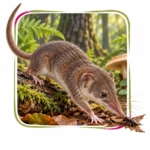
Field Vole Fact Highlight
From the full animal facts page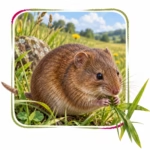
More Animal Comparisons
Pick another animal matchup and keep exploring. Compare appearances, habitats, diets, abilities, and surprising differences.






Make an Animal Story
Send a hungry Shrew and a grass-tunnel Vole through an underground food-web mystery with our free Animal Story Generator.