
Skunk vs Badger: Burrowing Mammal Comparison
Skunks and badgers are low-slung mammals with strong claws, nighttime habits, and bold facial or body markings, but their main defenses are very different. Skunks rely on warning colors and accurately aimed spray. Badgers rely on muscular bodies, long digging claws, tough hides, and underground escape routes.
About Skunk
- Type Mammal
- Diet Omnivore
- Group Mephitid
- Known for Powerful defensive spray, bold warning markings, digging, and nighttime foraging
- Special skill Spraying a strong-smelling defensive liquid with remarkable aim
About Badger
- Type Mammal
- Diet Omnivore or carnivore depending on species
- Group Mustelid
- Known for Powerful claws, muscular digging, underground dens, and determined defense
- Special skill Excavating soil rapidly with long claws and powerful front limbs
Skunk vs Badger: Quick Answer
Skunks are smaller omnivorous mammals famous for spraying a powerful-smelling liquid when threatened. Badgers are heavier, stronger diggers with long claws and broad bodies built for excavating burrows. Both usually forage at night, but skunks advertise their chemical defense while badgers depend more on strength and digging.
Where Do They Fit?
Follow the branches to see how Skunk and Badger are classified and related.
Skunk vs Badger: Quick Comparison
| Feature | Skunk | Badger |
|---|---|---|
| Animal type | Mammal | Mammal |
| Animal group | Mephitid | Mustelid |
| Known for | Defensive spray, warning markings, and nighttime foraging | Digging claws, muscular strength, burrows, and defense |
| Main habitat | Forests, grasslands, farms, deserts, and suburbs | Grasslands, forests, farms, mountains, and open country |
| Where found | North and South America | North America, Europe, Asia, and Africa |
| Diet | Omnivore | Omnivore or carnivore depending on species |
| Baby name | Kit | Cub |
| Main defense | Strong-smelling spray | Claws, teeth, strength, and digging |
| Body shape | Small, low, and often fluffy-tailed | Broad, muscular, and wedge-shaped |
| Special skill | Aiming defensive spray | Rapid excavation |
How Are Skunks and Badgers Alike?
- Both skunks and badgers are mammals in the musteloid branch of the carnivore family tree.
- Both have strong claws and can dig shelters or search for underground food.
- Both are often active from dusk through the night.
- Both eat small animals, insects, and other available foods.
- Both use scent and body signals to communicate and warn other animals.
How Are Skunks and Badgers Different?
- Skunks belong to the family Mephitidae, while true badgers belong to the family Mustelidae.
- Skunks rely mainly on foul-smelling spray, while badgers rely more on claws, teeth, strength, and digging.
- Badgers are generally heavier and more powerfully built than skunks.
- Skunks commonly have fluffy tails and bold black-and-white warning patterns, while badgers have shorter tails and broad striped faces or grizzled coats.
- Skunk babies are called kits, while badger babies are called cubs.
Skunk vs Badger Showdown
Burrowing-mammal showdown: The badger wins for size, speed, strength, and stealthy underground movement. Social life is a tie because behavior varies by species, and swimming is also a tie because neither is a water specialist. The skunk wins our weirdest-fact prize for accurately spraying a powerful-smelling liquid from glands beneath its tail.
Fun Skunk vs Badger Facts
Chemical Shield vs Digging Armor
A skunk warns enemies by stamping, hissing, raising its tail, or turning its rear toward the threat before spraying. A badger usually depends on strong claws, thick skin, powerful jaws, and the ability to dig or wedge itself into a burrow.
Mephitid vs Mustelid
Skunks were once grouped with weasels, but genetic evidence places them in their own family, Mephitidae. True badgers belong to Mustelidae, the family that also includes weasels, otters, ferrets, and wolverines.
Warning Stripes vs Face Stripes
A skunk’s contrasting black-and-white pattern warns predators that attacking may have smelly consequences. Many badgers also have bold markings, but their stripes may help with recognition, camouflage, or warning rather than advertising a spray.
Both Are Helpful Hunters
Skunks eat insects, grubs, rodents, eggs, fruit, and carrion. Badgers dig after rodents, insects, reptiles, roots, and other foods. By feeding, digging, and turning soil, both can influence the habitats around them.
Some Skunks Perform Handstands
Before spraying, spotted skunks may balance on their front feet with the tail and hindquarters raised high. This dramatic warning makes the animal look larger and points its spray glands toward the danger.
Skunk vs Badger Quiz
- Which animal is famous for defensive spray? Answer: Skunk.
- Which animal usually has the stronger digging build? Answer: Badger.
- What is a baby skunk called? Answer: A kit.
- What is a baby badger called? Answer: A cub.
- Which animal may perform a warning handstand? Answer: A spotted skunk.
Skunk vs Badger FAQ
What is the main difference between a skunk and a badger?
A skunk is a mephitid best known for defensive spray. A badger is a mustelid with a broad muscular body and long claws specialized for digging.
Which is bigger, a skunk or a badger?
Badgers are generally heavier and more powerfully built, although exact size depends on the species.
Are skunks and badgers related?
Yes, but not extremely closely. Both belong to the musteloid branch of carnivoran mammals, while skunks and true badgers belong to different families.
Do skunks and badgers live in the same places?
Striped skunks and American badgers overlap across parts of North America, especially in grasslands, farmland, scrublands, and open woodland.
Can badgers spray like skunks?
Badgers have scent glands and can produce strong odors, but they cannot aim and spray defensive liquid with the skunk's specialized accuracy and range.
Animal Words to Know
- Mephitid: A member of the skunk family, Mephitidae.
- Mustelid: A member of the weasel family, including badgers, otters, ferrets, and wolverines.
- Warning coloration: Bold colors or patterns that signal an animal may be dangerous or unpleasant to attack.
- Scent gland: A body gland that produces a strong-smelling chemical.
- Burrow: A tunnel or underground shelter dug by an animal.
Skunk and Badger Defense Activity
Skunk and Badger Defense Activity
Draw a striped skunk beside a broad-bodied badger. Give the skunk bold warning stripes and a raised fluffy tail. Give the badger a striped face, powerful front claws, and a burrow entrance. Label scent defense, warning pattern, claws, digging, burrow, kit, and cub. Show both animals calm rather than spraying or fighting.
Meet Each Animal
Want the full fact file? Here are quick highlights from each animal’s own facts page.
Skunk Fact Highlight
From the full animal facts page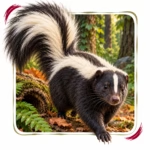
Badger Fact Highlight
From the full animal facts page
More Animal Comparisons
Pick another animal matchup and keep exploring. Compare appearances, habitats, diets, abilities, and surprising differences.

 Gorilla vs Monkey
Great-Ape Genus-to-Diverse Monkey Umbrella Comparison
Compare them →
Gorilla vs Monkey
Great-Ape Genus-to-Diverse Monkey Umbrella Comparison
Compare them →
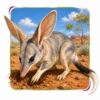
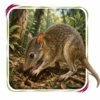 Greater Bilby vs Southern Brown Bandicoot
Bandicoot-Order Desert-vs-Scrub Ecology Comparison
Compare them →
Greater Bilby vs Southern Brown Bandicoot
Bandicoot-Order Desert-vs-Scrub Ecology Comparison
Compare them →

 Red Kangaroo vs Eastern Grey Kangaroo
Close-Relative Giant Kangaroo Identification Comparison
Compare them →
Red Kangaroo vs Eastern Grey Kangaroo
Close-Relative Giant Kangaroo Identification Comparison
Compare them →
Make an Animal Story
Turn this skunk vs badger comparison into a burrowing nighttime adventure with our free Animal Story Generator.
Source notes: References used for this comparison. See more See less
Try Another Matchup
Explore this comparison →