
Slow Worm vs Eastern Glass Lizard: Legless Lizard Comparison
Slow Worms and Eastern Glass Lizards are not worms or snakes. Both are legless lizards in the anguid family, with movable eyelids and tails that can break away. The Slow Worm is a smaller European species that gives birth to live young, while the much longer Eastern Glass Lizard lives in the southeastern United States and lays guarded eggs.
About Slow Worm
- Type Legless lizard
- Diet Carnivore
- Group Anguid lizard family, Anguidae
- Known for Smooth metallic skin, blinking eyelids, and a detachable tail
- Special skill Drops its tail to distract a predator and gives birth to live young
About Eastern Glass Lizard
- Type Legless lizard
- Diet Carnivore
- Group Anguid lizard family, Anguidae
- Known for Very long body, ear openings, side grooves, and a breakaway tail
- Special skill Breaks off a long wriggling tail and burrows through loose sandy ground
Slow Worm vs Eastern Glass Lizard: Quick Answer
Both animals are genuine legless lizards. The Slow Worm is usually about 40 to 50 centimetres long and lives in Europe and western Asia. The Eastern Glass Lizard may reach about 108 centimetres, lives in sandy southeastern North American habitats, has visible ear openings and side grooves, and lays eggs.
Where Do They Fit?
Follow the branches to see how Slow Worm and Eastern Glass Lizard are classified and related.
Slow Worm vs Eastern Glass Lizard: Quick Comparison
| Feature | Slow Worm | Eastern Glass Lizard |
|---|---|---|
| Scientific name | Anguis fragilis | Ophisaurus ventralis |
| Animal group | Legless anguid lizard | Legless anguid lizard |
| Length | Usually about 40 to 50 cm overall | About 46 to 108 cm overall |
| Native range | Europe and western Asia | Southeastern United States |
| Body clues | Smooth, shiny, fairly even-sided body | Long body with visible ear openings and a groove along each side |
| Main food | Slugs, earthworms, insects, spiders, and other small invertebrates | Insects, spiders, snails, earthworms, and occasional small vertebrates or eggs |
| Daily activity | Often hidden under warm cover and active in mild conditions | A daytime hunter that hides and burrows in loose soil |
| Young | Eggs develop inside the mother and young are born live | Female lays about 5 to 17 eggs and remains near the nest |
| Tail defense | Can drop the tail, which later regrows imperfectly | Long fragile tail breaks and wriggles, then regrows shorter |
| Favorite ground | Damp, cool cover in grassland, heath, woodland edges, and gardens | Sandy coastal plain habitats, dunes, flatwoods, meadows, and marsh edges |
How Slow Worms and Glass Lizards Are Alike
- Both are legless lizards in the family Anguidae, not snakes or worms.
- Both have movable eyelids and can blink.
- Both can detach part of the tail when a predator threatens them.
- Both hunt invertebrates such as insects, spiders, snails, or earthworms.
- Both spend much of their time hidden under cover or in loose ground.
How Slow Worms and Glass Lizards Are Different
- The Eastern Glass Lizard can grow more than twice as long as a typical Slow Worm.
- Slow Worms are native to Europe and western Asia, while Eastern Glass Lizards live in southeastern North America.
- The Eastern Glass Lizard has obvious external ear openings and side grooves, while these clues are much less noticeable on the Slow Worm.
- Slow Worm mothers retain developing eggs and produce live young, while Eastern Glass Lizards lay eggs.
- The Slow Worm favors cool, damp cover, while the Eastern Glass Lizard is strongly associated with loose sandy habitats.
Slow Worm vs Glass Lizard Adaptation Showdown
Adaptation showdown: Eastern Glass Lizard wins size because it can reach about 108 cm, more than twice the typical length of a Slow Worm. Speed is a Tie because the sources provide no fair matched race. Eastern Glass Lizard wins strength because its much larger body tackles a wider prey range and digs through loose ground. Stealth is a Tie because both use muted colors and spend long periods hidden. Social behavior is a Tie because both are mainly solitary. Swimming is a Tie because neither is a specialist swimmer. Eastern Glass Lizard wins weirdest because its extremely long fragile tail can snap into wriggling pieces, creating the glass-like nickname.
Fun Slow Worm vs Eastern Glass Lizard Facts
They Are Both Lizards
A Slow Worm and an Eastern Glass Lizard have no legs, but both belong to the lizard family Anguidae. Movable eyelids, ear structures, and breakaway tails help reveal the truth.
A Tail That Buys Time
When danger strikes, either lizard can detach part of its tail. The loose tail keeps wriggling and may hold a predator’s attention while the lizard escapes.
A North American Giant
Eastern Glass Lizards measure about 46 to 108 centimetres. Much of that length is tail, so an individual may suddenly look far shorter after a defensive tail break.
Live Young or Eggs
Slow Worm eggs develop inside the female and the young are born in late summer. An Eastern Glass Lizard lays eggs under cover, and the female stays nearby until they hatch.
A Slug Hunter in the Garden
Slow Worms often shelter in mature gardens, allotments, and compost heaps. Their diet includes slugs and earthworms, making them quiet helpers around plants.
Slow Worm vs Glass Lizard Quiz
- Are these animals snakes? Answer: No. Both are legless lizards.
- Which species can grow longer? Answer: The Eastern Glass Lizard.
- What can both lizards do when a predator grabs the tail? Answer: Detach the tail and escape.
- Which species gives birth to live young? Answer: The Slow Worm.
- Where does the Eastern Glass Lizard usually live? Answer: In sandy habitats of the southeastern United States.
Slow Worm vs Eastern Glass Lizard FAQ
Why is a Slow Worm called a worm?
The old common name describes its long legless shape, but scientifically it is a lizard.
Why is it called a glass lizard?
Its long tail breaks very easily, inspiring the idea of something fragile like glass.
Can the detached tail grow back?
Yes, but the replacement is usually shorter and different in color or structure.
How can you tell these animals from snakes?
They can blink with movable eyelids. Glass lizards also show external ear openings, and both have lizard-style body features.
Should you pick up a legless lizard?
No. Watch quietly and leave it alone because grabbing can trigger tail loss or cause injury.
Animal Words to Know
- Anguid: A member of the lizard family Anguidae, which includes several legless species.
- Autotomy: The ability to detach a body part, such as a tail, to escape danger.
- Legless: Naturally lacking visible legs even though the animal’s ancestors had them.
- Burrow: A tunnel or sheltered space in soil used by an animal.
- Hatchling: A young animal that has recently emerged from an egg.
Build a Legless Lizard Clue Card
Build a Legless Lizard Clue Card
Draw exactly one adult Slow Worm and exactly one adult Eastern Glass Lizard at honest relative scale, making the glass lizard much longer. Add arrows to movable eyelids, the glass lizard’s ear opening and side groove, and each detachable tail. Sort habitat cards into damp garden cover or sandy coastal ground. Observe wild reptiles without people handling them.
Meet Each Animal
Want the full fact file? Here are quick highlights from each animal’s own facts page.
Slow Worm Fact Highlight
From the full animal facts page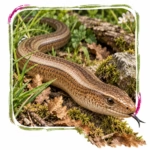
Eastern Glass Lizard Fact Highlight
From the full animal facts page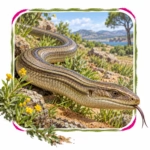
More Animal Comparisons
Pick another animal matchup and keep exploring. Compare appearances, habitats, diets, abilities, and surprising differences.
Make an Animal Story
Send a secretive Slow Worm and a breakaway-tailed Glass Lizard through an underground mystery with our free Animal Story Generator.
Source notes: References used for this comparison. See more See less
Try Another Matchup
Explore this comparison →