
Spider vs Insect: Arachnid vs Insect Comparison
Spiders and insects are both small joint-legged arthropods, but spiders are not insects. A spider is an arachnid with eight legs, two main body sections, no antennae, and silk-producing spinnerets. An insect has six legs, three main body sections, one pair of antennae, and often wings as an adult.
About Spider
- Type Invertebrate
- Diet Carnivore
- Group Arachnid
- Known for Eight legs, silk, venom, web building, and hunting small animals
- Special skill Producing several kinds of silk for webs, egg sacs, safety lines, shelters, and prey capture
About Insect
- Type Invertebrate
- Diet Varies
- Group Hexapod Arthropod
- Known for Six legs, three body sections, antennae, enormous diversity, and wings in many adults
- Special skill Flying in many adult species and undergoing complete or incomplete metamorphosis
Spider vs Insect: Quick Answer
Spiders have eight legs, two main body sections, no antennae, and spinnerets that produce silk. Insects have six legs, three main body sections, one pair of antennae, and many species have wings. Both are arthropods with exoskeletons and jointed legs, but they belong to different animal groups.
Where Do They Fit?
Follow the branches to see how Spider and Insect are classified and related.
Spider vs Insect: Quick Comparison
| Feature | Spider | Insect |
|---|---|---|
| Animal type | Invertebrate | Invertebrate |
| Animal group | Arachnid | Hexapod arthropod |
| Known for | Eight legs, silk, venom, and hunting | Six legs, antennae, diversity, and often wings |
| Main body sections | Two | Three |
| Legs | Eight | Six |
| Antennae | None | One pair |
| Wings | None | Present in many adults |
| Eyes | Usually several simple eyes | Usually compound eyes plus simple eyes in many species |
| Baby name | Spiderling | Larva, nymph, or juvenile |
| Special structure | Spinnerets | Antennae and often wings |
How Are Spiders and Insects Alike?
- Both spiders and insects are invertebrate arthropods.
- Both have jointed legs, segmented bodies, and hard exoskeletons.
- Both molt their exoskeletons as they grow.
- Both lay eggs in most species.
- Both play important roles as predators, prey, pollinators, decomposers, or recyclers in ecosystems.
How Are Spiders and Insects Different?
- Spiders have eight legs, while insects have six.
- Spiders have two main body sections, while insects have three.
- Spiders lack antennae, while insects have one pair.
- Spiders never have wings, while many adult insects do.
- Spiders produce silk from spinnerets, while insect silk, when present, comes from different glands and structures.
Spider vs Insect Showdown
Arthropod showdown: Size is a tie because both spiders and insects range from tiny species to giants larger than a human hand. The insect takes speed, social life, and swimming because the group includes rapid fliers, aquatic specialists, and highly organized ants, bees, wasps, and termites. The spider wins strength and stealth through venom, silk traps, camouflage, and ambush hunting. It also wins our weirdest-fact prize because a spider can produce several silk recipes from different glands inside one body.
Fun Spider vs Insect Facts
Eight Legs vs Six Legs
Every adult spider has eight walking legs. Adult insects have six legs, with one pair attached to each section of the thorax.
Two Body Sections vs Three
A spider’s body has a cephalothorax and abdomen joined by a narrow waist. An insect has a head, thorax, and abdomen.
No Antennae vs One Pair
Spiders sense their surroundings with hairs, slit organs, eyes, and other receptors but have no antennae. Insects use a pair of antennae to detect touch, smells, humidity, air movement, and sometimes sound.
Spinnerets vs Wings
Spiders produce silk through spinnerets at the rear of the abdomen. Many adult insects develop one or two pairs of wings attached to the thorax, although some insect groups and life stages are wingless.
Spiders Make Several Kinds of Silk
Different spider silk glands can make draglines, sticky capture threads, egg-sac silk, wrapping silk, and other materials. A spider adjusts the silk recipe for the job.
Spider vs Insect Quiz
- How many legs does an adult spider have? Answer: Eight.
- How many legs does an adult insect have? Answer: Six.
- Which animal has antennae? Answer: Insect.
- What structures produce a spider’s silk? Answer: Spinnerets.
- How many main body sections does an insect have? Answer: Three.
Spider vs Insect FAQ
What is the main difference between a spider and an insect?
A spider has eight legs, two main body sections, no antennae, and spinnerets. An insect has six legs, three main body sections, one pair of antennae, and often wings.
Is a spider an insect?
No. Spiders are arachnids, while insects belong to a separate arthropod group called Insecta.
Do all spiders make webs?
All known spiders produce silk, but not all build prey-catching webs. Some chase, jump, burrow, or ambush their food and use silk for safety lines, nests, egg sacs, or wrapping prey.
Do all insects have wings?
No. Many adult insects have wings, but some species are naturally wingless, and larvae or nymphs often lack working wings.
Are spiders and insects useful?
Yes. Spiders control populations of small animals, while insects pollinate plants, recycle nutrients, aerate soil, produce food, and feed countless other creatures. Some species can also bite, sting, spread disease, or damage crops.
Animal Words to Know
- Arthropod: An invertebrate with a segmented body, jointed limbs, and an exoskeleton.
- Arachnid: A member of the group containing spiders, scorpions, mites, and ticks.
- Thorax: The middle body section of an insect, where its six legs and wings attach.
- Spinneret: A silk-producing structure near the rear of a spider’s abdomen.
- Exoskeleton: A hard outer covering that supports and protects an arthropod.
Spider and Insect Body Detective Activity
Spider and Insect Body Detective Activity
Draw an enlarged spider beside a beetle. Give the spider eight legs, two main body sections, simple eyes, fangs, and spinnerets. Give the beetle six legs, three main body sections, antennae, compound eyes, and wings beneath hard wing covers. Label arachnid, insect, legs, body sections, antennae, and spinnerets.
Meet Each Animal
Want the full fact file? Here are quick highlights from each animal’s own facts page.
Spider Fact Highlight
From the full animal facts page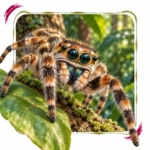
Insect Fact Highlight
From the full animal facts page
More Animal Comparisons
Pick another animal matchup and keep exploring. Compare appearances, habitats, diets, abilities, and surprising differences.






Make an Animal Story
Turn this spider vs insect comparison into a tiny arthropod adventure with our free Animal Story Generator.
Source notes: References used for this comparison. See more See less
Try Another Matchup
Explore this comparison →